
Introduction
The global environmental crisis is intensifying, with plastic pollution posing a particularly grave threat. Have you noticed the prevalence of discarded plastic bags littering our streets and beaches? These ubiquitous pollutants contaminate our waterways, endangering marine life and potentially harming human health.
That’s why exploring sustainable alternatives is crucial for environmental protection. Compostable trash bags offer a promising solution by converting organic waste into nutrient-rich soil. However, successful composting depends on specific environmental conditions. Therefore, the responsible use of compostable trash bags is paramount for effective and sustainable waste management.

What are Compostable Trash Bags?
Compostable trash bags are engineered to fully decompose into carbon dioxide, water, biomass and some humus under the composting environment, without leaving any toxic components. The resulting element is regarded as “compost”, fertilizing the soil and improving the plant growth.
Materials Used for Compostable Trash Bags
The manufacturing of compostable waste bags often applies the following materials:
- PLA (Polylactic Acid): Derived from plant-based material, PLA is a common polymer used for the compostable bag production. PLA offers good strength and printability but can be more brittle than other options.
- PBAT (Polybutylene Adipate Terephthalate): A biodegradable plastic polymer often blended with PLA to improve flexibility and durability.
- Corn-starch: Corn starch itself can be used in combination with other biodegradable polymers to create compostable films. It’s a readily available and renewable resource.
- Cellulose: Derived from plant fibers (e.g., wood pulp, cotton), cellulose can be processed into films suitable for compostable bags.
Compostability Standards
To ensure a bag is truly compostable, look for certifications from reputable organizations. These certification verify that the bag needs specific standards for biodegradation and non-toxicity.
- ASTM D6400: Bags that meet ASTM D6400 standard for compostability in industrial composting facilities are referenced by BPI (Biodegradable Products Institute) in North American.
- OK compost INDUSTRIAL &OK compost HOME: TÜV AUSTRIA offers several certifications, including “OK compost INDUSTRIAL” (for industrial composting), “OK compost HOME” (for home composting), and “OK biodegradable SOIL” (for biodegradation in soil). These certifications are widely recognized in Europe.
- EN 13432: The European standard for commercial compostable.
- AS 5810: The standard is verified as home compostable by Australasian Bioplastics Association (ABA)
- AS 4736: The bag with “compostable” and “AS 4736” logo are certified by Australasian Bioplastics Association (ABA).
Benefits of Using Compostable Trash Bags
- Reduce Landfill Waste: Switching to compostable packaging solutions involves diverting waste from landfills, thereby decreasing the volume of waste occupying landfill space.
- Sustainability to Nature: Compostable bags are sourced from plant-based materials and transform organic waste into nutrient-rich fertilizer without introducing harmful substances.
- Reduce Carbon Footprint: The adoption of compostable bags diminishes carbon emissions, contributing to a reduction in the overall carbon footprint.
- Enhance Brand Image: Embracing sustainable packaging solutions exemplifies your dedication to environmental stewardship, thereby boosting your brand image and advancing circular economy objectives.
- Compliance with Regulations: Numerous countries have implemented bans on single-use plastics. Consequently, compostable plastic bags serve as an excellent alternative to traditional plastic bags, ensuring regulatory compliance for businesses.
How to Use Compostable Trash Bags?
Compostable bags should be used and stored properly to maintain their integrity.
A Step-by-Step Guide to Using Compostable Bags
1. Choosing the Right Size and Type of Bag
For your intended use, choose the right size and type.
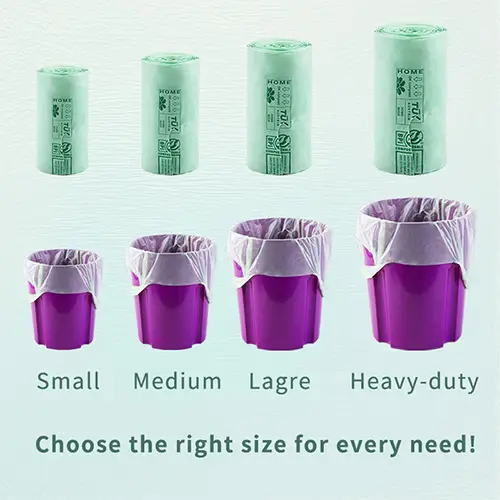
Here’s a table listing suggested compostable trash bag sizes for different uses. Note that “standard” sizes can vary slightly between manufacturers, so always check the actual dimensions listed on the product you’re considering. Also, consider the volume and type of waste you typically generate to choose the best fit.
| Use Case | Common Size Range (Width x Length, inches) | Volume (Gallons) | Typical Waste Type | Notes |
|---|---|---|---|---|
| Small Kitchen Waste | 14 x 16 – 17 x 20 | 3-6 | Food scraps, coffee grounds, tea bags, small paper waste | Ideal for countertop compost bins or small under-sink bins. Change frequently to prevent leaks. |
| Medium Kitchen Waste | 18 x 24 – 20 x 26 | 8-13 | Larger food scraps, vegetable peelings, coffee filters, paper towels | Suitable for larger kitchen bins. Consider a thicker bag for heavier food waste. |
| Standard Kitchen/Household Waste | 22 x 30 – 24 x 32 | 13-16 | Mixed household waste (paper, food scraps, wrappers), bathroom waste | A common size for general household use. Make sure it fits your kitchen trash can. |
| Large/Heavy Waste | 26 x 36 – 30 x 40 | 30-33 | Yard waste (leaves, grass clippings), heavier food waste, larger packaging materials | Use a thicker mil bag for yard waste to prevent tearing. Double-bagging can also help. Check the weight rating for the bag to ensure it can handle the load. |
| Extra-Large/Commercial | 30 x 48 – 33 x 50 | 45-60 | High-volume waste (commercial kitchens, events), bulky items | Primarily for commercial or industrial use. Requires a large trash can or receptacle. Verify composting facility accepts this size/type of bag. |
| Yard Waste (Specific) | 30 x 40 – 33 x 50 | 30-45 | Leaves, grass clippings, small branches | Often sold specifically as “yard waste bags.” Ensure the bag is designed to handle the moisture and weight of yard debris. |
| Pet Waste | 8 x 12 – 9 x 13 | Small/Individual Use | Dog/Cat waste | Small waste bags used to pick up pet droppings, designed to be easily carried and disposed of. |
Important Notes:
- Double-Check Dimensions: Always verify the actual dimensions of the bag before purchasing to ensure it fits your trash can or bin.
- Waste Volume: Estimate the volume of waste you typically generate to choose the appropriate bag size.
- Composting Facility Requirements: Contact your local composting facility to confirm they accept compostable bags and if they have any specific requirements regarding bag size or certification.
- “Tall Kitchen” Bags: 13-gallon trash bags (22 x 30 or similar) are often marketed as “Tall Kitchen” bags and are a very common size for home use.
This table provides a general guideline. Always prioritize the specific dimensions and recommendations provided by the compost bag manufacturer and your local composting facility.
2. Properly Lining Your Trash Cans
Choosing the right size for your trash cans can secure the bag over the rim and prevent it from slipping down. Before lining it, ensure your trash can is clean and completely dry. Any moisture can weaken the compostable bag.
Steps to Line the Trash Can
- Open the bag: Carefully open the compostable bag, avoiding to tearing it.
- Insert the bag: Place the bag inside the trash can, centering it as much as possible.
- Organize the edges: Fold the top edge of the bag over the rim of the trash can to create a secure overlap. Make sure the bags are evenly distributed along the edges. The goal is to achieve a comfortable overhang that will not slip off easily.
- Smooth out wrinkles: Gently smooth out the wrinkles or air pockets in the bag. This will help maximize the bag’s capacity and prevent it from tearing.
3. Identifying Acceptable and Unacceptable Items
Food scraps, shredded paper, dry leaves, and paper towels can be acceptable for composting system. Because they can be composted with bags in the compost bins or facilities.
Avoid putting sharp objects directly into the bag, as they can puncture it easily.
Drain off excess liquids of food scrap into the bag, which help prevent the bag from becoming overly saturated and leaking.
4. Sealing and Handling the Bags
Before removing the bag, tie it tightly to prevent spills and odors. When lifting the bag, be careful and inspect the bag for any leaks or tears.
Storage Tips to Extend Shelf Life
Compostable bags have a limited shelf life. Store unused compostable bags in a cool, dry place, away from direct sunlight and heat. This will help prolong their shelf life.
Common Mistakes to Avoid
- Overfilling bags: Don’t overfill the bag, because this can put pressure on the seams and lead to tearing. Leave enough space at the top of the bag to tie it securely.
- Putting non-compostable items in the bags: Glass, metal, diapers, hazardous and other non-biodegradable items can contaminate the entire compost.
- Using bags that are too old or have been stored improperly: These bags are easy to leak and spill.
- Assuming all “biodegradable” bags are compostable: Not all biodegradable bags are compostable.
Where to Dispose of Compostable Trash Bags?
To properly dispose of compost trash bags, you can finding a local composting facility or composting at your backyard.
Finding A Local Composting Program
Some local composting facility may not accept certain types of bags, so check with your composting facility for specific guidelines. The composting program is designed with high temperature and adequate moisture, which accelerates the degradation process of compostable bags.

Home Composting with Compostable Bags
If you have a backyard at home, make a compost bin to collect your kitchen waste and garden wreck. The composting soil can enrich your yard’s soil and help to gardening.

Learn more about composting details on this post: How to Dispose of Compostable Plastic Bags Correctly.
With these proper disposal methods, we can support the sustainable waste management.
Future Trends in Sustainable Packaging and Waste Management
The future of sustainable packaging and waste management is rapidly evolving, driven by innovation and a growing need to protect our planet. Let’s explore key trends shaping the industry:
Materials Innovations
The shift is underway to move beyond current bioplastics like PLA, with a focus on developing advanced materials that offer superior performance, durability, and biodegradability across a wider range of environments. This includes:
Polyhydroxyalkanoates (PHA): Produced by microorganisms from renewable resources, PHA boasts excellent biodegradability and can be customized for diverse applications, making it a promising alternative to conventional plastics.
Edible and Dissolvable Packaging: Imagine packaging you can consume alongside your product or that simply dissolves in water! This innovation is particularly exciting for single-use applications, such as food wrappers and portion-controlled items, reducing waste at its source.
Seaweed-Based Packaging: Harnessing the power of the ocean, seaweed offers a truly sustainable solution. This renewable resource can be transformed into biodegradable films and packaging materials. Seaweed’s cultivation requires no land, freshwater, or fertilizer, making it a highly eco-friendly alternative.
Technological Advancements in Waste Management
Waste-to-Energy Technologies: Converting waste into a valuable resource, these technologies utilize incineration, gasification, and other processes to generate electricity or heat. While not a perfect solution, waste-to-energy plants help reduce landfill waste and contribute to a renewable energy supply.
Advanced Recycling: The goal is to move beyond traditional recycling by developing technologies that can break down plastic polymers into their original building blocks. This closed-loop approach allows for the creation of virgin-quality plastics from recycled materials, fostering a truly circular economy.
Overall, the future of sustainable packaging and waste management is dynamic and full of promise. By embracing these material innovations and technological advancements, we can actively promote a circular and sustainable economy. This means minimizing waste, protecting our environment, and building a healthier planet for generations to come.
Conclusion
Compostable trash bags represent a significant step towards sustainable waste management, crafted from renewable materials designed to break down naturally. The key to their effectiveness lies in proper usage, ensuring their integrity and promoting successful composting.
To use compostable bags responsibly, consider these essential practices:
- Choose the Right Bag: Select the appropriate size and type of compostable bag for your needs.
- Line Your Bin Correctly: Ensure the bag fits your designated trash can.
- Know What Goes In (and What Doesn’t): Understand which items are acceptable for composting and which are not.
- Secure and Handle with Care: Seal the bag properly and handle it with care to prevent leaks.
- Proper Disposal: Compostable bags are best disposed of in home composting bins or industrial composting facilities, where the conditions are ideal for decomposition.
By following these guidelines, you’re actively contributing to environmental protection and a more sustainable economy. Ready to learn more about the specific features and benefits of compostable trash bags? Contact us today and we’re happy to provide you with all the information you need.