
The scene is all too familiar: a kitchen after a cleanup. You go to lift the heavy bag of food scraps from the bin, and—rip—the bottom splits. Waste spills across the clean floor, followed by that unmistakable, unpleasant odor from the bin.
Whether you’re a distributor hearing these complaints from your customers, or a business owner in hospitality or food service watching your staff deal with the fallout, the core frustrations with conventional trash bags are always the same: they’re surprisingly fragile and they trap odors.
When we turn to more sustainable options like compostable trash bags, the concerns don’t just vanish and often magnified. Will a plant-based bag be even weaker? Can you trust it to actually break down? With so many options for compostable plastic bags, how do you choose a product that is both dependable and truly eco-friendly?
We understand the hesitation. This guide will help you cut through the confusion and select the best compostable trash bags for a cleaner, greener operation.
What are Compostable Trash Bags?
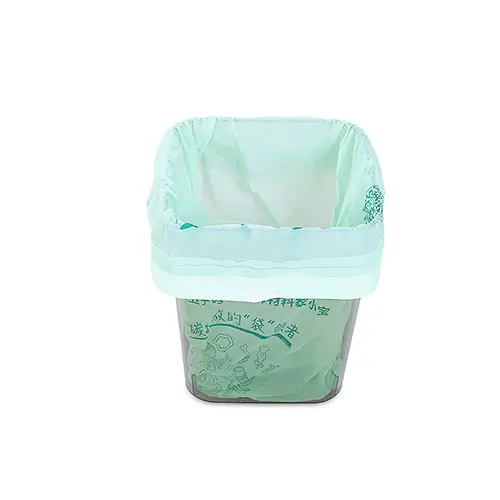
Compostable trash bags can break down completely into non-toxic components—water, carbon dioxide, and biomass—in a specific timeframe, usually within 90 to 180 days. It becomes nutrient-rich compost, ready to help new plants grow.
However, biodegradable bags eventually break down, but take a very long time and might leave some not-so-great stuff behind.
What are Compostable Trash Bags Made of?
So, what kind of materials goes into making these compostable plastic bags? It’s actually a fascinating blend of science and nature.
PLA, PBAT and Corn Starch
- PLA (Polylactic Acid): This is a bioplastic derived from renewable resources from fermented plant starch, like corn, sugarcane, or sugar beet pulp. It’s the “rigid” component that gives the bag some structure.
- PBAT (Polybutylene Adipate Terephthalate): PBAT is a biodegradable and compostable polymer that brings flexibility and toughness to the party. It’s what gives the bag its “pull” and stretch, preventing it from acting like a brittle piece of plastic. Without PBAT, you’d have a bag that cracks the second you put something pointy in it.
- Corn Starch: It reduces the reliance on fossil-fuel-based polymers and is a key component in ensuring the bag is bio-based and compostable.
When these three are blended in the right proportions, you get a bag that is both strong and truly compostable.
The Supporting Cast: CaCO3 and Other Eco-Additives
Sometimes, manufacturers will tweak the formula for specific needs. You might see Calcium Carbonate (CaCO3) added. This is a natural mineral (yep, chalk) that can improve the bag’s properties and, honestly, make it more cost-effective without sacrificing its compostability.
Other eco-friendly additives might be included to enhance things like shelf life or the feel of the bag. The key is that every single ingredient is chosen to ensure the final product breaks down cleanly and completely.
How to Choose the Best Compostable Trash Bags?
To select the best compostable trash can bags, various aspects need to be taken into consideration.
Material Formulations
First of all, the material component is the first priority. Because the material can impact the performance and biodegradability of finished products. As mentioned above, compostable bin bags are usually crafted from PLA, PBAT and corn starch. Some compostable bags may be produced with PHA, making them water-soluble.
If you need some unique features, you can ask the expert of the supplier to learn more.
Size and Capacity
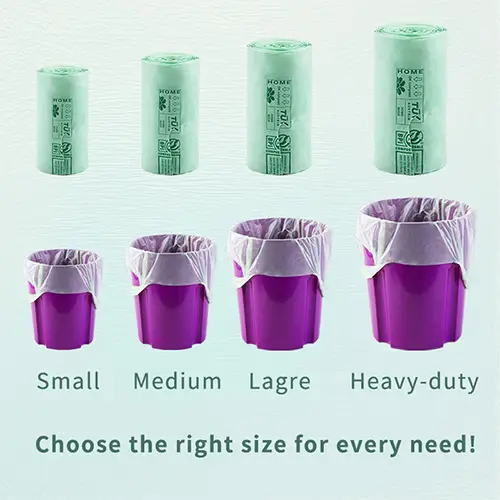
A bag that’s too small is a recipe for disaster—spills, overflows, and a whole lot of frustration. A bag that’s too big is just wasteful, both in terms of material and money.
Before you even think about placing an order, measure your bins. Check the gallon capacity, but also measure the height, width and gusset. Then share these specs with your supplier. A professional manufacturer can help you find the absolute perfect size for a secure fit every single time. It’s a small step that makes a huge difference in day-to-day use.
Heavy Loads
Capacity is one thing; load-bearing is another. A bag might hold 13 gallons of light, fluffy popcorn, but can it handle 13 gallons of wet coffee grounds and food scraps without giving away at the seams?
Whether it’s in a busy restaurant kitchen, a hotel, or an office, trash can get heavy. You need compostable trash bags that are up to the challenge.
Tear-Resistance
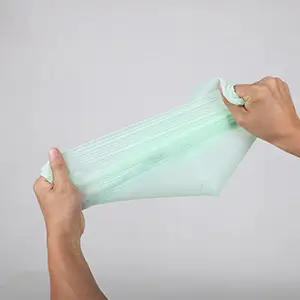
You must want a bag that can stretch and give a little when faced with a bulky or oddly shaped item, rather than just immediately puncturing or ripping. When you’re vetting a new bag, you can give the bag a stretch with your hands. A quality compostable bag should feel both soft to the touch and surprisingly strong.
Bag Types
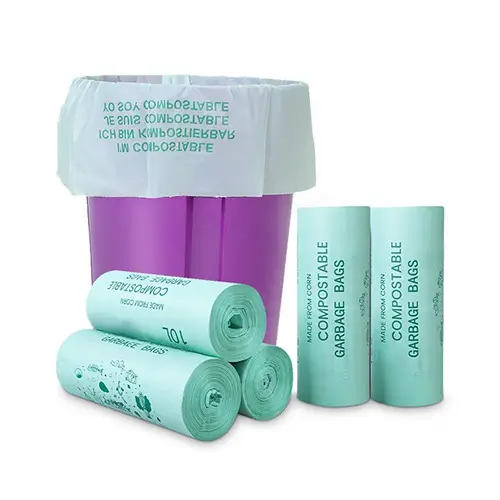
Not all waste is created equal, and neither should the bags be. The best compostable garbage bags come in a variety of styles for different applications.
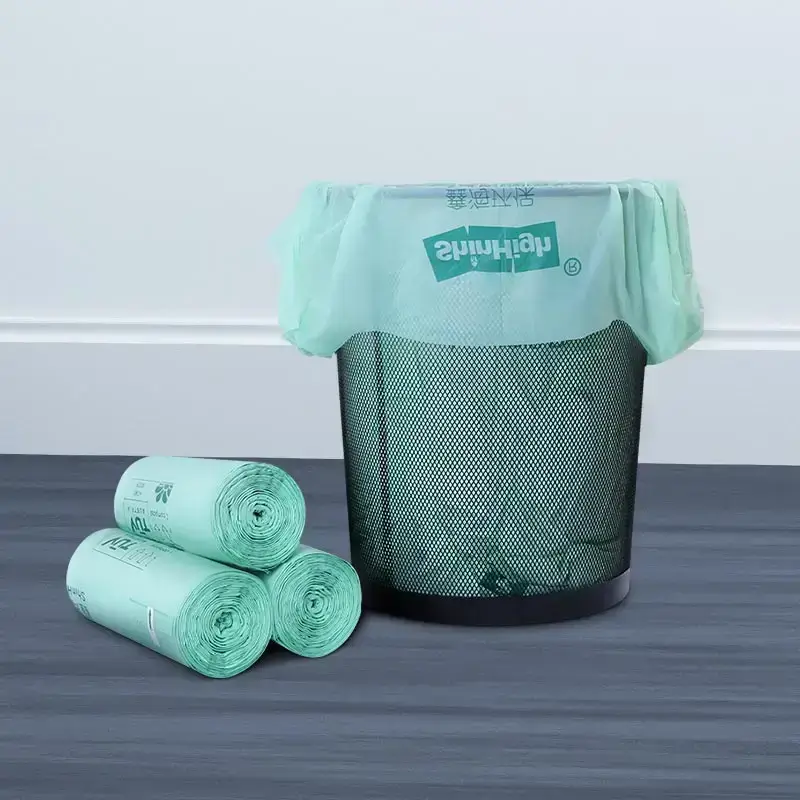
- Flat Top Bags: These are your straightforward, no-frills bags. They’re often the most economical choice and are perfect for lining bins where you don’t need to tie the bag shut for transport. They usually come in large rolls and are easy to store. Great for smaller bins in offices, bathrooms, or for light kitchen use.
- Tie Handle Bags (or Flap Tie Bags): You know those little “ears” on some bags? Those are tie handles. They make closing up a full bag incredibly simple and secure. No need for a separate twist-tie.
- Drawstring Bags: The built-in drawstring offers the tightest, most secure closure, helping to trap odors and prevent spills. For high-traffic areas like food courts, hotels and commercial kitchens, drawstring trash bags are a game-changer.
Flat top trash bags
Handle tie trash bags
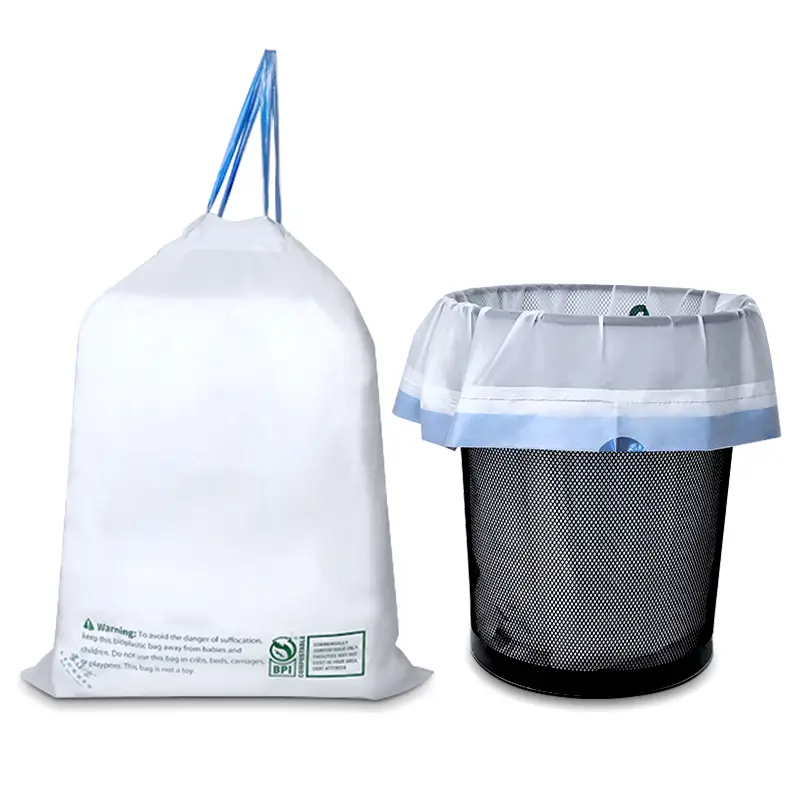
Drawstring trash bags
Dispensing
How trash bags are dispensed? Are they on a coreless roll that gets tangled easily? Or are they on a neat, easy-to-pull roll that fits a standard dispenser? For a cleaning crew or a busy staff, fumbling with a messy roll of bags is a waste of time and a source of frustration. Look for packaging and roll styles that are designed for quick and easy use. It’s a detail that shows a manufacturer understands the end-user.
Odor Control Feature
Compostable bags, by their nature, are made from breathable materials. This is great for the composting process, but it can sometimes be a challenge for odor control.
However, high-quality compostable garbage bags are designed to manage this. The right material thickness and formulation can perform well in containing unpleasant smells, keeping your space fresh and clean.
For specialized applications, some manufacturers can incorporate eco-friendly additives that help, but this is a custom feature you’d need to discuss directly.
Beyond the Basics: Customization, Cost, and Certifications
We have covered the core functional aspects. Now, let’s look at the factors that can elevate your product from a simple commodity to a branded, trusted solution.
Custom Printing and Designs
For businesses, a compostable trash bag isn’t just a utility; it’s a branding opportunity. When a customer sees your logo on a beautifully printed, eco-conscious bag, it sends a powerful message about your values.
You can add your logo, company colors, or even handling instructions. The key is to ensure the inks used are also eco-friendly and non-toxic, so they don’t interfere with the composting process. This is a value-added service that can set your offering apart.
Cost
Compostable bags may have a higher upfront cost than their traditional plastic counterparts. Since you already know that, the real question is what are you paying for?
Paying the lowest price often means:
- Questionable material blends (more filler, less active compostable polymer).
- Weak or non-existent certifications.
- Inconsistent sizing and poor seal strength.
- A supplier who might disappear tomorrow.
Investing in a fairly priced, high-quality product from a reputable manufacturer means:
- Reliability and performance that keeps your customers happy.
- Verifiable certifications that protect you from greenwashing claims.
- A stable supply chain you can count on.
- Long-term value that far outweighs the initial savings of a cheap bag.
By choosing compostable solutions, you’re investing in a sustainable product that your customers are increasingly demanding. As technology improves and production scales up, the price gap is narrowing.
Certifications
If a bag is labeled ” compostable”, it needs to have the paperwork to prove it. Certifications from recognized bodies are your guarantee that the product will perform as advertised. Certified compostable products have been scientifically tested to break down in a composting facility within a set timeframe.
Look for certifications like BPI (from the Biodegradable Products Institute) in North America or the “Seedling” logo (EN 13432) in Europe. A bag without these certifications is just a bag with a promise. A certified bag is a bag with proof. Always ask a potential supplier for certification documents.
Your Partner in Sustainability: Why Choosing the Right Manufacturer Matters
Sourcing compostable trash bags isn’t a transaction; it’s a partnership. You need a manufacturer that is as invested in quality and sustainability as you are.
Longxin – A Partnership Built on Stability and Expertise
Longxin, a bioplastic bags manufacturer with rich experience, specializes in providing custom packaging bags for various industries. Whether you need a specific size, a custom print, or a unique formulation, we have the expertise to deliver.
A stable production capacity of 30,000 tons per year and advanced manufacturing facilities ensure that you can get a consistently high-quality product every single time. Partner with us to improve your waste management right now.
Conclusion
Based on the points mentioned above, you can know how to choose the best waste bags for your business. Choosing the best compostable garbage bags is a detailed process, but it’s one that pays dividends in customer satisfaction, brand reputation, and genuine environmental impact. You’re not just buying bags; you’re building a greener future. So go ahead, make the smart, sustainable choice.