
Introduction
To be honest, no one would enter the pet industry just because they like picking up feces. Dog walkers, manure removal services, distributors, pet stores – you do it out of love for animals and also for doing business. But daily work is a troublesome thing. For decades, the default practice has always been to grab a plastic bag. Out of sight, out of mind, right? Wrong. These fragile plastic bags have caused a terrifying problem that persists for a long time after the smell disappears. They pile up in landfills, suffocating wild animals and decomposing into harmful microplastics, causing harm to the ecosystem environment.
The good news: there is a smarter, cleaner way. Compostable dog poop bags are not merely a niche trend; They are a fundamental shift towards truly sustainable pet care. For enterprises like yours – from distributors in the supply market to front-line services – understanding and accepting this transformation is not only beneficial to the planet; It is becoming increasingly important for meeting customer expectations, building trust and ensuring future operations. Let’s delve into why composting is the clear choice and how your business can lead this trend.

What Are Compostable Dog Poop Bags?
Definition
Instead of relying on fossil fuels, compostable bags harness the power of recent plant growth. They’re crafted from renewable resources that pulled carbon dioxide out of the atmosphere just months or years ago. When composted correctly, they break down through natural biological processes into nutrient-rich soil amendments – water, carbon dioxide (the same CO2 the plants absorbed), and valuable organic humus. It’s a circular system, not a dead-end landfill sentence.
Materials Used
- Cornstarch: Cornstarch based bags are derived from corn instead of petroleum-based plastics, making them softer and more flexible. They’re a great alternative, but keep in mind that they can sometimes be prone to tearing.
- PLA (Polylactic Acid): Made from fermented plant sugars (usually corn or sugarcane). PLA provides stiffness and structure. On its own, it can be brittle, especially in cold weather, and typically requires industrial composting.
- PBAT (Polybutylene Adipate Terephthalate): A biodegradable, fossil-based but compostable polymer. It’s often blended with PLA or cornstarch to add flexibility, toughness, and improve compostability across different conditions.
- Other Bio-Polymers: Research is ongoing! Materials like PHA (Polyhydroxyalkanoates), made by microorganisms, show huge promise for marine biodegradability and home composting resilience.
How do Compostable Dog Poop Bags Work?
Have you ever wondered how compostable dog poop bags actually work? The secret lies in the composting process, which changes waste into useful soil.
The Composting Process
When these bags are disposed of properly, microorganisms such as bacteria and fungi break down the organic materials in the presence of oxygen, moisture, and heat. Over time, the bag and its contents turn into water, carbon dioxide, and nutrient-rich compost that can be used as fertilizer.
Home Composting & Commercial Composting
Industrial composting facilities handle large volumes, carefully managing piles to achieve and maintain high temperatures (typically 130-160°F / 55-70°C) through active turning and aeration. Many compostable dog poop bags, especially those certified for industrial composting (like BPI), break down efficiently here in 3-6 months. The high heat also effectively kills pathogens present in the dog waste.
Most backyard bins or piles don’t consistently reach the sustained high temperatures needed. Decomposition is slower, taking 6-12 months or more, and pathogen kill-off is less certain. Only bags specifically certified as “OK Compost HOME” or equivalent are reliably tested to break down in these cooler, less controlled conditions. Even then, check local regulations; many advise against composting pet waste at home due to pathogen risks.
The Role of Microorganisms
Billions of tiny bacteria and fungi are the real heroes. These microorganisms see the compostable pet waste bags and their contents as a gourmet meal. They secrete enzymes that break down the complex plant-based polymers and the organic waste into simpler molecules they can absorb. This process generates heat and produces the fundamental building blocks of healthy soil: carbon-rich humus, water, and carbon dioxide (CO2). Crucially, this CO2 is part of the natural, short-term carbon cycle – the same CO2 the plants used to grow – unlike the CO2 released from burning fossil fuels for plastic production.
Conditions Affecting Decomposition
For microbes to thrive and do their job effectively, they need:
- Heat: Speeds up microbial activity. Industrial facilities provide this reliably.
- Moisture: The pile needs to be damp, like a wrung-out sponge. Too dry, microbes slow down; too wet, it becomes anaerobic and smelly.
- Oxygen: Microbes need air! Regular turning or aeration is vital. Anaerobic decomposition produces methane, a potent greenhouse gas.
- Time: Even in ideal conditions, it doesn’t happen overnight. Patience is part of the process.
To get the best results, follow the disposal instructions on the bag and verify with your local composting facility if they accept compostable dog waste bags.
Why Choose Compostable Dog Poop Bags?
Environmental Advantages
This is the core. By offering compostable bags:
- You directly reduce the mountain of persistent plastic pollution.
- You support systems that turn waste into a valuable resource (compost), closing the loop.
- The production of plant-based polymers generally has a lower carbon footprint than extracting and refining oil for plastic. It’s a step towards decarbonizing pet care.
- You contribute to healthier soils by enabling organic nutrient recycling.
Meeting Surging Consumer Demand for Eco-Conscious Pet Products
Pet owners are increasingly aware and concerned. They actively seek out brands and services aligned with their environmental values. Offering compostable bags isn’t just an option; it’s becoming a baseline expectation for many clients choosing a dog walker, poop scoop service, or pet store.
Operation Advantages
- Leak-Proof Design: Advanced heat seal technology ensures the bags stay sealed and prevents messy accidents, crucial for dog walkers carrying multiple bags or services storing waste until collection.
- Durability: Quality compostable bags are strong and tear-resistant, handling even large or unexpected deposits confidently.
- Ease of Use: Available on rolls, with easy-tear perforations, often with handles for quick, secure tying. Dispenser compatibility is standard. Scented options help manage odors during transport or storage.
Comparison to Traditional Plastic Bags
| Features | Compostable Bags | Traditional Plastic Bags |
|---|---|---|
| Resource Use | Petroleum | Renewable resources (e.g., cornstarch, PLA, PBAT) |
| Time to Decompose | Hundreds of years | 3-6 months (in commercial composting); 6-9 months (home) |
| End Result | Microplastics, landfill mass | Nutrient-rich compost (humus), water, and CO2 |
| Landfill Impact | Pile up in the landfill | Returns organic waste to the earth as nutrient-rich compost |
User Guide: How to Choose the Right Compostable Poop Bags?
Certifications
Look for certifications like BPI, EN 13432, AS 5810, and OK compost HOME. These ensure that the bags are truly compostable.
Performance Factors
- Thickness (Gauge): Measured in microns (µm) or gauge. Thicker bags (e.g., 18-22+ microns) are generally stronger. Ask suppliers for specs.
- Leak-Proof Seals: Are the seams heat-sealed effectively? Can they handle liquid? Ask about leak-testing protocols.
- Tear Resistance: Can it withstand being pulled from a dispenser sharply? Does it resist punctures from twigs or rough ground?
- Performance in Weather: How does it hold up in cold (brittleness?) or heat (softening?)? Real-world testing by your team is invaluable.
Size Matters
One size does not fit all. Offering the right size improves user experience and reduces waste.
- Small Bags: Suitable for toy/small breeds. Also good for walkers needing compact bags.
- Medium Bags: The workhorse for most medium/large breeds.
- Large/Extra-Large Bags: Essential for giant breeds or multi-dog pickups. Consider extra length for easier handling.
Scented or Unscented
Scented: Popular for masking odors during walks or in storage bins. Often use natural essential oil scents (like lavender or citrus). Check scent strength – overpowering can be unpleasant.
Unscented: Preferred by clients with scent sensitivities, allergies, or dogs with sensitive noses. Essential for service dogs or training environments where strong scents can be distracting.
Packaging & Dispensers
- Rolls: Standard format. Ensure clean perforations for easy tearing.
- Dispensers: Offering branded or compatible dispensers (clip-on for leashes, bag holders for vehicles) adds convenience for clients and walkers. It’s an upsell opportunity and reinforces your brand.
- Core Size: Ensure rolls fit standard dispensers without jamming.
- Packaging: Is the outer packaging also recyclable or compostable? Aligns with overall sustainability.
Price & Value
Cost is important, but focus on the overall value—sometimes paying a bit more means better quality.
Brand Reputation
Trustworthy brands often produce better products. Take a moment to check reviews and see which brands are well-regarded.
Best Practices for Using & Disposing Compostable Dog Waste Bags
Providing the right bag is only half the battle. Educating your clients (or their customers) on proper use and especially disposal is critical for the environmental benefit to be realized. This is where your business becomes a true educator.
The Pick-Up Process
- Turn the bag inside out over your hand like a glove.
- Scoop the waste.
- Pull the bag right-side out, enclosing the waste.
- For larger piles or awkward spots, some prefer placing the open bag flat and scooping the waste into it with a tool.
Sealing Securely
- Poop Bags with Handles: Simply pull the handles and tie in a secure knot. This is the easiest and most reliable method to seal the bags.
- Poop Bags without Handles: Gather the top, twist tightly several times, then fold the twisted section over and tie it into a knot. Ensure it’s tight!
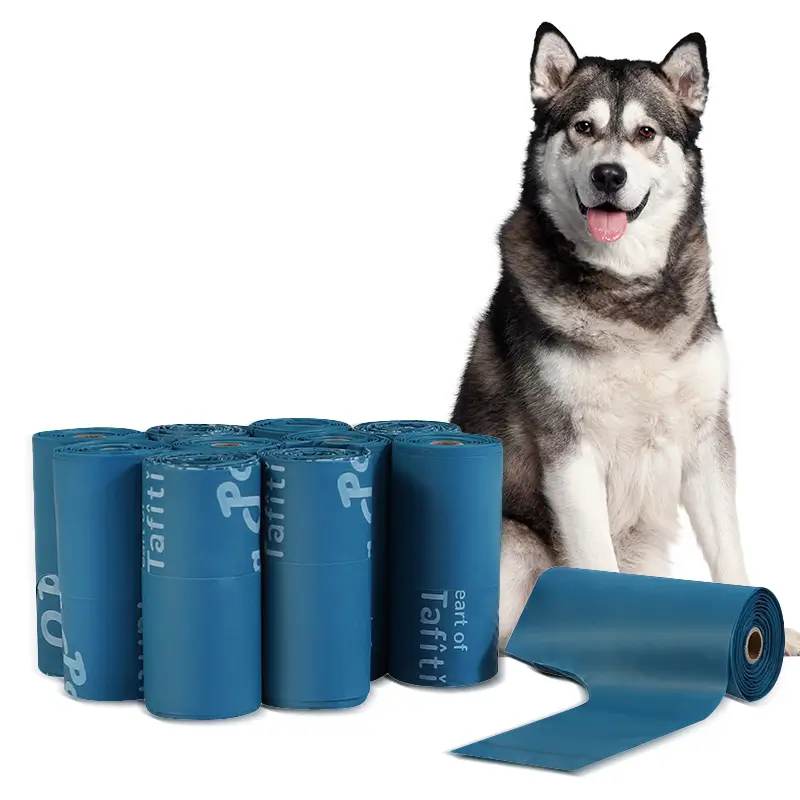
Disposal Pathways
- Commercial composting: If your area has composting facilities and the bags are certified for commercial composting, this is a great option.
- Home composting: Dedicate a specific, well-managed compost bin only for pet waste (not for food crops). Ensure high temperatures are achieved if possible (hot composting).
- Trash (as a last resort): If no other options are available, dispose of the bag in your regular trash. It’s better than leaving waste on the ground.
Storage & Maintenance
- Heat, moisture, and UV light can start the decomposition process prematurely. Keep bags in a cupboard, closet, or vehicle glovebox, not in direct sunlight or a hot garage.
- Especially after long storage or seasonal changes, give a bag a gentle tug to ensure it hasn’t become brittle or weakened.
Conclusion
Choosing compostable dog poop bags is far more than swapping one bag for another. It’s a conscious decision to align your pet business with the health of the planet and the values of a growing wave of eco-aware pet owners. It reduces plastic pollution at its source, supports circular systems that create valuable compost, lowers carbon footprints, and meets clear customer demand.
For distributors, it’s about supplying the future. For dog walkers and poop scoop service providers, it’s an operational upgrade and a powerful trust-builder. For pet stores, it’s offering a responsible solution that clients are seeking.
It’s a small change in the daily routine that adds up to a massive collective impact. By making the switch and championing sustainable pet waste management, your business isn’t just cleaning up after pets; you’re helping clean up the future. Let’s build that greener future for pets and the planet, one compostable bag at a time.