
PLA and ASA are two widely used FDM materials, but they differ in strength, heat resistance, and outdoor durability.
PLA offers excellent printability, dimensional accuracy, and cost efficiency, making it ideal for indoor prototypes and general-purpose prints. ASA provides great heat resistance, durability, and UV stability. So it is better suited for outdoor and end-use parts.
This guide compares both materials across heat resistance, UV stability, strength, printability, and cost to help you choose the right filament for your needs.
PLA and ASA at a Glance
The table below summarizes the main differences.
| Property / Parameter | PLA | ASA |
|---|---|---|
| Ease of printing | Excellent | Moderate |
| Nozzle temperature | Lower | Higher |
| Bed temperature | Lower | Higher |
| Enclosure | Usually not required | Recommended |
| UV resistance | Low | Excellent |
| Heat resistance | Low | High |
| Tensile strength | High (Rigid, stiff) | Moderate to High (Tough, ductile) |
| Impact resistance | More brittle | Better |
| Outdoor durability | Limited | Excellent |
| Warping | Low | Higher |
| Odor / Ventilation | Low odor | Odor, need ventilation |
| Surface appearance | Smooth / detailed | Matte / functional |
| Best for | Indoor models | Outdoor parts |
What is PLA Filament?
Composition of PLA Materials
PLA (Polylactic Acid) is a biodegradable thermoplastic derived from renewable resources such as corn starch, sugar cane, or cassava roots. It can be degraded under industrial composting conditions, but not backyard composting.
Key Characteristics & Strengths
- Easy to Print: PLA does not demand strict thermal management. It lays down cleanly at lower nozzle temperatures without lifting or shrinking.
- Good Dimensional Accuracy: Because PLA exhibits minimal thermal contraction as it cools, corners stay sharp, complex geometries retain their scale, and tolerance-critical assemblies mate reliably.
- Good Surface Finish and Excellent Detail: The natural rheology of molten PLA allows fine nozzle extrusions, delivering crisp layer stacking, sharp overhangs, and detailed embossing.
- Wide Color Selection: PLA accepts masterbatch dyes exceptionally well, giving manufacturers access to vast color palettes, silk sheens, matte finishes, and dual-color co-extrusions.
Limitations of PLA
- Poor Heat Resistance: PLA begins softening between 55°C and 60°C (131°F – 140°F). A functional part left on a vehicle dashboard or inside a warm warehouse will quickly warp under its own weight.
- Prone to Brittle Fracture: While PLA has high tensile rigidity, it has minimal elongation at break. Under sudden impact or cyclic flexing, it snaps rather than bends.
- Limited UV Resistance: PLA is not designed for long-term outdoor use. Continuous UV exposure can degrade its structure, causing discoloration, cracking, and loss of strength.
- Moisture Sensitivity: Like many bio-based polymers, PLA is hygroscopic. Improper storage or moisture absorption can result in extrusion issues, reduced print quality, and weaker layer bonding.
Common Applications of PLA
- Concept models and rapid visual prototyping
- Architectural mockups and terrain displays
- Educational projects, cosplay items, and decorative props
- Low-stress indoor organizers, desk accessories, and jigs
- Short-run packaging samples
Extended Reading: The Basics of PLA Filament for 3D Printing.
What is ASA Filament?
Composition of ASA Materials
ASA (Acrylonitrile Styrene Acrylate) is an engineering-grade amorphous terpolymer designed to provide the mechanical strength and durability of ABS while overcoming its biggest limitation: poor UV resistance.
Chemically, ASA replaces the polybutadiene rubber used in ABS with an acrylic ester elastomer. This modification removes the UV-sensitive double bonds that degrade under sunlight exposure, making ASA one of the most reliable filaments for outdoor 3D printing.
Key Characteristics & Strengths
- Excellent Weather & UV Resistance: ASA can withstand years of intense sun, heavy rainfall, salt spray, and freeze-thaw cycles without chalking, discoloring, or losing tensile strength.
- High Thermal Deflection: With a glass transition temperature around 100°C (212°F), ASA parts easily withstand harsh automotive environments and extreme summer conditions.
- High Impact & Fatigue Resistance: The integrated acrylic elastomer gives ASA excellent toughness, allowing parts to absorb impacts, survive drop shocks, and hold threaded inserts without cracking.
- Acetone Vapor Smoothing: Like ABS, ASA is soluble in acetone. Exposing finished prints to acetone vapor melts the outer layer, eliminating layer lines to create a glossy, injection-molded look while hermetically sealing the shell.
Limitations of ASA
- High Shrinkage & Warping Risk: ASA has higher thermal shrinkage than PLA and can warp during cooling. Without a controlled printing environment, large parts may detach from the build plate or develop cracks between layers.
- Requires Higher Printing Temperatures: ASA typically requires a high-temperature hotend (240°C–260°C) and a heated bed maintained around 90°C–110°C for reliable printing.
- VOC Emissions: During printing, ASA can release volatile organic compounds (VOCs), including styrene emissions. Proper ventilation or filtration is recommended when printing in enclosed spaces.
- Higher Material Cost: As an engineering-grade filament, ASA is generally more expensive than standard PLA due to its advanced performance and outdoor durability.
Ideal Applications for ASA
- Automotive exterior trim, mirror caps, vent louvers, and sensor brackets
- Outdoor electrical junction boxes, camera enclosures, and antenna mounts
- Drone frames, marine utility brackets, and agricultural equipment parts
- Outdoor commercial signage, garden tools, and irrigation components
- Industrial end-use ducting and machinery safety guards
Key Differences Between PLA and ASA
1. Printability & Equipment Requirement
PLA
PLA is the most forgiving material available for FDM technology. It melts cleanly, adheres aggressively to raw glass, PEI, or blue painter’s tape at modest bed temperatures (50°C), and does not require an enclosure. You can print it on open-frame hobby machines just as easily as on a multi-tier commercial print farm. Thermal draft control is largely unnecessary, and print failures stemming from material contraction are rare.
ASA
ASA demands careful thermal management. As the extruded plastic transitions from 250°C down to room temperature, internal stresses build quickly.
Printing large-format ASA components on an open-frame printer invites warping, corner lifting, and mid-print layer delamination.
To achieve industrial results with ASA, your production line needs:
- An all-metal hotend rated to at least 260°C.
- A high-power heated build plate that reliably holds 100°C.
- A 3D printer enclosure for ASA that maintains a passive ambient temperature between 40°C and 55°C.
- Bed adhesives (such as PVP glue sticks, polyamide sheets, or specialized ABS/ASA slurries) to anchor the first layer.
2. Heat Resistance
PLA:
- Softens around 55–60°C
- Not suitable for hot cars or high-temp environments
A PLA part left in a sealed car on a sunny summer day (65–70°C inside) will soften, sag, and warp under even slight tension.
ASA:
- Tg around 95–100°C
- Handles automotive interiors and hot climates
It easily survives boiling desert heat, direct sunlight, automotive interior environments, and hot industrial machinery casings without losing structural integrity.
3. UV and Weather Resistance
PLA
PLA has limited outdoor durability due to its poor UV resistance. Prolonged exposure to sunlight can break down its polymer structure, causing color fading, surface chalking, and increased brittleness. Combined with rain and temperature changes, PLA parts may lose strength and fail over time when used outdoors.
ASA
ASA is designed for outdoor applications where UV resistance is required. Its acrylic ester elastomer structure helps protect against UV degradation, allowing ASA parts to maintain their impact resistance, color stability, and mechanical properties during long-term outdoor exposure. It also performs well in rain, humidity, and temperature fluctuations.
4. Strength and Toughness
When comparing PLA and ASA, people often confuse rigidity with durability.
- Tensile Strength & Stiffness: Pure PLA typically has a higher tensile strength (roughly 60–70 MPa) and a higher tensile modulus than ASA (roughly 40–50 MPa). Its high stiffness allows PLA parts to maintain their shape under static loads. However, this rigidity also makes PLA more brittle and less resistant to sudden impacts.
- Impact Resistance & Ductility: ASA offers better impact strength, flexibility, and elongation at break. Under impact, vibration, or repeated stress, ASA can flex and absorb energy instead of cracking immediately. PLA, while strong and rigid, is more likely to fracture under sudden mechanical forces.
- Layer Adhesion: When printed with proper temperature control and an enclosed build chamber, ASA can achieve strong layer bonding and durable functional parts. However, poor printing conditions can reduce ASA’s interlayer adhesion, sometimes making PLA appear stronger in certain applications.
5. Warping and Dimensional Stability
PLA
PLA has low thermal expansion rate and minimal shrinkage during cooling (around 0.3%–0.5%). This excellent dimensional stability makes PLA easy to print, especially for large flat parts that require accurate dimensions and a smooth build surface without complex setup.
ASA
ASA has higher thermal shrinkage during cooling (around 0.6%–1.1%). As the material cools, upper layers can contract and create internal stress, increasing the risk of corner lifting and layer cracking. To achieve reliable results, ASA usually requires a heated bed (around 100°C), and enclosed print environment, and properly tuned printing settings.
6. Surface Finish and Appearance
Both materials offer distinctive aesthetic qualities and post-processing paths for commercial finishing:
PLA Surface Finishing
PLA delivers excellent surface quality straight from the printer, with vibrant colors, fine details, and a natural semi-gloss finish. It is easy to sand and can be painted with common coatings such as automotive primers, acrylic paints, and oil-based paints. However, PLA is difficult to smooth with standard solvents, and chemical smoothing typically requires the use of specialized chemicals.
PLA Surface Finishing
ASA also produces high-quality surfaces with good layer consistency and can be post-processed through sanding, painting, and vapor smoothing. Unlike PLA, ASA can be chemically smoothed using acetone-based methods, which help reduce visible layer lines and create a smoother, more polished finish.
7. Odor, Safety and Ventilation
When operating multiple 3D printers in an enclosed production environment, air quality and emissions should be considered.
PLA is a bio-based filament that generally produces low levels of VOC emissions during printing. It may release small amounts of lactide-related vapors, but emissions are typically much lower compared with engineering-grade materials. With basic ventilation, PLA is suitable for use in classrooms, offices, and home workshops.
ASA printing at high temperatures (~ 250°C) can release volatile organic compounds (VOCs). These emissions may cause unpleasant odors and can contribute to indoor air quality concerns during prolonged exposure, especially in poorly ventilated spaces.
8. Cost and Production Economics
For print shops and commercial manufacturers, material selection directly impacts profit margins and machine uptime.
- Direct Material Cost: Standard high-grade PLA usually ranges from $15 to $30 kilogram, while standard ASA filament typically runs $25 to $40 per kilogram.
- Scrap Rate & Machine Uptime: PLA offers excellent print reliability and a high first-pass success rate when printing parameters are properly tuned. ASA requires more precise process control, as factors such as insufficient bed adhesion, temperature fluctuations, or premature removal can increase the risk of warping and failed prints.
- Warranty & Field Failures: Choosing the lowest-cost material does not always reduce overall costs. PLA parts exposed to high heat or outdoor conditions can degrade under heat and UV exposure, leading to failures and higher costs. ASA reduces this risk in applications that require weather resistance and long-term durability.
9. Sustainability and Environmental Footprint
PLA is bio-based and industrially compostable, but it will not break down in backyard compost or landfills. ASA is petroleum-based, recyclable in standard styrene streams, and lasts much longer outdoors.
Optimal Print Settings for PLA and ASA
Setting the slicing parameters is essential to maintain a stable printing speed. Use the following values as starting points.
| Parameter | PLA | ASA |
| Nozzle temperature | 190–220°C | 240–260°C |
| Hotbed temperature | 45–60°C | 90–110°C |
| Enclosure | No required (Open door/lid) | Strongly recommended (45°C – 55°C) |
| Cooling Fan | 80% – 100% (Continuous) | 0% – 25% (Low cooling avoids layer splits) |
| Printing Speed | High (60 – 250+ mm/s) | Moderate (40 – 100 mm/s) |
| First Layer Speed | 20-30 mm/s | 15-25 mm/s |
| Build Plate Adhesion | Bare PEI, textured PEI, Blue Tape | PEI + Glue Stick, Dimafix, or ABS Slurry |
| Brim Configuration | Rarely needed | Recommended (5-10mm wide) |
| Drying Settings | 50°C – 60°C for 4-6 hours | 65°C – 70°C for 4–8 hours |
For stringing or first-layer issues, see our PLA printing temperature guide.
Practical Tuning Tips for ASA Success
- Turn Down the Cooling Fan: Too much part-cooling airflow is the primary cause of layer separation in ASA prints. Start with your fan completely off for the first 4 layers, and cap it at 15–20% for overhangs and bridging on later layers.
- Preheat the Chamber: Before starting an ASA print, set your heated bed to 105°C and let the printer sit enclosed for 15–20 minutes. This pre-heats the ambient chamber air, minimizing the thermal shock on freshly extruded lines.
- Use a Wide Brim: Add a 6–10mm outer brim to anchored corners on large prints. This spreads thermal tensile forces across a wider footprint, preventing the part edges from lifting off the build plate.
Which Filament Should You Choose?
Choose based on where and how the printed part will be used.
When Should You Choose PLA?
Choose PLA Checklist:
- The part will spend its life inside an office, home, or warehouse.
- High-detail visual accuracy and sharp cosmetic overhangs are the priority.
- You want plug-and-play printing on open-frame machines without enclosures.
- The operating temperature will never exceed 50°C (122°F).
- You need high color variety, silk finishes, or decorative sheens.
- You are printing rapid prototypes where lowest unit cost is paramount.
Choose PLA when printability and appearance matter more than outdoor or high-temperature performance.
When Should You Choose ASA?
Choose ASA Checklist:
- The printed part will live outside in direct sunlight and open weather.
- The part will be installed inside a vehicle, engine bay, or hot environment.
- The part needs to withstand mechanical drops, shock impacts, or flexural stress.
- You have enclosed 3D printing equipment with heated bed capability up to 100°C.
- You plan to acetone-vapor-smooth parts for a glossy, injection-molded finish.
- The assembly relies on snap-fits, heat-set brass inserts, or bolted flanges.
Choose ASA when the finished part needs to withstand sunlight, heat, and outdoor weather.
How to Source Consistent PLA and ASA?
No matter whether you consume 50 rolls or 5,000 rolls per month, the consistency of materials between production batches is the key to keeping a print farm profitable. Sourcing sub-par filament leads to micro-clogs, intermittent under-extrusion, bed releases, and costly scrapped prints.
When buying PLA or ASA in bulk, batch consistency is critical.
- 1. Diameter Tolerance: Strict ±0.02 mm (Prevents flow fluctuation & hotend clogging)
- 2. Moisture-Barrier Packaging: Vacuum + desiccant pack (Reduces moisture absorption problems)
- 3. Color Matching: Stable colors (Guarantees color consistency across batch runs)
- 4. Automated Spool Winding: High-tension precision (Eliminates mid-print spool snags & layer pauses)
FAQ
Only for indoor, room-temperature applications where parts are protected from impact, mechanical stress, and sunlight. PLA cannot replace ASA in automotive, high-heat, or exterior weather settings—it will quickly soften and degrade.
PLA is stiffer, while ASA is tougher. PLA resists bending under static loads, but ASA absorbs impacts better. For functional parts exposed to shock or weather, ASA is usually the better choice.
ASA is superior for outdoor use. PLA photo-oxidizes, warps, and embrittles under ultraviolet solar rays within months. ASA features a specialized acrylic elastomer formulation that resists UV radiation, rainfall, and thermal cycles for years without performance loss.
Yes. PLA can be printed on virtually any open-frame machine right out of the box. ASA requires a 3D printer with an all-metal hotend (240°C–260°C), a heated bed capable of reaching 95°C–110°C, and an enclosed chamber to manage thermal contraction and prevent warping. ASA also requires dedicated ventilation to clear styrene emissions.
You can print small ASA parts (under 50mm in length) on an open-frame printer if you use a hot bed, an adhesive promoter, and turn off your part cooling fans. However, for medium to large-scale parts, an enclosure is mandatory. Without one, ambient drafts will cause the part to lift off the build plate or split along layer lines.
PLA is the clear choice for beginners. It does not warp easily, requires no enclosure, produces negligible odor, adheres readily to print surfaces, and forgives small slicing mistakes. Beginners should master bed leveling, extrusion rates, and basic printer tuning with PLA before tackling engineering polymers like ASA.
Conclusion
When choosing between PLA and ASA, there is no single “best” material. The right choice comes down to where your finished part will live and what demands will be placed on it:
                   Where will your part live?
                               │
               ┌───────────────┴───────────────┐
               ▼                               ▼
          [ INDOORS ]                    [ OUTDOORS ]
               │                               │
    Is it exposed to heat?                     ▼
         (Above 50°C?)                      CHOOSE
        ┌──────┴──────┐                       ASA
        ▼             ▼
      [YES]          [NO]
        │             │
        ▼             ▼
      CHOOSE        CHOOSE
       ASA           PLA
For commercial print farms and product manufacturers, keeping both filaments dialled in and ready on the floor gives you the best of both worlds: rapid, high-margin visual prototyping alongside rugged, industrial-grade manufacturing.
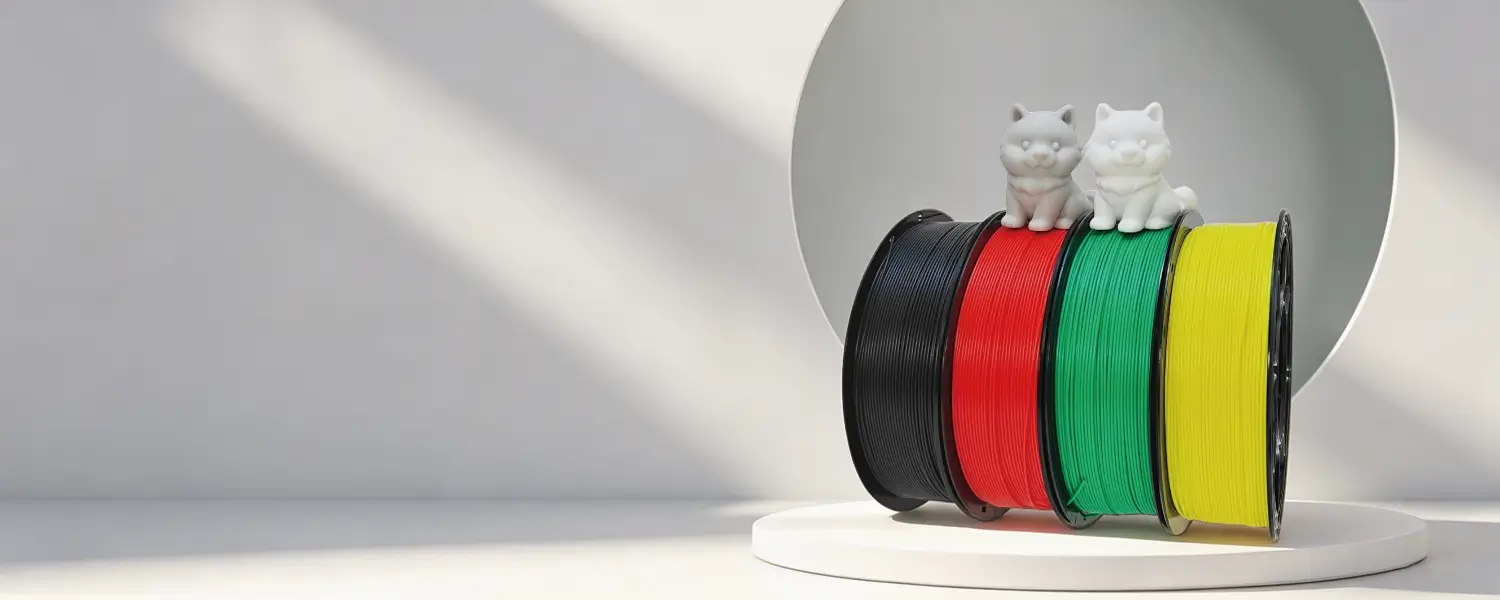
Need consistent PLA or ASA for production?
Browse our filament catalog or request samples.