
Choosing the right 3D printer filament is an important decision for any FDM project. Among the most widely used materials, PLA and ABS filament remain two of the most common choices.
Whether you are creating prototypes, functional parts, or production components, choosing between PLA and ABS filament can directly affect print quality, durability, and manufacturing efficiency.
So, which one should you load into your machine? Let’s break it down.
The Quick Verdict: Which One Should You Pick?
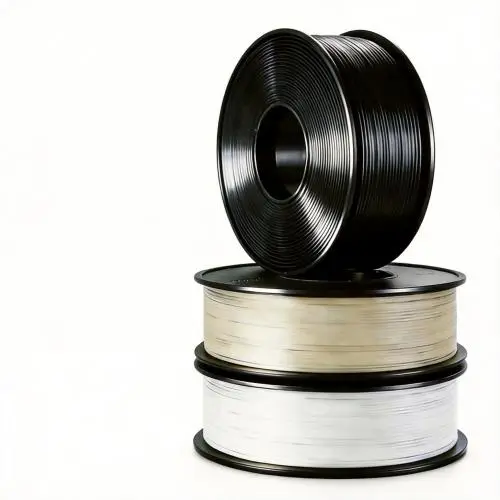
PLA filament is generally easier to print and has a lower environmental impact compared with petroleum-based ABS when properly managed. ABS filament is the veteran of the engineering world—tougher, heat-resistant, and better suited for functional parts.
The Selection Logic: Are you prioritizing aesthetic precision and low-maintenance production, or do you need functional durability and thermal stability?
Direct Recommendations:
- Choose PLA if: You are a beginner, or you are running high-volume visual prototypes, architectural models, or low-stress jigs. It’s perfect for environments without specialized ventilation and for businesses looking to minimize “print failure” overhead.
- Choose ABS if: You are producing end-use functional parts, automotive components, or enclosures for electronics. You must have an enclosed printer with a high-temperature heated bed, and be prepared for a steeper learning curve regarding bed adhesion and warping.
| Need | Recommended Filament |
| Easy printing | PLA |
| Beginner-friendly projects | PLA |
| Functional parts | ABS |
| Heat resistance | ABS |
| Industrial applications | ABS |
Quick Comparison Highlights
When evaluating PLA vs. ABS filament for a professional project, keep these high-level distinctions in mind:
- Ease of Scaling: PLA is much easier to manage across a 50-printer farm because it doesn’t require constant enclosure monitoring.
- Thermal Performance: ABS is better for many automotive and industrial applications where higher temperature resistance is required.
- Physical Resilience: ABS can take a hammer blow; PLA is more likely to crack under high impact.
- Chemical Post-Processing: ABS can be chemically welded or smoothed with acetone; PLA requires manual sanding or specialized coatings.
- Sustainability: PLA aligns better with “Green” corporate initiatives as it’s derived from renewable biomass.
Similarities of PLA and ABS Filament
While they behave differently on the build plate, PLA (Polylactic Acid) and ABS (Acrylonitrile Butadiene Styrene) share a fundamental DNA. Both are thermoplastics—materials that become pliable at a specific elevated temperature and solidify upon cooling.
In the context of 3D printing filament, both are the primary choices for FDM. They are standardized into 1.75mm or 2.85mm diameters and wound onto spools.
PLA vs. ABS Filament: Technical Comparison Table
For the engineers and buyers, here is the side-by-side data:
| Feature | PLA Filament | ABS Filament |
|---|---|---|
| Print Difficulty | Easy | Moderate to Hard |
| Nozzle Temperature | 190°C – 220°C | 220°C – 250°C |
| Bed Temperature | 40°C – 70°C (Optional) | 95°C – 110°C (Mandatory) |
| Enclosure Required | No | Yes (Essential for large parts) |
| Cooling Fan | 100% (High Airflow) | 0% – 20% (Low Airflow) |
| Shrinkage/Warping | Low | Higher |
| Glass Transition Temp | ~60°C (Softens easily) | ~105°C (Heat resistant) |
| Impact Resistance | Low (Brittle) | High |
| Surface Finish | Glossy/Semi-Matte/Silk | Matte/Satin |
| Post-Processing | Sanding/Painting | Sanding/Acetone Vapor Smoothing |
| Odor & Emissions | Low odor | Stronger odor, “plastic” smell (VOCs) |
| Typical Use | Prototyping, Props, Toys | Functional Parts, Automotive |
Material Profiles of PLA and ABS Filament
To optimize your production, you need to understand how these types of 3D printer filament behave under heat and pressure.
PLA Material Profile: The Precision Performer
PLA is a bio-based polyester commonly produced from renewable resources such as corn starch or sugarcane.
- The Advantage: Because it doesn’t shrink much, your parts will almost always be the exact size you designed in CAD. This “size accuracy” is why PLA is the go-to for parts that need to fit together without much post-print calibration.
- The Downside: Its rigidity is its weakness. PLA doesn’t “bend” before it breaks; it snaps. If you drop a PLA part, it might shatter. Also, if you leave it in a sunny window or a hot car, it will deform over months.
ABS Material Profile: The Industrial Workhorse
ABS is an engineering thermoplastic known for its toughness and heat resistance.
- The Advantage: Toughness. The “B” in ABS (Butadiene) is essentially a rubbery substance that gives the plastic impact resistance. It also has a much higher glass transition temperature, meaning it stays rigid in environments where PLA would turn into a noodle.
- The Downside: Thermal stress. ABS has a high “coefficient of thermal expansion.” As the plastic cools from 240°C to room temperature, it wants to shrink. If that cooling happens too fast or unevenly, the part will pull itself off the bed or crack between layers.
Printability and Hardware Requirements
If you are setting up a manufacturing space, the hardware requirements for PLA vs. ABS filament will dictate your initial investment.
The Low-Barrier Entry of PLA
PLA is incredibly forgiving. Because it has very low thermal expansion, it doesn’t shrink much when it cools.
- Bed: Doesn’t strictly need a heated bed, though 50°C helps with adhesion.
- Nozzle: Standard brass nozzles work perfectly.
- Cooling: Requires powerful part-cooling fans to “freeze” the plastic in place as it leaves the nozzle, which allows for clean overhangs and bridges.
The High-Spec Demands of ABS
To print ABS filament at a professional level, your hardware must be up to the task.
- The Enclosure: An enclosure traps the heat from the bed, creating a warm “micro-climate” (around 40-50°C) that prevents the ABS from cooling too quickly and warping.
- The Heated Bed: You need a high-wattage bed that can reach and maintain 100°C+ for hours.
- The Hotend: Many cheap printers use PTFE-lined hotends that degrade at 240°C. For ABS, you should use an “all-metal” hotend to ensure safety and consistency.
Warping, Shrinkage, and Dimensional Accuracy
Ever printed a part that was supposed to be 50mm but came out 49.2mm? That’s shrinkage.
ABS filament shrinks by about 1-2% as it cools. This makes it difficult to print parts that need to fit together perfectly unless you calibrate your “shrinkage factor” in your slicer software. Furthermore, the bottom corners of ABS parts also tend to lift (warping), which can ruin a 20-hour print.
PLA, in contrast, offers excellent dimensional accuracy due to its low cooling shrinkage. With a shrinkage rate typically below 0.2%, PLA maintains its shape well and minimizes the risk of warping or size deviation.
PLA vs ABS: Strength and Durability Comparison
In the PLA vs. ABS filament debate, the word “strength” is often misused.
Tensile Strength and Toughness
- PLA: High stiffness and tensile strength, but has limited toughness. It tends to fail suddenly under excessive stress due to its brittle nature.
- ABS: Lower stiffness, but better impact resistance and toughness. Before breaking, ABS can deform and show signs of stress whitening, allowing it to absorb more impact energy.
For example, if you hang a weight from a 3D-printed hook, PLA can actually hold more weight than ABS before it fails. It is a “stronger” material in terms of ultimate tensile strength. However, PLA is brittle. When it fails, it shatters like glass.
Temperature Resistance
- PLA begins to soften at 60°C (140°F). Parts made from PLA may soften or deform when exposed to heat sources such as hot car interiors, direct sunlight, or high-temperature environments.
- ABS holds its shape up to about 105°C (221°F). This makes it more suitable for functional components, automotive parts, and industrial applications where heat resistance is required.
Surface Finish and Post-Processing
Both PLA and ABS filaments can be used to produce attractive components, but their surface treatment methods are different.
The Aesthetic Variety of PLA
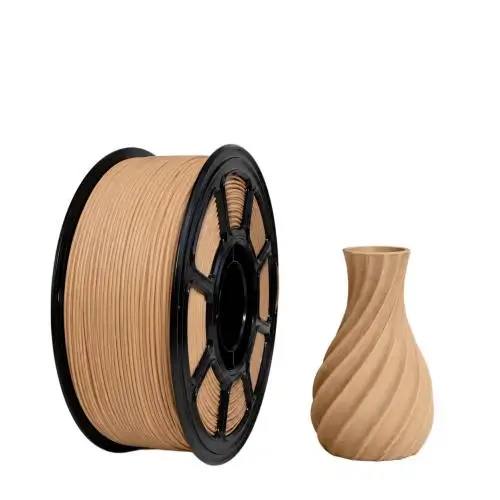
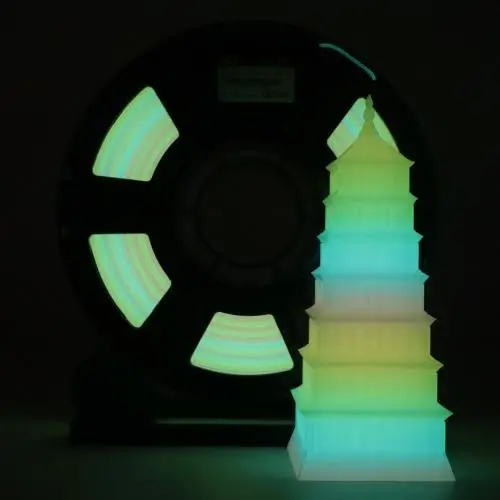
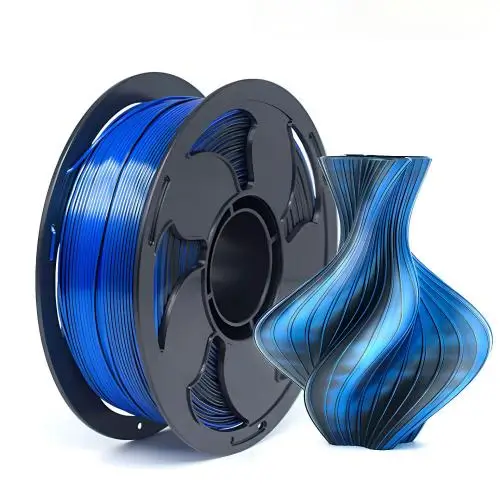
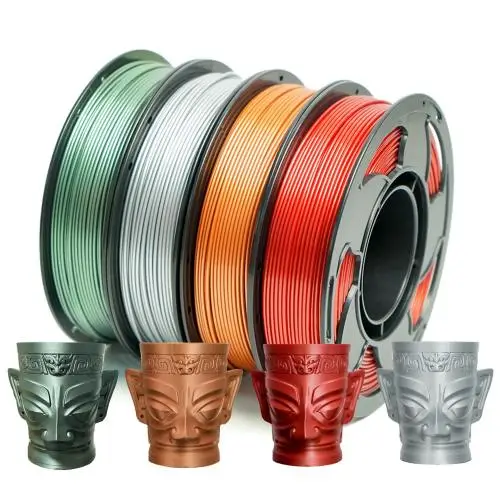
PLA comes in more “flavors” than any other 3D printing filament. You can get Silk PLA, Wood-filled, Metal-filled, Glow-in-the-dark, and even Color-changing PLA. While you can’t use acetone to smooth it, you can use specialized primers and acrylic paints to get a high-end finish.
Acetone Vapor Smoothing for ABS
ABS has a superpower: it dissolves in acetone. By placing a 3D-printed ABS part in a vapor bath of acetone, the outer “skin” slightly melts, erasing all layer lines. The result is create a smoother surface finish similar to injection-molded parts. It’s also much easier to sand and drill than PLA because it doesn’t melt and “gum up” the sandpaper as easily.
Application Scenarios: Where Should You Use What?
For businesses and print farms, matching the material to the use case is vital for the bottom line.
Common Application: Rapid Prototyping
Both PLA and ABS filament are commonly used for rapid prototyping, helping designers quickly test concepts, check dimensions, and refine product designs before final production.
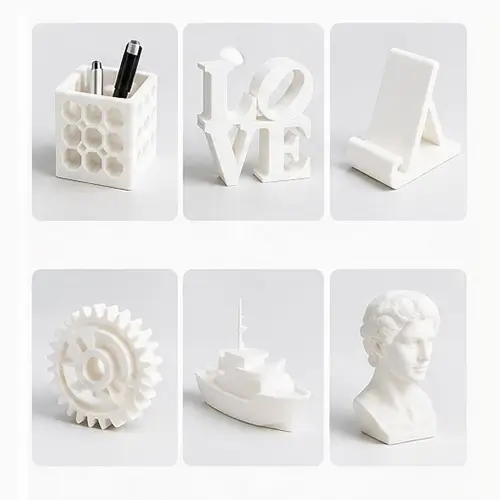
Use PLA for:
- Concept Models: When the client just needs to see the shape and size.
- Tooling/Jigs: For assembly line aids that don’t get hot and aren’t dropped.
- Medical Models: Anatomical models for visualization, education, and surgical planning purposes (not for implantation or direct medical use).
- Education and Training: High-volume printing in classrooms where ease of use and safety are paramount.
Use ABS for:
- Functional Enclosures: For electronic devices and components that might generate heat.
- End-Use Consumer Goods: Like custom tool handles, remote control housings, or protective gear.
- Automotive Prototypes: Parts that will be tested in real-world vehicle environments.
- Replacement Parts: Replacing broken plastic gears or clips in old machinery.
Environmental Friendliness & Safety
For many modern businesses, “sustainability” isn’t just a buzzword—it’s a requirement for contracts.
PLA is often marketed as “bio-plastic.” While it won’t decompose in your backyard, it is industrially compostable. It takes much less energy to produce PLA than it does to produce petroleum-based plastics. Furthermore, the lack of toxic fumes makes it the preferred choice for open-plan offices or schools.
ABS is a petroleum product. It’s not going to decompose anytime soon. While it is technically recyclable, most municipal recycling centers won’t take 3D-printed scraps.
Safety Warning: When printing ABS filament, the printing emissions of the plastic releases Ultrafine Particles (UFPs) and Volatile Organic Compounds (VOCs) like Styrene. In an industrial manufacturing setting, you must ensure your printers have carbon filtration or are vented to the outside. Do not run 20 printers in a small room with people without proper PPE or ventilation.
Cost and Production Efficiency
PLA filament is often the more cost-effective choice for high-volume 3D printing. Its lower material cost, easy printability, low failure rate, and compatibility with standard FDM printers help reduce waste, labor, and equipment expenses.
ABS filament usually requires a higher initial investment due to the need for enclosed printers, higher temperatures, and better environmental control. However, its superior impact resistance and heat stability make it a better long-term choice for functional parts and applications where durability is essential.
Frequently Asked Questions (FAQ)
In terms of “not breaking when dropped,” yes, ABS is stronger. In terms of “how much weight it can hold before stretching,” PLA is actually stronger. For most functional business uses, ABS is considered the “tougher” material.
Standard PLA filament is not automatically a food-safe filament. While PLA is bio-based, layer lines and additives can affect food-contact safety. For commercial use, always choose certified food-safe materials and follow proper processing guidelines.
Mainly because of “thermal contraction.” ABS wants to shrink as it cools. Without a heated enclosure to keep the part warm until the very end of the print, different layers will shrink at different rates, leading to cracks and warping.
Yes. PETG filament offers a balance between PLA and ABS. It offers much of the ease-of-use of PLA but with the heat resistance and impact strength that approaches ABS. However, it doesn’t sand or finish as well as ABS.
Conclusion
In the PLA vs. ABS filament debate, there is no ultimate winner—only the right tool for the job.
For the modern print farm or industrial manufacturing facility, the trend is clear: use PLA filament for everything you possibly can to maximize uptime and minimize waste. Save the ABS filament for those specific engineering challenges where heat, impact, and chemical smoothing are non-negotiable.
Looking for reliable PLA or ABS filament for your production needs? Choose a 3D filament supplier that provides consistent diameter tolerance, material quality, and batch-to-batch stability.