
Introduction
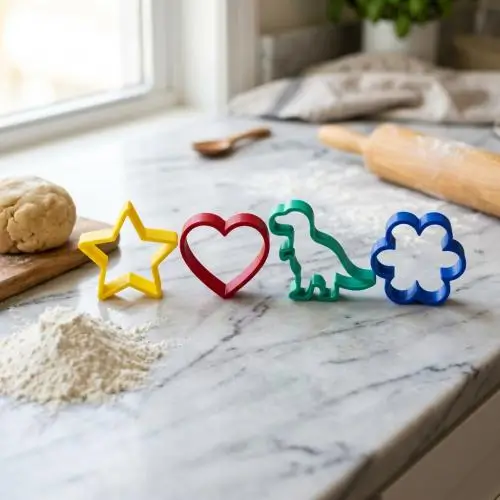
Food-safe 3D printing filament is now behind a growing range of kitchen and food-related applications—from cookie cutters and cake stamps to custom chocolate molds and utensils.
But here’s the critical point: safety doesn’t end with choosing a food-grade filament. It depends on the entire process—printing conditions, post-processing, and how the final part is actually used.
This guide walks you through the complete food-safety chain, from material selection and printer settings to post-processing and real-world use. If you run a print farm, bakery, or food business, use this as your roadmap to stay compliant and keep your customers safe.
Food Safety Certifications and Compliance Standards
When a manufacturer claims their products is “food-grade,” they are usually referring to two major regions:
- The European Gold Standard: EU (EC) No 1935/2004 & 10/2011
Regulation (EC) No 1935/2004 states that any material intended to come into contact with food must not transfer its constituents to food in quantities. Because they could endanger human health or change the food’s composition.
Then there is (EC) No 10/2011, which focuses specifically on plastics. It lists “authorized substances” (monomers and additives) that can be used in manufacturing. If your 3D filament doesn’t mention these codes, it hasn’t been vetted for the European market.
- The US FDA Regulations
In the United States, the FDA regulates “Food Contact Substances” (FCS). When you see PLA filament or PETG filament marketed as FDA-compliant, it typically means the raw resin pellets used to make the filament are safe. However, the FDA does not “approve” the final 3D printed part—that responsibility lies with the manufacturer.
Migration Testing: The Core of Compliance
Migration testing evaluates the risk of harmful substances transferring from the plastic to the food. This isn’t just about the “base” plastic; it includes the dyes, the flow-enhancers, and the flame retardants. A certified food safe 3D printing filament has been tested to ensure that even under heat or acidity, it doesn’t “leak” chemicals into your dinner.
Usage Limitations
Even certified materials have limits. Most are only tested up to a certain temperature (e.g., 40°C or 100°C). Furthermore, many are not certified for food types with high alcohol content (>15%) or heavy fats, as these can act as solvents and pull chemicals out of the plastic.
Why 3D Printed Parts Are Not Inherently Safe – Two Root Causes
1. Layer-Line Micro-Porosity
Imagine a 3D print under a microscope. It’s not a solid block; it’s a stack of tiny plastic “logs.” Between those logs are microscopic gaps and valleys. This is known as layer-line micro-porosity.
These gaps create capillary channels. If you use a printed spoon in a bowl of soup, the liquid gets sucked into these channels by capillary action. Once the soup is inside the print, it’s game over. Routine washing, alcohol wipes, or bleach sprays cannot eliminate microorganisms hidden deep inside.
2. Printer Hardware Contamination
Your printer is likely full of heavy metals. Most standard nozzles are made of brass. However, to make it easy to machine, manufacturers add lead (usually around 2%).
When you heat your food safe 3D printing filament to 200°C+ and push it through a brass nozzle, trace amounts of lead can migrate into the plastic. If that part touches acidic food (like tomato sauce) or oily food, that lead can leach into the food.
It’s not just the nozzle, either. Some “hardened steel” nozzles actually have brass cores for better heat conductivity. Even the PTFE (Teflon) tubes in your hot-end can release harmful substances if they degrade at high temperatures.
Full-Process Food Safety Assurance Measures
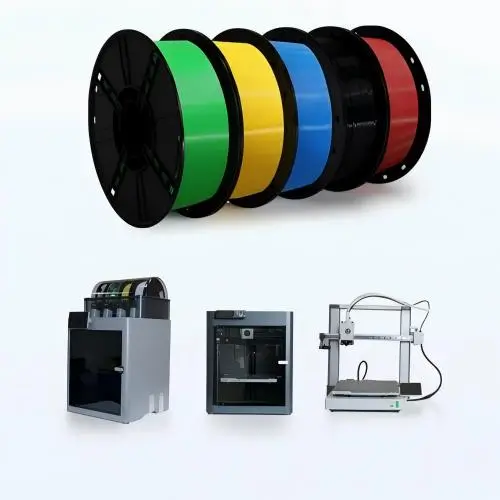
1. Printer Hardware Preparation
You cannot use a “general purpose” printer for food-safe parts without some serious upgrades.
- Stainless Steel Nozzles: Replace all brass nozzles with food-grade stainless steel (304 or 316 grade). They are harder to heat, but they are lead-free.
- Inspect the Hot-End: Check the heat break and the extruder drive gears. If any part in the filament path is brass, replace it.
- Upgrade the Bowden Tube: If your printer uses a PTFE tube, replace it with a high-quality, high-temp version like Capricorn XT. This reduces the risk of chemical off-gassing.
- Sterilize the Build Plate: Remove all hairspray, glue sticks, or PEI residues. Clean the plate with 99% Isopropyl Alcohol (IPA) before every food-safe print.
2. Printing Parameter Optimization
- Layer Height: Set this to 0.1mm or 0.12mm. Thinner layers mean tighter bonds and shallower “valleys,” which reduces the depth of the bacteria channels.
- Wall Line Count: Increase this to 5–8 lines to form a dense outer shell.
- Infill Density: Aim for 40–60%. While you want a solid exterior, a higher infill density reduces the total volume of “trapped air” inside the part.
- Printing Temperature: Print at the higher end of the filament’s recommended range. This promotes better “interlayer fusion,” essentially melting the layers together more effectively to seal gaps.
- Cooling Fan: Drop the fan speed to 30–50%. Excessive cooling will cause the plastic to shrink rapidly, which creates micro-cracks between layers.
3. Post-Processing and Sealing Techniques
If a part is meant to be reused, you must seal the surface. There are two main ways to do this.
Chemical Smoothing:
- ABS Filament: You can use acetone vapour to melt the outer layers into a glass-smooth finish. It should be noted that acetone is toxic, and the parts must undergo “thermal degassing” (low heat ventilation) for weeks to ensure that all solvents is gone before it touches food.
- PETG Filament: It does not respond to common solvents and smoothing may degrade the part.
- PLA Filament: Can be smoothed with ethyl acetate, but this is hazardous and often results in a “gummy” surface that is hard to clean. It’s generally not recommended for home or small business use.
Food‑Grade Coatings (The Recommended Method):
The most reliable way to make a 3D print safe is to “shrink-wrap” it in a food-grade resin.
- The Procedure: Sand the part (220 to 400 grit) → Apply a thin coat of FDA-compliant, two-part food-grade epoxy (like Max CLR) → Let it cure for 48 hours → Repeat.
- The Result: A smooth, non-porous, waterproof surface that can actually be washed and reused.
Food Safe Filament for 3D Printing: PLA vs PETG vs ABS
| Property | PLA / PLA+ (certified) | PETG | ABS |
| Base resin food-safe | Yes (PLA+ needs specific certification) | Yes | Yes |
| Heat resistance | Soften at 55–60°C | 70–80°C | 95–105°C |
| Layer adhesion | Medium | Good | Excellent |
| Porosity | High | Medium | High (can be acetone-smoothed) |
| Chemical smoothing feasibility | Limited (solvents hazardous) | Not possible (degrades) | Effective (acetone) |
| Dishwasher suitability | ❌ Not safe | ⚠️ Only on Eco/Low-temp | ✅ Yes (with coating) |
| Recommended coating | Required for reuse | Recommended for reuse | Required for reuse |
| Best For | Single-use items | General food tools | High-heat environments |
PLA Filament: The “Eco” Choice
PLA filament is made from corn starch or sugarcane. While the base material is “safe,” PLA is very porous and has terrible heat resistance. If you put a PLA cookie cutter in a dishwasher, it will warp into a plastic puddle. It’s best used for items that touch dry food once and are then discarded.
PETG Filament: The Professional Standard
PETG filament is essentially the same plastic as your water bottles but with “Glycol” added to make it easier to print. It’s naturally more water-resistant and tougher than PLA. It doesn’t become brittle over time and can handle warmer water during cleaning. For most print farms, PETG is the “sweet spot” for food-related projects.
ABS Filament: The Industrial Specialist
Standard ABS filament is a nightmare for food safety because of the fumes it releases. However, if you use a certified food-grade ABS and perform acetone smoothing, you get a part that is incredibly durable and heat-resistant.
Safety Recommendations for Different Scenarios
| Application Scenario | Recommended Material | Rationale & Precautions |
|---|---|---|
| Single‑use cake stamps / moulds | PETG filament | Short contact time (seconds). Bacteria risk is negligible. No coating needed. |
| Reusable cookie cutters | PETG or food‑grade PLA + food‑grade epoxy coating | Reuse requires sealing micro‑channels; ensure full cure of coating |
| Cutting raw meat or fish | Do not use 3D‑printed tools | Raw proteins easily penetrate porous structure, causing severe cross‑contamination |
| Long‑term food storage or fermentation | Use metal or glass containers instead | Prolonged contact with moisture and organics – no remedial measure can eliminate internal growth risk |
| Dishwasher safe parts | Food-grade ABS | Standard 3D filament will fail. Only food-grade ABS or annealed PLA+ can handle the heat. |
Frequently Asked Questions (FAQ)
Q: Is PETG filament food safe?
PETG is one of the most “food-friendly” plastics because it doesn’t absorb water like PLA. However, “food safe” refers to the system. If you print PETG with a brass nozzle and leave the layer lines exposed, it is not safe for repeated use. Use it for single-use or coat it in epoxy for long-term safety.
Q: Is PETG safer than PLA for food?
Generally, yes. PETG has better chemical resistance (it won’t break down when touching acidic foods) and higher heat resistance. It’s also “tougher”—it won’t chip or flake off into the food like brittle PLA can.
Q: Can I put any PLA in the dishwasher?
No. Standard PLA filament will deform at around 55°C. Most dishwashers run much hotter. However, some “High-Temp PLA” can be “annealed” in an oven after printing to increase its heat resistance. Always check the manufacturer’s spec sheet before making promises to your customers!
Q: What’s the deal with “Bio-based” vs. “Food-Safe”?
Just because PLA filament is made from corn doesn’t mean it’s safe to eat. “Bio-based” just tells you where the plastic came from; “Food-safe” tells you it won’t leach toxins into your body. Always prioritize the latter.
Conclusion
Food safety depends on the synergy of material, hardware, printing parameters, post‑processing, and usage.
- For single‑use, low‑risk items (e.g., cake stamps): PETG is the most cost‑effective choice.
- For reuse: a food‑grade coating is mandatory, and avoid contact with raw meat.
Always be aware that even if all steps are compliant, 3D‑printed parts are still not suitable for long‑term direct food contact.
3D printing offers a world of customization for the culinary arts. By following this guide, you can ensure that your food safe 3D printing filament isn’t just a marketing label, but a promise of quality and safety.