
Introduction
Are you looking for a 3D printing material that is more durable than PLA, easier to print than ABS, and without the harsh fumes?
This is exactly why PETG filament has entered the spotlight. As one of the most popular materials in recent years, it perfectly bridges the gap between PLA and ABS. Whether you are an individual maker, an OEM/ODM brand developing custom products, or a distributor looking to stock 3D filament bundle, understanding PETG materials is essential.
This article will walk you through the definition, core properties, comparative advantages, applications, and essential printing tips for PETG filament from the ground up.
What is PETG Filament? A Look into Its Chemistry
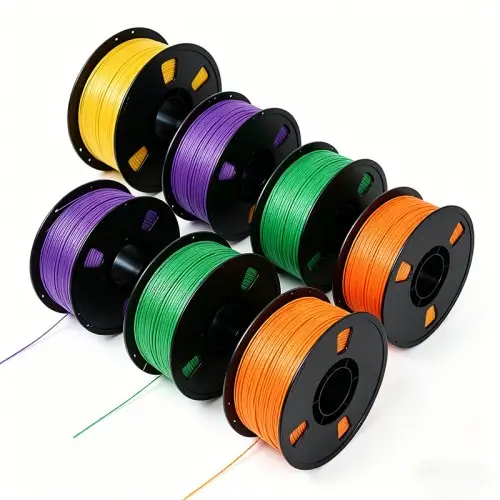
To really understand PETG filament for 3D printing, it helps to look at where it comes from.
Full Name and Origin
The acronym PETG stands for Polyethylene Terephthalate Glycol-modified.
If the first part of that name sounds familiar, it should. PET is the exact same thermoplastic used to make single-use water bottles, soda containers, and food packaging all over the globe. It’s recyclable, clear, and incredibly common.
However, raw PET isn’t great for 3D printing. When raw PET cools down during extrusion, it crystallizes rapidly. This makes it brittle, prone to cloudiness, and extremely difficult to print cleanly through a tiny hotend nozzle.
That’s where the “G” (Glycol) comes in. The added glycol acts like an internal shock absorber—eliminating brittleness, boosting impact resistance, and giving the raw material the exact fluidity and toughness required for smooth 3D extrusion.
[ Standard PET Plastic ]  --->  Brittle, crystallizes quickly, hard to print
                 +
        [ Glycol Modification ]
                 =
    [ PETG 3D Printing Filament ] ---> Tough, flexible, ultra-layer-adhesive, easy to print
Why is PETG Filament So Popular in 3D Printing?
PETG filament for 3D printing changed the game by offering a true middle ground. It combines the effortless printability and low thermal shrinkage of PLA with the high impact resistance, temperature tolerance, and chemical durability of ABS. Add in a nearly odor-free printing experience, and it’s easy to see why PETG materials have become the baseline standard for functional manufacturing.
Learn more about PLA printer filament: The Basics of PLA Filament for 3D Printing.
PETG Filament’s Core Properties
When evaluating PETG printer filament for your next batch of production parts or shop tools, understanding its mechanical, thermal, and visual traits helps you decide if it’s the right fit.
1. Mechanical Properties: A Balance of Strength, Toughness & Impact Resistance
PETG filament exhibits outstanding flexural strength and impact resistance. Instead of shattering under sudden shock or heavy weight, it yields slightly and absorbs energy.
- High Layer Adhesion: Because PETG materials melt into a viscous, sticky liquid, adjacent layers fuse together far more aggressively than PLA or ABS. Delamination (layers splitting apart) is exceptionally rare with well-tuned PETG 3D printing filament.
- Impact Resistance: Highly resistant to drops, bangs, and physical abuse.
- Ductility: When stressed beyond its yield point, PETG bends before it breaks, making it a far safer choice for structural components.
2. Thermal Properties & Chemical Resistance
If you’ve ever left a PLA print inside a car on a hot summer afternoon, you know the heartbreak of returning to a melted puddle of deformed plastic.
- Glass Transition Temperature (Tg): PETG filament typically has a glass transition temperature around 80°C to 85°C (compared to PLA’s ~55-60°C). This means it can easily withstand ambient outdoor summer heat, warm engine bays, or hot water washing without warping or softening.
- Chemical Resistance: PETG is remarkably inert. It resists breakdown from water, mild acids, alkalis, salts, and oils. This makes it a preferred choice for outdoor gear, garden fixtures, and industrial liquid storage components.
3. Appearance & Sensory Characteristics
- Optical Clarity & Glass-Like Sheen: In its natural, uncolored state, PETG filament is naturally translucent. When printed with thicker layer heights and high temperatures, it lets light pass through beautifully, producing a “stained glass” or ice-like aesthetic.
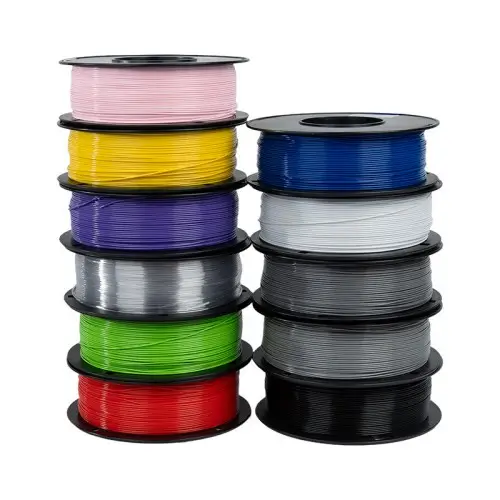
- Vivid Colors: When colorants are added, PETG produces rich, glossy finished prints that look professional right off the build plate.
- Low Odor & Safe Printing: Unlike ABS or ASA, which off-gas strong styrene odors that require heavy ventilation, printing with PETG printer filament emits virtually no noticeable smell. This makes it ideal for indoor home setups, office environments, and large print farms housing hundreds of active machines.
PETG Filament Pros & Cons
No 3D printing material is 100% perfect for every scenario. To get the best results—and save yourself from failed prints—you need to weigh the huge advantages against a few known material quirks.
Pros | Cons |
|---|---|
| • Extremely strong layer adhesion | • Prone to stringing and “cobwebs” |
| • Virtually zero warping (no enclosure) | • Highly hygroscopic (absorbs moisture) |
| • Low odor & safe for indoor printing | • Extreme bed adhesion (can damage PEI) |
| • High impact resistance & flex strength | • Scratches more easily than PLA |
Four Pros You Can’t Ignore
- Extremely Strong Layer Adhesion: If your part needs to take a beating, hold a load, or handle torque, PETG filament for 3D printing delivers near-isotropic strength compared to other FDM materials.
- Virtually No Warping: You don’t need a heated chamber or fully enclosed 3D printer to make large, flat parts. PETG stays flat on the build plate during cooling.
- Safe and Low-Odor Workflow: Ideal for print farms operating in shared workspaces or educational environments where heavy fumes are a deal breaker.
- Tough & Long-Lasting: Finished parts resist brittle fracture over time, surviving UV exposure, weather fluctuations, and mechanical wear far better than standard PLA.
Three Challenges Beginners Must Know
1. The “Stringing” Star
Because molten PETG is naturally viscous and sticky, it loves to ooze out of the nozzle during travel moves. If your retraction settings, printing temperature, or travel speeds are slightly off, you’ll end up with fine, spiderweb-like strings across your print.
2. A “Moisture Sponge” (Hygroscopic)
PETG materials absorb atmospheric humidity much faster than PLA. When wet PETG filament hits a hot nozzle, the trapped water boils into steam, causing popping noises, poor surface finish, weak layer bonding, and extreme stringing.
3. The Bed “Over-Adhesion” Dilemma
While some plastics refuse to stick to the print bed, PETG sticks too well. If you print PETG filament directly onto smooth PEI steel sheets or clean glass, it can weld itself to the surface. When you pull the part off, it might rip up chunks of your PEI coating or chip glass right out of the bed.
What are PETG Prints Used for?
Thanks to its unique balance of thermal durability, mechanical flexibility, and chemical resistance, PETG 3D printing filament is used across an enormous variety of industries and personal projects.
Mechanical & Industrial Functional Parts
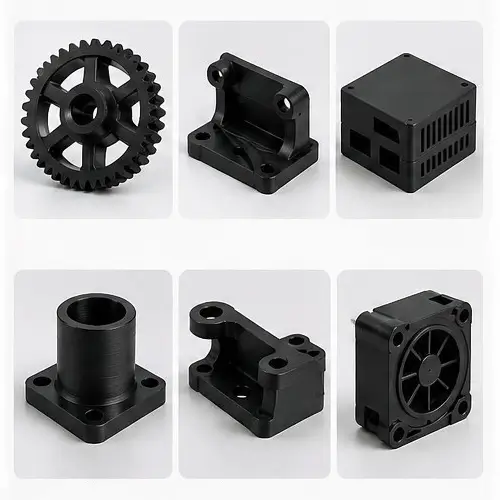
Print farms and OEM manufacturers rely on PETG filament to produce end-use structural components, custom assembly line jigs, and functional prototypes that must undergo repeated stress:
- Drone frames and motor brackets
- Robotic grips, gears, and pulleys
- Wall-mounted tool hooks, battery caddis, and workshop storage
- Electronics enclosures and custom junction boxes
Outdoor & Wet Environment Gear
Unlike PLA, which can degrade when exposed to constant moisture and UV rays, PETG printer filament thrives outdoors:
- Garden irrigation connectors, hose splitters, and custom nozzles
- Weatherproof housings for outdoor IoT sensors and cameras
- Aquarium filter nozzles, pump brackets, and tank dividers
- Marine and kayaking accessories
Daily Items & Creative Goods
Because PETG materials look great and can be semi-transparent, artists and product designers use them for visual impact:
- Water-resistant vases and planters
- Translucent lampshades, LED light diffusers, and sign channels
- Cell phone stands, tablet mounts, and desk accessories
- High-durability cosplay props and armor pieces that won’t snap during transport
A Quick-Start Guide to Printing PETG for Beginners
Printing with PETG filament doesn’t require a high-end industrial machine, but it does demand slightly different habits than printing PLA. Follow these core parameters to nail your first print.
Key Printing Parameter Ranges
| Parameter | Recommended Setting Range | Notes |
| Nozzle Temperature | 230-250°C | Start at 240°C and adjust based on stringing vs layer strength. |
| Bed Temperature | 70-85°C | Essential for proper initial layer grip. |
| Print Speed | 40 – 60 mm/s | PETG likes to be laid down deliberately; don’t rush it on stock setups. |
| Cooling Fan Speed | 30% – 50% | Lower fan speeds maximize layer strength; turn up to 80% for overhangs. |
| First Layer Height | 0.24mm – 0.28mm | PETG prefers slightly less nozzle “squish” than PLA. |
| Retraction Distance | Direct Drive: 1-3mm / Bowden: 4-6mm | PETG prefers slightly less nozzle “squish” than PLA. |
Two “Never Forget” Pro Tips
Pro Tip 1: Storage & Filament Drying
Because PETG filament for 3D printing absorbs air moisture like a sponge, keeping it dry is non-negotiable.
- Always store unused spools in a vacuum-sealed bag or sealed dry box filled with fresh silica gel desiccant.
- If your filament has been sitting out in the open and starts popping, sputtering, or stringing aggressively, dry it in a dedicated filament dryer at 50-60°C for 4 to 6 hours before printing.
Pro Tip 2: Bed Preparation (Protect Your Build Plate)
To prevent PETG printer filament from permanently fusing to your print surface:
- Apply a thin, even layer of standard washable glue stick, hairspray, or dedicated release agent onto smooth PEI or glass build plates.
- Note: The glue stick doesn’t just help the print stick—it acts as a release layer so you can pop the finished part off safely without damaging your print bed!
Frequently Asked Questions About PETG Filament
It is safe during printing with almost no toxic fumes released.
PET (Polyethylene Terephthalate) is standard, un-modified plastic commonly used in disposable bottles.
PETG is a glycol-modified version of PET that eliminates its brittleness, making it suitable for 3D printing.
The raw material may be food-contact grade, but the layer lines in FDM prints trap bacteria, and the nozzle may release trace harmful substances, so it’s not recommended for direct food contact.
In 95% of cases, no enclosure is required to print PETG filament. Because PETG experiences very low thermal contraction as it cools, it warps far less than ABS or PC. You can print large components successfully on an open-frame printer, provided there are no cold, direct drafts blowing across the build plate.
Yes, but it requires a bit more elbow grease than PLA. Because PETG is flexible and tough, dry sanding it by hand can cause the surface to gum up rather than abrade smoothly.
Conclusion
PETG filament is currently the most comprehensive and balanced consumer 3D printing material, the “all-rounder” every maker must master from beginner to advanced levels.
By combining the direct printing properties of PLA with the heat resistance, toughness and chemical durability of ABS, PETG has become an indispensable material in every manufacturer’s workshop and every print farm.
Now that you have all the core knowledge, the next step is to print it yourself! Pick a roll of PETG filament from us, and start your functional printing journey.