
Traditional plastic bags have long been a staple of the retail experience, yet their environmental cost—from plastic pollution to high carbon footprints—is no longer sustainable. In response, compostable shopping bags have emerged as a powerful alternative, enabling businesses to reduce emissions and embrace a truly green model.
However, transitioning to compostable options involves more than just swapping materials; it requires a strategic approach to ensure quality and compliance. Below, we outline the critical factors you should consider when selecting the best compostable bags for your brand.
What are Compostable Shopping Bags?
Traditional plastic bags are like that one bad houseguest who comes for a weekend and ends up staying for several centuries. Compostable shopping bags just don’t leave. They are specifically designed to be polite to the earth.
Compostable shopping bags are made from bioplastic materials—typically derived from renewable resources like corn starch, cassava, or sugarcane. The most important point is that they are entirely designed to break down into organic matter, water, and carbon dioxide in a composting facility.
The Magic of Bioplastics
Bioplastic shopping bags look like plastic, feel somewhat like plastic and perform like plastic. But they aren’t traditional petroleum-based plastic. Under the right conditions—usually high heat, moisture, and plenty of hungry microorganisms—these bioplastic shopping bags undergo a magical transformation, returning to the earth as nutrient-rich compost.
Dodging the Landfill Legacy
The absolute most important thing to remember here is that compostable shopping bags are not designed to be buried in landfills. In a landfill, nothing breaks down properly because there’s no oxygen. It’s a mummification chamber. By choosing compostable shopping bags, and encouraging your customers to compost them, you are actively ensuring these materials avoid the landfill trap. This breaks the cycle of continuous impact on our environment.
Types and Applications of Compostable Shopping Bags
When deciding how to choose the best compostable shopping bags, you have to match the bag to the job. Just like you wouldn’t use a heavy-duty boutique bag for a quick run to the corner store.
Compostable T-shirt Grocery Bags
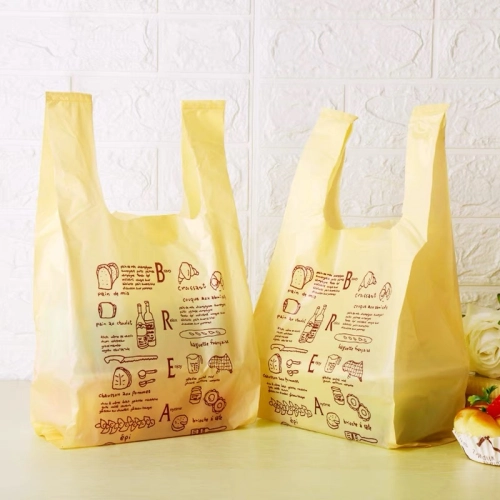
It’s got those two recognizable handles that look like a tank top. If you run a grocery store, this is your bread and butter.
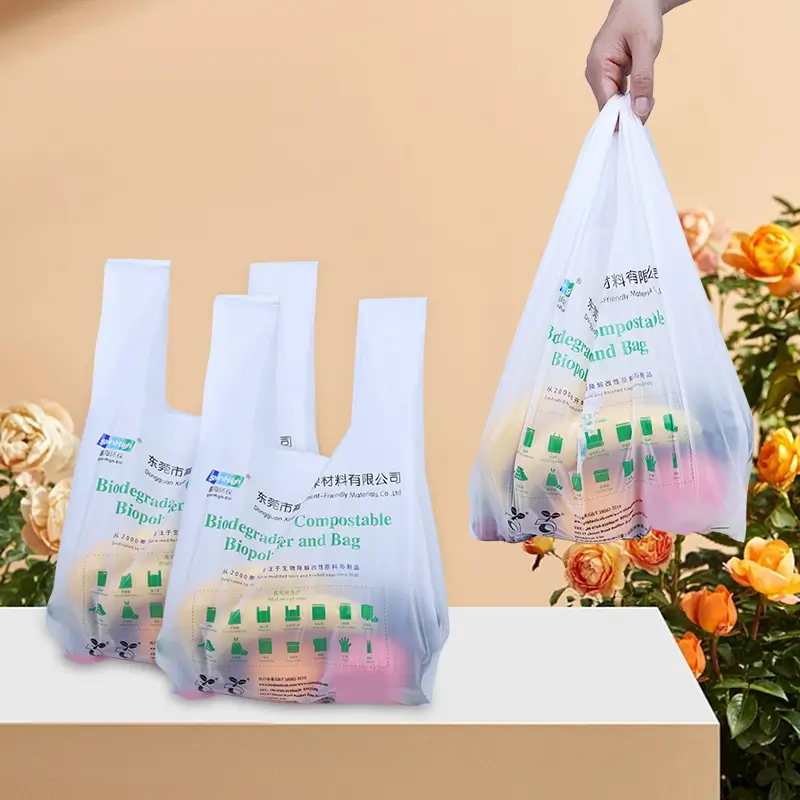
Compostable T-shirt grocery bags are the absolute workhorses of the checkout aisle. Customers love them because they are easy to carry, they hold a lot of awkwardly shaped items, and they are quick to pack. For grocery store businesses, these bags are relatively inexpensive compared to thicker boutique bags, but they send an immediate message to your shopper that you care about the planet.
Compostable Die-Cut Handle Bags for Retail and Boutique
If you supply or run a boutique shops, bookstores, or clothes stores, a T-shirt bag just feels a little casual. You may want something with a bit more sophistication.
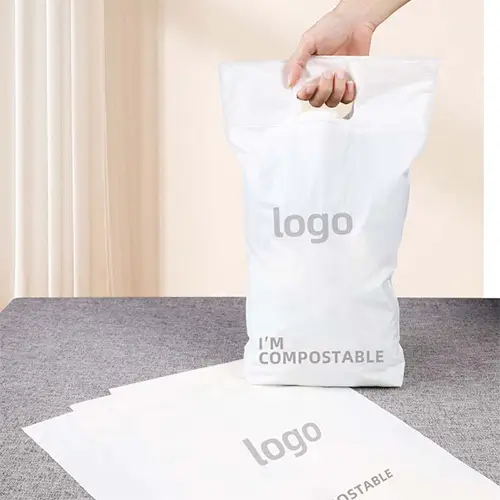
Compostable die-cut handle bags feature a clean, oval hole punched right into the top for the handle. These bags for retail and bouquets are incredibly popular because they sit flat, display printed logos beautifully, and offer a premium unboxing experience. If a customer is buying a high-end candle, compostable die-cut handle bags are absolutely the way to go.
Extended Reading: Guide to Customize Compostable Die-Cut Handle Bags.
Compostable Soft Loop Handle Bags
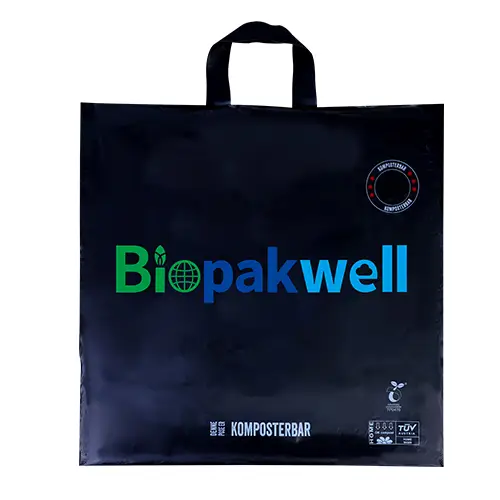
However, what if you need something a little more robust than a die-cut bag? Sometimes the cut out handle can stretch if the items are heavy. This brings us to compostable soft loop handle bags, which feature thick, flexible loops attached to the top of the bag.
They feel comfortable in the hand, even when carrying heavy boxes or multiple items. For higher-end grocery items, specialty markets, or clothing retailers, compostable soft loop handle bags provide a reusable feel (even if their ultimate destination is the compost bin). They just exude a slightly higher perceived value.
Key Factors to Consider Before Stocking Up
You know what types are out there. But how do you actually look at a spec sheet and decide? Here are the key factors you must absolutely consider when choosing the best compostable shopping bags for your business.
Material Composition
You need to know what your compostable shopping bags are made of. Look for blends of PBAT (polybutylene adipate terephthalate) and PLA (polylactic acid), usually mixed with cornstarch. PLA gives the bag its rigidity, while PBAT gives it flexibility. You want a good balance. If the manufacturer is vague about the material composition, run for the hills. You want to see clear, transparent material breakdowns.
Durability and Strength
Have you ever been walking to your car, carrying a bag of groceries, and suddenly the bottom completely gives out? Suddenly, your tomatoes are rolling down the driveway into the street.
When choosing compostable shopping bags, durability and strength cannot be compromised. Yes, they are designed to break down, but they shouldn’t break down while your customer is carrying a six-pack of soda. You need them to be strong. Look for compostable plastic bags that boast a high micron thickness. Usually, anything above 20-25 microns for a standard T-shirt bag will offer decent puncture resistance and load-bearing capacity.
Shelf Life
Compostable shopping bags have an expiration date. If you are a distributor, you need to manage your inventory carefully. You don’t want them breaking down on the shelf. If you store them too long in a hot, humid warehouse, they literally will degrade.
Typically, the shelf life of compostable grocery bags is about 12 months. When buying in bulk, make sure you are only ordering what you can reasonably sell or use within a year. And store them in a cool, dry place away from direct sunlight. Heat and moisture are the enemy of un-used compostable shopping bags.
Size and Design
A bakery needs wide, bottom-gusseted bags to hold cake boxes flat. A convenience store needs small, quick bags for a soda and a bag of chips. Make sure the manufacturer offers a variety of sizes.
Also, consider the design and printability. You want to print your logo or your client’s logo on the bag. Make sure the compostable shopping bags use eco-friendly, soy-based or water-based inks. It completely defeats the purpose to have the perfectly good compostable bag covered in toxic, heavy- metal ink.
Cost vs. Value
Biodegradable compostable bags are going to cost more than traditional plastic bags. There is no getting around it. The raw materials cost more, the manufacturing process is more specialized, and the certifications cost a pretty penny.
But you have to weigh cost vs. value. Being penny wise and pound foolish isn’t going to help you here. Customers are literally choosing where to shop based on a store’s environmental footprint. A slight increase in your packaging overhead can result in massive boosts to customer loyalty and brand reputation. When you provide high-quality compostable shopping bags, you aren’t just giving them a bag; you are giving them peace of mind.
Certifications to Trust
This is the most critical part of this entire guide. Please pay attention to this part. The market is flooded with fake “biodegradable” bags.
In order to buy true compostable shopping bags, you are absolutely must look for an alphabet soup of verified certifications.
Here are the heavy-hitter certifications to trust.
BPI (Biodegradable Products Institute)
If you are operating in the United States, BPI is the gold standard. When you see the BPI logo on compostable shopping bags, it means the product has been tested in an independent lab to ensure it break down safely in a commercial composting facility, leaving no toxic residue behind.
Extended Reading: What are BPI Certified Compostable Bags?
TÜV Austria (OK Compost Industrial & OK Compost Home)
TÜV Austria is a globally recognized certification body. They offer two main labels you should look for:
- OK Compost Industrial: This means the ploy bags will break down in industrial composting facilities.
- OK Compost Home: It means the bags will break down in a standard backyard compost bin. Home compost bins don’t get as hot as industrial ones, so if a bag is “OK Compost Home” certified, it is highly degradable.
Seedling Logo
If you are buying or selling in Europe, you will see the Seedling logo. This little sprout indicates that the product complies with the strict European standard for industrial compostability. It’s a very trusted mark that guarantees the compostable plastic bags will turn into nice, clean dirt.
EN 13432
EN 13432 is the European equivalent. When a supplier says their compostable shopping bags “meet EN 13432,” it means the bioplastic shopping bags will degrade at a rate comparable to known compostable materials (like paper or yard trimmings).
AS 5810 and AS 4736 (Australia)
AS 4736 is the Australian standard for industrial composting. Interestingly, this standard includes an earthworm toxicity test, which is pretty cool!
AS 5810 is the Australian standard for home composting.
If your compostable shopping bags pass these Australian standards, you’ve got yourself a seriously high-quality, earth-friendly product.
Conclusion
For distributors and retailers alike, the right compostable bag is a powerful tool for change. To get it right, you need more than just a “green” label. You need materials that offer real durability—because no one wants their groceries ending up on the pavement. You also need to be mindful of shelf life to ensure your stock stays fresh in the warehouse. Most importantly, always look for the highest certifications to guarantee authenticity.
Choosing premium compostable bags isn’t just a business transaction; it’s a leadership move. It shows your customers that you care about the future of our planet, one bag at a time.