
Introduction
For brand marketing, customized packaging is an indispensable part. Among them, for the retail business, handle bags can carry brand logos, highlighting the commercial value.
The customization of compostable die-cut bags is not an easy task. Various factors need to be taken into consideration, such as material, performance, size, color, printing, and certification.
This guide will walk you through everything you need to know to customize the perfect compostable die-cut handle bags for your brand.
What are Compostable Die-Cut Handle Bags?
Definition
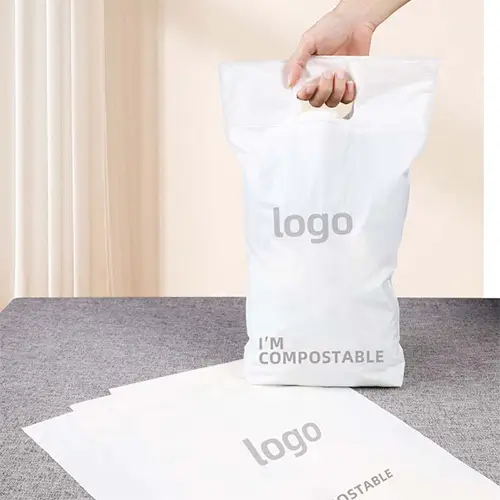
Die-cut handle bags are flat carrying bags where the handle is “punched” or cut directly out of the bag’s material. The handle is a kidney or oval shape near the top. Unlike “T-shirt” bags (the ones you get at the grocery store with the two big loops), die-cut bags offer a cleaner, flatter profile. They are the go-to for boutiques, trade shows, and clothing retailers because they look neat and display logos beautifully.
The “Compostable” Difference
Traditional bags are made of polyethylene (PE)—a fossil-fuel plastic that lasts forever. On the other hand, compostable die-cut handle bags are manufactured using biodegradable polymers.
Typically, this is a blend of:
- PBAT: Provides toughness and flexibility.
- PLA (Polylactic Acid): Provides stiffness and strength.
- Cornstarch: Acts as a natural filler and accelerates biodegradation.
End-of-Life: Returning to the Earth
These bags are designed to break down into non-toxic components (water, CO2, and biomass) in composting environments, leaving no microplastics behind. It’s a circular lifecycle that appeals heavily to the modern, eco-conscious consumer.
Features of Compostable Die-Cut Handle Bags
Aside from saving the planet, compostable die-cut handle bags have some unique physical characteristics that might actually elevate your brand image.
- Eco-Friendly Material: They are made from renewable plant resources and biodegradable polymers.
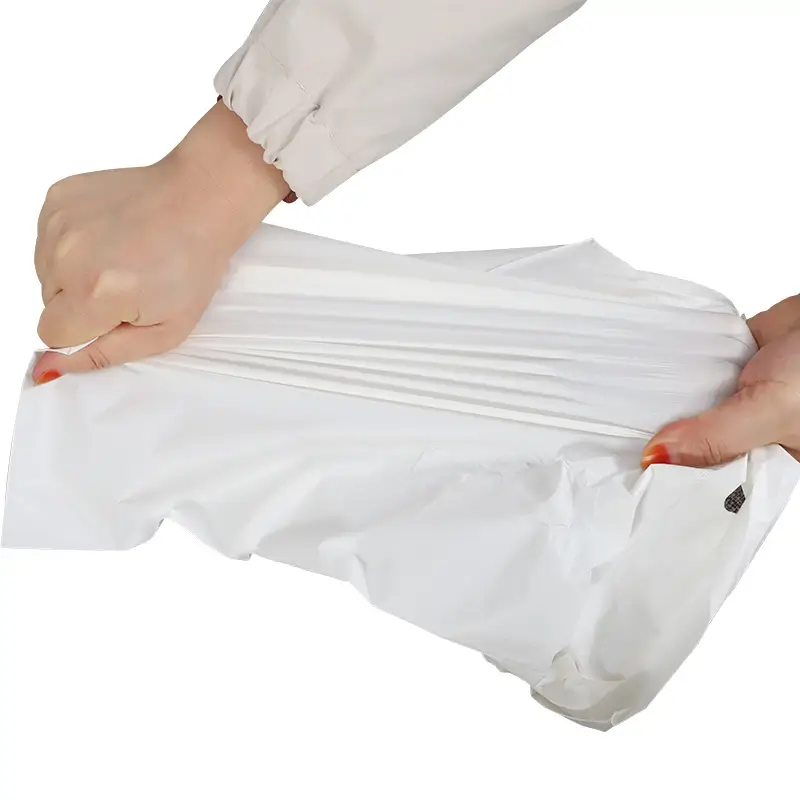
- Soft & Premium Texture: Compostable films often have a “soft-touch” matte finish that feels more premium than crinkly traditional plastic.
- Durable Construction: Despite being eco-friendly, modern bio-blends offer excellent tensile strength and puncture resistance. So these bags are suitable for retail, boutiques, and light grocery use. Whether you are packing a silk scarf or a stack of hardcover books, there is a thickness grade that can handle it.
- Certified Compliance: Legitimate compostable handle bags carry serious certifications like OK Compost, BPI, or EN13432, ensuring they meet international biodegradability standards.
How to Customize Compostable Die-Cut Handle Bags
You want to order these bags, but you need them to scream “Your Brand.” Customizing compostable plastic is slightly different than standard plastic. Here is the step-by-step roadmap.
Step 1: Determine Product Specifications
To get an accurate quote and the perfect bag, you need to define the physical attributes clearly.
Materials and Shelf Life
Most manufacturers use a standard blend of PBAT, PLA, and cornstarch. However, here is the kicker that distributors need to know: compostable plastics have a shelf life.
Unlike plastic, which survives the apocalypse, compostable bags typically last 10-12 months before they start losing structural integrity. You need to account for this in your inventory management. Store them in cool, dry place, where is away from direct sunlight.
Size and Thickness
Dimensions: Width x Length (plus gusset depth if applicable).
Size is standard, but thickness is crucial for weight capacity.
- Lightweight (e.g., 1.5 – 2 mil): Perfect for clothing, light gifts, or trade show pamphlets.
- Heavy Duty (e.g., 2.5 – 3 mil): Essential for books, groceries, or dense retail items.
Pro Tip: If you are carrying heavy items, ask your supplier about a “fold-over” top. This doubles the material thickness around the die-cut handle area, preventing the handle from stretching or tearing under weight.
Film Color
By default, compostable die-cut handle bags have a natural milky white or creamy beige tint. It screams “natural,” which many brands love. However, you can customize the film color. You can add compostable masterbatches to dye the film black, green, pink—you name it.
Warning: Keep in mind that heavy pigmentation can sometimes increase the cost of compostability certification or slightly alter the biodegradation speed.
Printing Design
How complex is your logo?
- Simple (1-2 Colors): If you just have a vector logo, this is the cheapest option and usually uses Flexographic printing.
- Complex (Photos/Gradients): If you want a full-color image, you might need Rotogravure printing. This involves making copper cylinders, which costs more upfront but looks incredible.
Crucial Note: You must ensure the factory uses water-based or soy-based inks. There is no point in having a compostable bag if the ink is full of heavy metals that poison the soil.
Print Placement
- Single-Sided: Most cost-effective.
- Double-Sided: Maximum brand exposure.
- Side Gusset Printing: If your bag has gussets (expandable sides), you can print a website URL or a cheeky slogan right on the side profile. It’s a unique touch.
Square Bottom or Gusset Side
The shape of the bag depends on what you are putting inside it.
- Side Gusset: The bag expands at the sides, which is ideal for bulky but soft items like apparel or plush toys.
- Bottom Gusset: The bag expands at the bottom, giving it a bit more room for irregular shapes.
- Square/Block Bottom: This allows the bag to stand upright on its own. Best for stacking boxes, takeout containers, or structured gifts.
Step 2: Source Reliable Suppliers
Now that you know what you want, you need someone to make it. Sourcing sustainable die-cut handle bags can be a minefield of greenwashing, so you need to be sharp.
Verify Certifications
Ensure the supplier holds valid BPI (USA), DIN CERTCO (EU), or ABA (Australia) certificates—not just for the raw material, but for the finished bag. Some factories buy certified cornstarch but mix it with cheap plastic. Don’t get duped.
Know the Production Capacity
Does the factory have the capacity to scale? If your marketing campaign goes viral and you suddenly need 100k units instead of 10k, can they handle it?
Compostable resin sometimes has longer lead times than standard plastic. Check their schedule to ensure it aligns with your retail calendar.
Request A Quote or Some Samples
Always ask for physical samples to test the “hand feel,” seal strength, and handle durability before committing to a full run.
Step 3: Start a Trial Order
You’ve found a supplier and like the samples. Ready to go all in? Wait a second.
MOQ (Minimum Order Quantity)
Compostable manufacturing often requires higher MOQs than plastic due to machine setup. The machines need to be purged of standard plastic, and the temperature settings for bio-resins are very finicky. However, a good supplier will work with you on a trial order.
Market Testing
Use the trial batch to gather customer feedback. How do they like the texture? Does the bag hold up in the rain? Use this data to tweak the specs for your massive re-order.
Longxin Bio: A Reliable Supplier of Compostable Bags
If you are looking for a shortcut to a reliable partner, let me introduce you to Dongguan Longxin Bio-Environment Technology Co., Ltd. (Longxin Bio).
Company Profile
Longxin Bio is a leading manufacturer dedicated to the R&D and production of fully biodegradable materials and products. With over 25 years of experience in the industry, it specializes in “One-Stop” solutions—from raw material modification (resin) to film blowing and bag making.
Certifications
Our products hold top-tier international certifications including TÜV AUSTRIA OK Compost Industrial & Home, BPI (ASTM D6400), and DIN CERTCO (EN13432), guaranteeing global compliance.
Why Choose Us?
- Advanced Customization: Capable of complex printing (up to 8 colors) and custom structures (die-cut, T-shirt, flat bags).
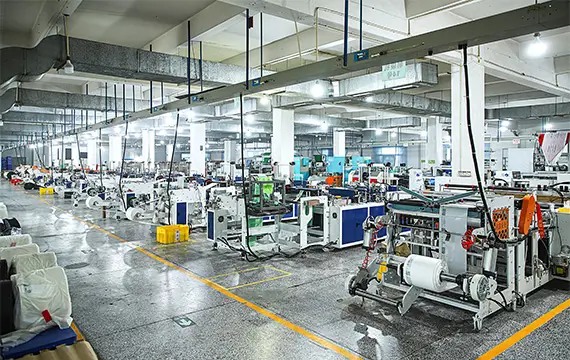
- High Capacity: Equipped with professional film blowing and bag-making machinery to ensure stable supply and timely delivery.
- Full Support: We assist clients not just with manufacturing, but with navigating the technical specs of compostable packaging to ensure the final product is both functional and eco-compliant.
Conclusion
Switching to compostable die-cut handle bags is more than a packaging decision; it’s a statement about where your business stands in the global effort to reduce waste. The customization process involves a few more technical steps than ordering cheap plastic. But the payoff—in brand loyalty, environmental impact, and customer satisfaction—is massive.
By understanding the materials, defining your specs, and partnering with a veteran supplier like Longxin Bio, you can create a packaging experience that feels good in the hand and even better for the planet.