
Introduction
Ever stopped to think about what happens to all that shrink wrap after it’s peeled off your pallets? Most of it ends up in landfills, sitting there for centuries. But what if there was a way to keep your products secure and your conscience clean?
Enter compostable shrink film—the eco-friendly alternative making waves in warehouses, logistics, and manufacturing. But is it really ready to replace the trusty old shrink wrap we’ve relied on for decades? Let’s break it down.
What is Traditional Shrink Wrap?
You’ve seen it everywhere, right? That clear, snug plastic that hugs your products, keeping them neat and protected. Traditional shrink wrap is essentially a thermoplastic film that shrinks tightly around an item when exposed to heat. This process creates a protective, tamper-evident seal, guarding against dust, moisture, and general wear and tear during transit and storage.
Different Types of Traditional Shrink Wrap
When we talk about traditional shrink wrap, we’re often referring to a few key players:
- Polyvinyl Chloride (PVC) Shrink Film: Once the reigning champ of shrink wrap, PVC shrink film is known for its excellent clarity and high shrinkage rate, allowing it to conform tightly to products. It is cost-effective, due to the lower material cost compared to other shrink film like POF.
- Polyolefin (POF) Shrink Film: Think of POF film as the versatile middle child. It offers a great balance of clarity, strength, and flexibility, making it a favorite for retail and consumer goods, including food items, thanks to its FDA approval for direct contact. It’s generally considered safer and more environmentally friendly than PVC, with good puncture resistance and a professional, glossy finish.
- Polyethylene (PE) Shrink Film: PE shrink wrap is prized for its strength, durability, and flexibility, making it perfect for wrapping larger, heavier, or irregularly shaped items. Think of pallet loads or industrial equipment. It might not have the same crystal-clear finish as other types, but it’s built to last.
The Pros of Going Conventional
Traditional shrink wrap has earned its place in the packaging filed for good reason.
- Cost-Effective: You can usually find traditional shrink wrap easily, and it’s often the more budget-friendly option upfront.
- Strong and Resilient: These films offer excellent tensile strength, protecting your products from physical damage during transit and storage.
- Versatile: Whether it’s bundling small items or securing a full pallet, there’s a type of conventional shrink wrap for most industrial needs.
- Proven Performance: It’s a tried-and-true material that has reliably served industries for decades.
What About the Downsides?
While traditional shrink films offer unparalleled benefits, their negative impact on the environment cannot be underestimated.

- Plastic Pollution: The large amount of plastic film sits on the landfill, releasing greenhouse gases and creating microplastic that will pollute the air and soil, even the entire food chain. In addition, some plastics will enter the ocean, polluting the living environment of marine life and may even be mistakenly ingested by them.
- Not Always Recyclable: While some types of traditional shrink wrap can be recycled, it’s often a complex process. Contamination from food or labels, coupled with a lack of specialized recycling facilities, means much of it ends up in landfills anyway.
- Resource Depletion: Its production relies on finite fossil fuels, which isn’t exactly a recipe for a sustainable future.
What is Compostable Shrink Film?
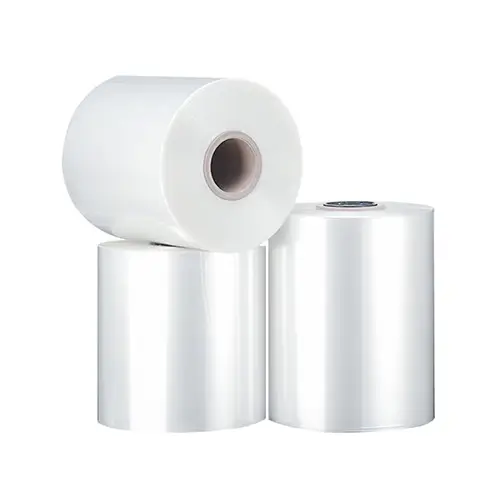
Now, let’s talk about the rising star: compostable shrink film. This innovative material is designed to perform much like traditional shrink wrap but with a crucial difference – its end-of-life story is far greener. Typically made from plant-based renewable resources like cornstarch, PLA, and PBAT, compostable shrink film breaks down naturally into biomass, water, and CO2 under specific composting conditions.
Performance of Compostable Shrink Wrap
You might be wondering, “Can a ‘green’ film really do the job?” The answer is a resounding yes! Compostable heat shrink films are engineered to offer comparable strength, clarity, and puncture resistance to their traditional counterparts.
Early versions had a bad rap for being flimsy, but today’s compostable films are surprisingly tough.
- Strength & Clarity – Matches traditional PE in many cases.
- Puncture Resistance – Good enough for most industrial uses.
- Seal Integrity – Works with standard heat-sealing equipment.
They provide that essential tight seal, protecting your goods from moisture and contaminants. Think of it as getting the same high-level protection, but with a material that’s designed to return to the earth, nourishing it rather than polluting it.
Advantages of Compostable Shrink Film
Make the switch to compostable shrink film isn’t just about feeling good; it’s about circular economy and responsible stewardship.
- Reduced Environmental Impact: By breaking down into natural components, compostable film greatly cuts down on landfill waste and reduces plastic pollution.
- Non-Toxic Breakdown: Unlike traditional plastics that can leach harmful chemicals as they degrade (or fail to degrade), compostable films break down into harmless, non-toxic components.
- Supports a Circular Economy: Using plant-based renewable resources to replace fossil fuels in the production of degradable films is to reduce reliance on limited resources. Meanwhile, compostable products eventually degrade into beneficial resources that nourish the soil, which helps to create a more circular economic model.
- Enhanced Brand Image: Nowadays, customers are increasingly making purchasing decisions based on a company’s commitment to sustainability. Using compostable packaging can boost your brand’s appeal and demonstrate genuine environmental responsibility.
The Cons of Compostable Shrink Wrap
Of course, no material is perfect, and compostable shrink film has a few hurdles:
- Higher Cost: Honestly, compostable options can be a bit more expensive upfront than traditional plastics. Whether it is the acquisition and production of raw materials or the manufacturing process of the film, they are relatively more complex than those of traditional plastics, so the cost incurred is bound to be higher.
- Limited Disposal Infrastructure: Compostable film needs the right conditions to decompose properly. This usually means access to industrial composting facilities. While home composting is possible for some certified materials, industrial facilities offer the controlled environment (heat, moisture, microbes) needed for efficient breakdown. If these facilities aren’t readily available in your area, the environmental benefits can be lost.
- Shorter Shelf Life: Because these materials are designed to decompose, they have a shelf life. Storing them properly—in a cool, dry place, away from direct sunlight—is key to maintaining their integrity until use.
Comparison of Compostable Shrink Film and Traditional Shrink Wrap
Let’s break it down feature by feature:
| Feature | Compostable Shrink Film (PLA/PBAT Blend) | Traditional Shrink Wrap (PE/PVC/POF) |
|---|---|---|
| Source Material | Plant-based, renewable resources (corn, sugarcane) | Fossil fuels (petroleum, natural gas) |
| End-of-Life | Composts into biomass, water, CO2 in 3-6 months (Under ideal conditions) | Lasts for hundreds of years in a landfill |
| Environmental Impact | Reduces landfill waste, non-toxic, supports a circular economy | Contributes to plastic pollution, potential for toxic release |
| Performance | Excellent strength, clarity, and puncture resistance | High strength and proven performance |
| Food Contact | FDA-approved and food-safe options available | Food-grade options available (e.g., POF) |
| Disposal Method | Industrial or home composting (depending on certification) | Landfill or (limited) recycling |
| Brand Image | Shows a strong commitment to sustainability and innovation | Represents the conventional, less eco-conscious approach |
Which One Should You Choose?
When you look at the above table, the choice between compostable and traditional shrink film becomes clearer. While traditional shrink wrap has served us well, its environmental cost is becoming increasingly unsustainable. The logistics and infrastructure for composting are evolving, and for businesses looking to lead in environmental responsibility, compostable shrink film offers a compelling solution.
Think about it: the public is more aware than ever about plastic pollution. By adopting compostable packaging, you’re not just meeting potential regulations down the line; you’re actively responding to consumer demand and building a brand that resonates with a values-driven market. Plus, the performance is there – you don’t have to sacrifice product protection for sustainability.
For warehouse, logistics, and manufacturing industries, the shift might seem daunting, but the benefits are substantial. Imagine streamlining your supply chain with packaging that aligns with global sustainability goals. It’s about future-proofing your business and contributing to a healthier planet. It’s a move that says you’re not just shipping products; you’re shipping a promise of a better future.
FAQs
A: Food-grade shrink film is a type of film that meets FDA safety standards for direct food contact, preventing contamination.
A: Shrink wrap creates a protective barrier against external moisture, dust, and contaminants, which can indirectly help prevent mold growth.
However, it doesn’t inherently absorb moisture. If an item is wrapped while still wet, or if moisture gets trapped inside, mold can still form. To combat this, ensuring items are dry before wrapping or using specialized vents can help manage internal humidity.
A: Typically 6-12 months if stored properly (cool, dry place).
A: No. It’s designed to compost, not recycle. Mixing it with recyclables can contaminate the recycling stream.
A: Some high-performance compostable films can handle pallet wrapping, but check the specs—traditional PE might still be stronger for extreme loads.