
Introduction
Gloves play a crucial role in food preparation by preventing contaminants, and they serve as the defense line for food safety. Although gloves ensure hygiene, in today’s era of increasingly severe plastic pollution, traditional plastic gloves have imposed a huge environmental burden.
Compostable food gloves, acting as a promising solution, can not only meet the food safety standard but also solve the plastic waste problem. This post will explore why choose compostable gloves, their materials, benefits, usage and how to ensure compliance.
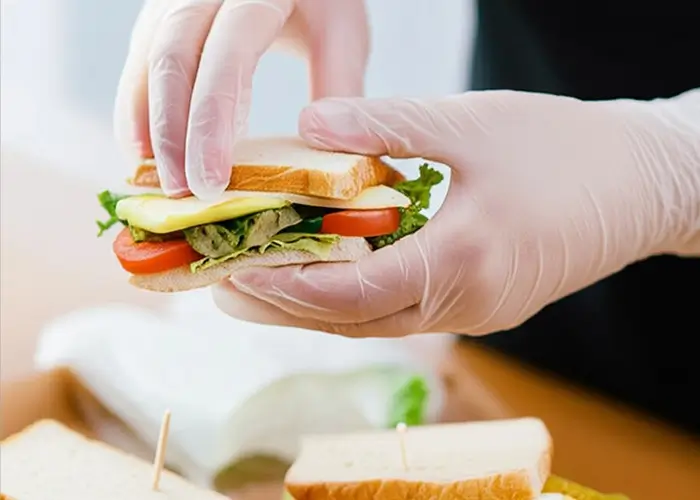
Why Choose Compostable Food Service Gloves?
The decision to switch to compostable options is driven by a dual commitment: protecting public health and protecting the planet.
Food Safety Defense
Just like traditional gloves, compostable food gloves act as a critical physical barrier. They prevent bare-hand contact with ready-to-eat foods, reducing the transmission of pathogens such as Salmonella, E. coli, and Norovirus.
Environment-Friendly Benefits
Traditional gloves (vinyl, polyethylene, or nitrile) can take hundreds of years to decompose in landfills, breaking down into harmful microplastics. In contrast, certified compostable food gloves are designed to break down into nutrient-rich organic matter under specific composting conditions. This turns a single-use waste product into a resource that returns to the earth.
Healthier Materials
Beyond waste, there is the issue of chemical leaching. Some traditional vinyl gloves contain phthalates that can leach into fatty foods. High-quality compostable gloves are typically plant-based and free from BPA and phthalates, making them a “cleaner” choice for food handling.
What are Compostable Food Gloves Made of?
Not all eco-friendly gloves are created equal.
Materials of Compostable Gloves
- PLA (Polylactic Acid): Derived from renewable resources like corn starch or sugarcane. PLA gloves are transparent, lightweight, and offer a feel similar to traditional plastic but are fully compostable in industrial facilities.
- PBAT + Corn Starch: These blends often provide better flexibility and durability than pure PLA, making them less prone to tearing during moderate tasks.
Comparing with Traditional Options
- Vs. Nitrile: While nitrile is extremely durable, it is fossil-fuel-based. Compostable gloves are generally best suited for food prep tasks (sandwiches, tossing salads) rather than heavy-duty industrial cleaning.
- Vs. Latex: Compostable gloves are naturally latex-free, eliminating the risk of allergic reactions for both staff and customers.
Important Note on Certification: Always look for certifications such as ASTM D6400 or EN 13432. These standards ensure the gloves are genuine compostable food gloves and not just “biodegradable” plastics that leave behind toxic residues.
Benefits of Using Compostable Gloves in Food Prep
Integrating sustainable food gloves into your operation offers advantages that go beyond the bin.
1. Reduced Environmental Footprint
By diverting waste from landfills to composting facilities, you are actively participating in the circular economy. The amount of garbage in the landfill has been reduced, and the waste has been transformed into nutrient-rich compost. As a result, less carbon emissions and greener ecological environment.
2. Food Safety Without Toxicity
These gloves are made of plant-based materials and can protect the food without any petrochemicals seeping into them. Please refer to the food contact reports of the US Food and Drug Administration (FDA) and the European Union to verify their authenticity.
3. Improve Brand Image
For food manufacturing and service enterprises, the use of biodegradable gloves can effectively convey their firm commitment to sustainable development. As modern consumers prefer sustainable brands, your brand image will be enhanced.
4. Regulatory Compliance
With single-use plastic bans sweeping across states and countries, switching early future-proofs your supply chain against upcoming regulations.
Proper Use and Disposal of Compostable Food Gloves
To maximize the benefits of biodegradable compostable gloves, users must follow strict protocols.
Preparation Before Wearing
Thoroughly wash hands by soap and dry hands before donning gloves.
Avoid Cross-Contamination
After handling raw meat, coming into contact with allergens, or switching tasks, gloves must be changed. One task, one pair. Never move from a “dirty” task to a “clean” task (prepping food) wearing the same gloves.
The Correct Method of Disposal
Compostable food gloves should not be thrown in the general trash, where they will end up in a landfill (where they cannot compost properly due to lack of oxygen).
- Discard used gloves in a designated organics or commercial compost bin.
- Note: Ensure your local waste management provider accepts “compostable bioplastics,” as some facilities only accept food scraps.
Best Practices for Selection and Storage
- Size and Fit
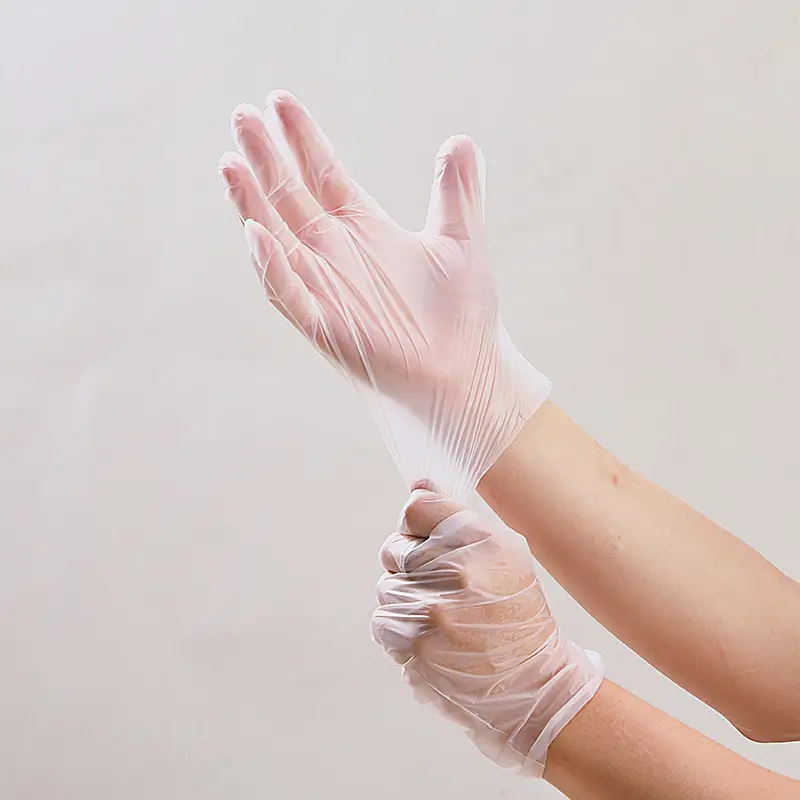
A proper fit is essential for food preparation. Gloves that are too lose can fall into food or snag on equipment; gloves that are too tight may tear.
- Storage Conditions
Compostable materials are sensitive to heat and moisture. So store your food prep gloves in a cool, dry place away from direct sunlight.
- Check Shelf Life
Unlike synthetic plastics that last forever, plant-based gloves may have a “best by” date (usually 12 months) to ensure structural integrity.
Application Scenarios of Compostable Food Gloves
Where are compostable food prep gloves used the most?
- Restaurants: Perfect for assembly lines (sub shops, burrito bowls) where gloves need to be changed frequently.
- Events: Essential for green weddings, festivals, or pop-ups aiming for zero landfill waste.
- Bakeries and Delis: Ideal for handling ready-to-eat pastries and clod cuts.
- Home Kitchens: Ideal for home cooks handling raw poultry or marinating meats.
- Packing Takeout Orders: Maintain hygiene when portioning out takeout dishes.
Training and Compliance
Implementing sustainable gloves requires a culture shift.
- Staff Education
Train employees not just on when to wear gloves, but where to throw them. Clear signage on bins (Compost vs. Landfill) is crucial to prevent contamination of the compost stream.
- Safety Audits
Regularly review glove usage to ensure that the switch to compostable materials hasn’t led to a lapse in hygiene protocols (e.g., ensure staff aren’t wearing them too long to “save money”).
Conclusion
The evolution of kitchen safety is no longer just about preventing bacteria; it is about preserving our environment. Compostable food gloves represent the intersection of high safety standards and environmental stewardship.
By making the switch, food service providers and home cooks alike can ensure that safety in cooking doesn’t come at the cost of the planet. As we move toward a greener future, these gloves are not just an alternative—they are the new standard for responsible food preparation.
Are you ready to make your kitchen and food service business more sustainable? Explore certified compostable food gloves today and take a hands-on approach to protecting both your food and the earth.