
Compostable cat litter bags are becoming a staple in sustainable pet care. Dealing with cat waste is never a glamorous task and the environmental cost is even easier to overlook. Traditional plastic bags can sit in landfills for hundreds of years, but sustainable alternatives offer a way to reduce the carbon pawprint and protect the planet.
If you are looking to switch from traditional plastic, this ultimate guide will help you understand, use, and dispose of compostable cat litter bags.
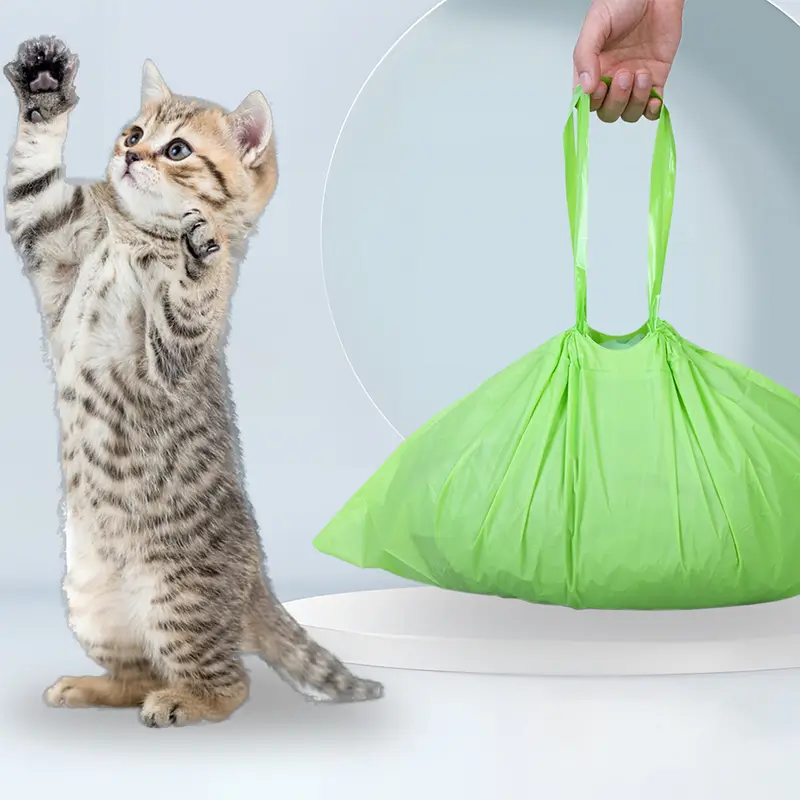
What are Compostable Cat Litter Bags?
Unlike traditional plastic bags derived from petroleum, compostable cat litter bags are usually made from renewable plant-based materials. They are designed to be eaten by microbes. Given the right conditions—moisture, heat, and oxygen—bacteria see these bags as a buffet. As a result, these kitty litter bags decompose into carbon dioxide, water and biomass, without any toxic matter behind.
Types of Compostable Cat Litter Bags
Not all bags are created equal. Depending on whether your customer is a “scoop daily” person or a “dump the whole tray” person, you’ll need different options.
Standard Handle Tie Waste Bags
They look and feel like standard dog poop bags but are slightly wider to accommodate a litter scoop. Their handle tie design make it convenient to tie and knot the bag for daily maintenance.
Compostable Cat Litter Tray Liners
Compostable cat litter tray liners are a game-changer for people who hate scrubbing litter boxes. These are large sheets that fit inside the tray before the litter goes in. When it’s time to change the litter, you just pull the drawstrings and lift the whole mess out. Some tray liners feature several holes on the bottom, which will allow the clean cat litter to be filtered out of the bag, leaving only the dirty and messy parts inside.
How to Use These Cat Litter Bags?
Method 1: Scooping out the Waste
This is the most common method.
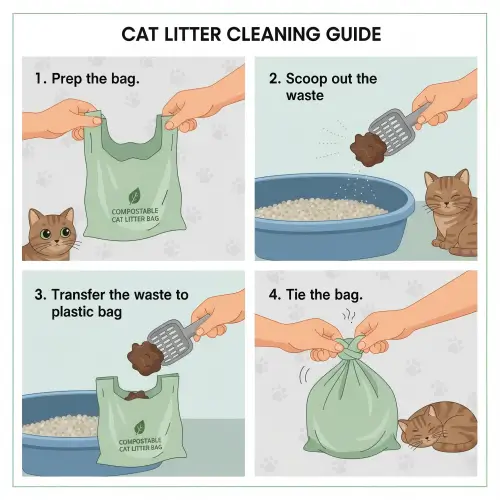
- Prep the bag. Open your compostable cat litter bag and give it a little check. Since these bags are plant-based, they have a shelf life. If they’ve been sitting in a hot warehouse for two years, they might be brittle.
- Scoop out the waste. Use the cat litter scoop to sift the clumps from the litter box.
- Transfer the waste to a plastic bag. One hand holds the plastic bag and the other hand pours the waste into the bag from the spoon. Don’t overfill the bag to avoid tearing and leaking.
- Tie the bag: To lock in odors, tie a tight knot at the top of the bag. Once the bag is correctly sealed, toss it into the trashcan.
Method 2: Line the Box with Cat Litter Tray Liners
Using compostable cat litter liners can save massive amounts of time, but you have to do it right.
- Clean the box: Ensure the empty litter box is dry. Moisture trapped under the liner can cause the bottom of the compostable bag to start degrading prematurely.
- Fit the bag in the box: Open and place the liner in and smooth it out.
- Add litter: Pour at least 3-4 inches of litter. You want a thick barrier so that when the cat scratches, they are scratching litter, not the bag.
- Lift the whole mess out: Pull the drawstring closure and lift the mess out the tray.
Method 3: A Cat Litter Disposal System to Make Disposing Process Easy
Those diaper-pail style systems for cats are great for locking in smells. The problem is that the refills are usually hugh lengths of single-use plastic.
You can actually hack this for sustainability. Many eco-conscious owners are now using sustainable cat litter disposal bags inside these pails. While the continuous feed mechanism might not work perfectly with individual bags, you can place a large compostable kitty litter bag inside the pail bin.
- Open the pail.
- Line the bucket with a large compostable bag.
- Scoop waste into it daily.
- When full, tie the bag off and replace a new one.
With a self-cleaning litter box, waste management becomes a breeze. Just follow these steps to line the drawer:
- Pull out the waste drawer.
- Open a compostable bag and place it inside the drawer.
- Tuck the bag tightly under the retention tabs or clips found on the rim. Important: Make sure the bag stays low and doesn’t protrude above the rim, otherwise, the laser sensors will think the drawer is full immediately.
- Finally, pull the drawstring to secure the bag in place.
Eco-Friendly Way to Dispose of Compostable Cat Litter Bags
Using compostable cat litter bags doesn’t mean you can throw them anywhere.
Home Composting
Cat waste often carries Toxoplasma gondii, a harmful parasite. Most home compost piles do not reach the high temperature required to kill these pathogens (sustained heat of 55 ℃/131 °F). If you use that compost on your vegetable garden, you risk contaminating your food.
The Safe Rule:
- Only home compost cat waste if you are using a dedicated pet-waste digester that is separate from your garden compost.
- Never use the resulting soil on food crops. It should be used strictly for ornamental bushes, flowers, or lawns.
Industrial Composting
Industrial composting is the dream scenario. Some cities have green bin programs that accept pet waste. If your local facility reaches those high temperatures, compostable cat litter disposal bags are perfect. However, you must check local regulations. Many facilities ban pet waste not because of the bag, but because of the bacteria in the poop.
Learn more about the disposal of compostable cat litter bags.
Choosing the Right Litter to Match
To get the most out of sustainable cat litter disposal bags, you need to pair them with biodegradable litter. When the litter and the bag are made of similar organic materials, they break down at the same speed.
Pairing these bags with biodegradable litter options:
- Corn
Corn litter can clump well and lightweight. It’s arguably the best partner for cornstarch-based compostable cat litter bags. It’s a match made in agricultural heaven.
- Wheat
Similar to corn, wheat litter is enzymatic and controls odors naturally. It’s fully biodegradable. However, it can be a bit dusty, so make sure the bag is sealed tight to prevent “proofing” dust when you toss it.
- Wood Pine
Pine pellets turn into sawdust when wet. If you are using compostable kitty litter bags, be careful not to overload them with wet pine sawdust, or the bottom might drop out.
- Tofu/Soy
This is huge in the Asian market and gaining traction here. It’s made from soybean pulp. It’s water-soluble (flushable in small amounts) and breaks down incredibly fast in a compost environment. It is the perfect companion for a compostable bag.
- Grass seed
It clumps hard and fast. It’s very light, which reduces the strain on the compostable plastic bags, reducing the risk of tears during transport to the bin.
Business Insight: Sourcing High-Quality Bags
The market is flooded with “green” bags that tear if you look at them wrong. When sourcing compostable cat litter bags, pay attention to thickness (micron count).
A standard 13-micron bag might work for a dog, but for heavy, wet cat litter clumps, you want to aim for 15 to 18 microns or higher. Your customers will pay a premium for a bag that doesn’t leak cat pee on their shoes. Trust me.
Also, check the shelf-life guarantees. Since these bags are designed to degrade, you don’t want to buy 5 years’ worth of stock. Aim for a turnover of 12-18 months to ensure the product remains fresh and strong for the end consumer.
FAQs
Can I put cat litter in compostable bags?
Absolutely. These bags are designed to handle cat waste and litter. However, please keep in mind that compostable materials react differently to stress than traditional oil-based plastics. If you use a heavy clay litter, avoid filling the bag to the very brim to prevent tearing.
Do compostable bags start leaking if I leave them in the litter pail?
They can. Since they are designed to break down with moisture, a bag full of wet clumps may begin to “sweat” or weaken if left in a warm drawer for too long. To ensure the bag stays strong and mess-free, we recommend emptying the drawer every 2–3 days.
Can I flush these compostable bags down the toilet?
No. Even tough the bags are compostable, they do not dissovle instantly like toilet paper. Flushing them can cause severe clogs in your home plumbing or the city sewer system. Always dispose of them in the trash or a dedicated compost bin.
Wrapping Up
Switching to compostable cat litter bags isn’t just a trend; it’s a necessary step in reducing the massive environmental pawprint our pets leave behind. Whether you are a distributor looking to provide sustainable cat litter disposal bags to pet stores, or a business owner looking to green up your operations, the technology is finally here to make it viable.
By pairing these bags with the right organic litter and understanding the nuances of disposal, we can make the dirty business of cat care a little cleaner for the planet.
So, the next time you scoop, ask yourself: Is this bag going to be around for 500 years, or is it going back to the earth? The choice, honestly, is in the bag.