
Introduction
Every day, thousands of tons of laundry move through hotels, spas, and hospitals wrapped in single-use poly bags. It has long been seen as a necessary compromise—keeping clean linens sanitary and separating soiled items. But the reality is, we are drowning in plastic waste. As guests grow increasingly conscious of sustainability, that small plastic wrapper no longer signifies quality service—it looks like waste.
So, let’s talk about compostable laundry bags. It might sound like a small swap, but in the grand scheme of sustainable laundry management, it’s a significant step forward.
What are Compostable Laundry Bags?
Compostable laundry bags are made from plant-based materials like cornstarch, vegetable oils, or PLA (polylactic acid). Unlike traditional plastics, which sits in a landfill for roughly 500 years, certified compostable bags break down. Under the right conditions (usually in an industrial composting facility), they turn into water, CO2, and biomass.
Key Features:
- Fully Biodegradable & Compostable: Break down naturally into carbon dioxide, water, and biomass under industrial composting conditions.
- Strength & Durability: Comparable to traditional plastic bags, meeting the demands of laundry transportation.
- Hygiene & Safety: No toxic release, suitable for sensitive environments.
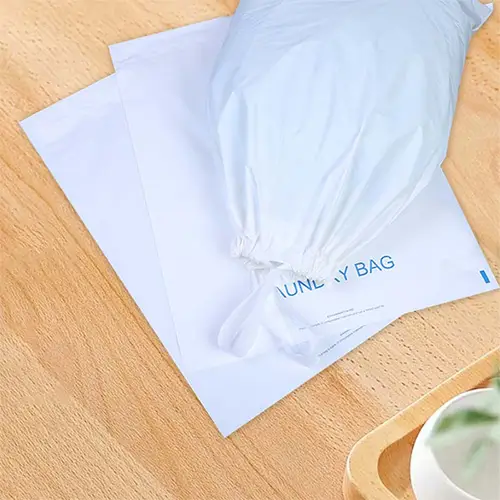
Why Make the Switch to Compostable Laundry Bags?
Environmental Impact
Conventional plastic bags linger in landfills for centuries, emitting greenhouse gases and contributing to microplastic pollution. In contrast, compostable bags sent to industrial composting facilities can break down into organic matter within a few months.
So Switching to compostable alternatives aligns with greener practices and demonstrates a commitment to planetary health—a message that resonates with today’s eco-aware guests.
Regulatory Compliance
An increasing number of states and regions are enacting bans or taxes on single-use plastics. Compostable bags offer a forward-looking solution, helping businesses stay ahead of regulations, avoid penalties, and reduce compliance risks.
Long-Term Value
While the unit cost may be slightly higher, the overall benefits are compelling. These biodegradable compostable bags will leave a better impression on guests, which helps enhance brand value and build a loyal customer base. As mentioned earlier, these laundry bags help reduce plastic waste and comply with packaging regulations. Therefore, your company using compostable dry cleaning bags can lower compliance risks and reduce waste disposal costs.
Real-World Applications
Hotel Sector
In hotels, laundry is an added service of the operation. Plastic laundry bags are mainly used for housekeeping and guest laundry.
- Housekeeping: Housekeeping carts are usually lined with massive plastic bags for stripping beds. Switching to heavy-duty compostable liners here makes a huge dent in your waste audit.
- Guest Laundry: These storage bags are often placed in the closet for dry cleaning requests. With printing compostable message, the bag turns a mundane amenity into a brand value statement.
Spas & Wellness Centers
If your spa smells like eucalyptus and you’re selling organic facials, wrapping your robes in standard plastic is a contradiction. Compostable laundry bags fit the aesthetic. Plus, spas deal with a lot of oils. Interestingly, some plant-based bags breathe a little better than heavy plastic, helping to prevent stale odors from oils or damp fabrics.
Healthcare Sector
Hospitals generate substantial waste while prioritizing infection control.
Here, we see a mix. Water-soluble laundry bags (which dissolve in the wash) are standard for infectious linens to minimize handling. But for general non-hazardous linen transport, compostable bags are gaining traction. It shows that even in high-stakes environments, you can reduce the carbon footprint without compromising safety.
Dry Cleaners
For dry cleaners, the plastic garment cover is often the most visible source of waste. Compostable garment bags—often with a subtle frosted finish—offer a premium, differentiated look that customers appreciate and that sets businesses apart from competitors using conventional plastic.
Action Guide: How to Switch to Compostable Laundry Bags
Ready to make the change? Follow these steps to ensure a smooth and informed transition.
1. Assess Your Needs
Go look at your current stock. What sizes are you using? How heavy are the loads?
- Weight Test: If your housekeepers are stuffing 30 lbs of wet towels into a bag rated for 15 lbs, it’s going to rip. It doesn’t matter if it’s plastic or cornstarch. Be realistic about the “par levels” and load weights.
- Storage: Compostable bags are organic material, so they have a shelf life. You can’t buy a five-year supply and leave it in a hot warehouse. Buy what you need for the next 6-12 months.
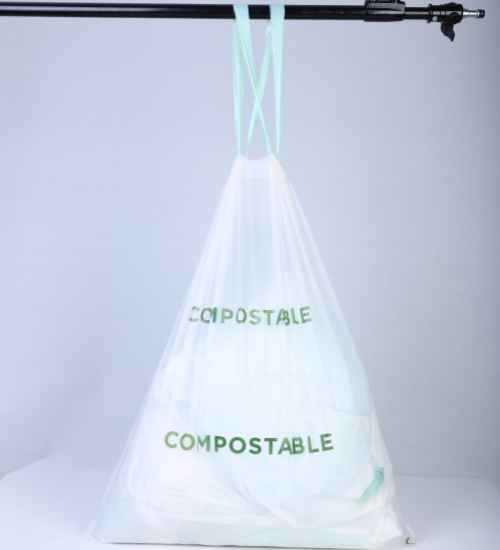
2. Select a Certified Supplier
To select a reliable packaging bags supplier, you must consider the production experience, production capacity, customization capability, delivery time and so on. In addition, Always request proof of compostability certifications such as:
- ASTM D6400 (BPI)
- EN 13432 (DIN CERTCO)
- OK Compost (TUV Austria)
Avoid vague claims like “degradable”—only certified products guarantee industrial compostability.
3. Communicate with Staff & Clients
If the housekeeping staff doesn’t know the bags are compostable, they might throw them in the recycling bin (which contaminates the recycling) or the trash (where they don’t compost properly).
- Training: Educate teams on proper storage, usage, and disposal. Emphasize that bags should go to compost—not recycling or general trash.
- Marketing: Use in-room cards, bag tags, or front desk signage to share your sustainability story. Example: “Our laundry bags return to the earth.”
4. Track Impact
If you have chosen biodegradable compostable options, then measure what benefits they bring to you and the environment.
“We switched to compostable bags for laundry management and diverted 500 kg of plastic from the landfill this year.” That is powerful data for your annual report or your social media.
Conclusion
Switching to compostable laundry bags represents a meaningful step toward operational sustainability—one that aligns environmental responsibility with practical business sense. This change does more than just replace plastic; it transforms a routine operational element into a statement of values, demonstrating to guests, staff, and stakeholders that your business is committed to responsible practices.
Beyond waste reduction, adopting compostable bags positions your organization ahead of evolving regulations, reduces long-term compliance risks, and enhances brand reputation in an increasingly eco-conscious market. It’s a visible, actionable measure that contributes to a circular economy by ensuring that even daily essentials like laundry bags can return harmlessly to the earth.
In an industry where service and perception matter, choosing compostable alternatives reflects thoughtfulness, innovation, and respect—for both people and the planet. This is not merely a switch in supplies, but a stride toward sustainable stewardship—one bag at a time.
FAQs:
Q: Are compostable bags as strong as regular plastic laundry bags?
A: High-quality compostable bags are surprisingly durable and offer similar puncture resistance to traditional Low-Density Polyethylene (LDPE).
However, just like regular plastic, they come in different thicknesses (mils). If you’re hauling wet, heavy towels, make sure you order a thicker gauge bag suited for heavy-duty use.
Q: How do compostable bags handle wet or damp linens, like gym towels?
A: Surprisingly well. They are breathable to prevent mildew. And the water-resistant property ensure the transportation of wet clothing safety. In addition, they won’t dissolve instantly like water-soluble bags.
Q: What is the difference between water-soluble bags and compostable bags?
A: Water-soluble bags are designed to dissolve completely in hot water during the wash cycle to prevent staff from touching infectious linens.
On the other hand, compostable bags are meant for transport and disposal, breaking down under the composting condition.