
Are you tired of the piles of plastic bags and films accumulating in your nursery or garden center? These plastics create a greater environmental burden, leaving microplastics in the soil and causing trouble in waste disposal.
So it’s time for a green revolution. The horticulture industry is transforming, and compostable films and bags for horticulture are leading the charge. They offer the performance you need with a planet-positive end-of-life. This definitive guide will walk you through everything you need to know to make the smart, sustainable switch.
The Problems of Traditional Plastics
For decades, traditional plastics have been the default in horticulture. But the downsides are now impossible to ignore:
- Environmental Pollution: Conventional plastics persist for centuries, breaking down into microplastics that contaminate our soils and waterways.
- Waste Management Problems: Recycling streams are often contaminated with soil and plant matter, meaning most horticultural plastic ends up in landfills.
- Root-Bound Plants: Traditional smooth-sided plastic pots encourage roots to circle, leading to root-bound plants that struggle after transplanting.
What are Compostable Horticulture Films & Bags?
Compostable films & bags are designed to turn into CO2, water and nutrient-rich humus in composting facilities. The composting is a specific process requiring certain conditions: temperature, humidity and microbes. True compostable products meet strict certification standards, like ASTM D6400, EN 13432, AS 5810, AS 4736 and OK Compost.
Why Your Horticulture Business Should Make the Switch
Adopting compostable films and bags isn’t just an environmental statement; it’s a strategic business decision.
Reduced Waste Footprint and Costs
Unlike traditional plastics sitting on the landfill for hundreds of years, compostable bags can disappear within a few months. And the final compost can enrich the planting soil. By diverting your used pots and films to a commerical composter or even a home compost pile, you greatly reduce the volume of waste sent to landfills, which can lower disposal fees.
Boost Plant Health and Vigor
Many compostable plant bags are designed to allow for air-pruning. When roots reach the edge of the container, they are exposed to air, which naturally “prunes” them. This stimulates the growth of a dense, fibrous root system rather than a circling one. At the result, heathier, more established plants that experience less transplant shock.
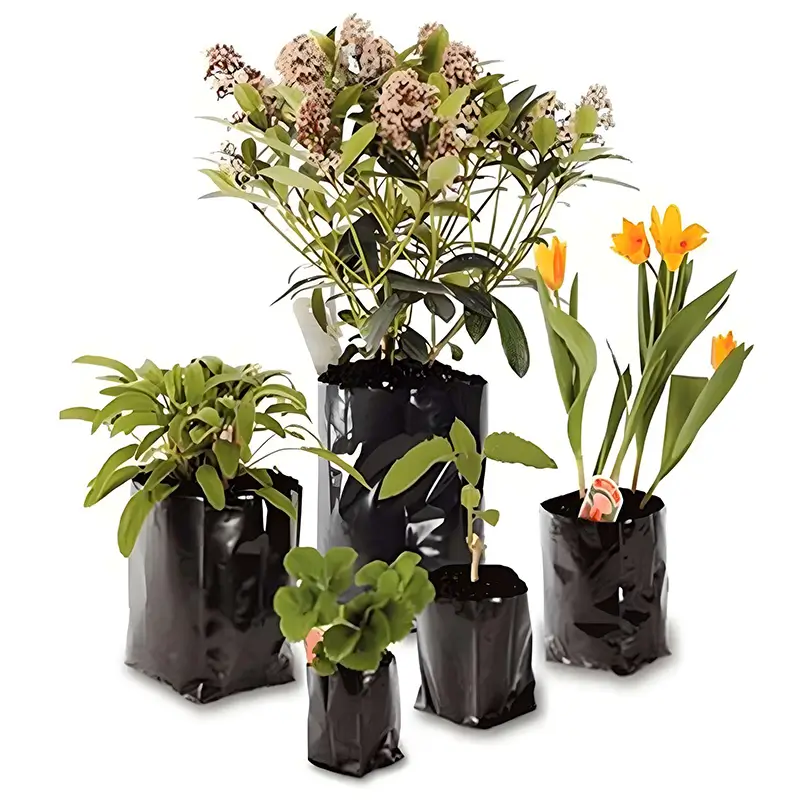
Streamline Workflow with Direct Planting
Due to their compostability, compostable bags can be planted directly into the soil with the seedling. This eliminates transplant shock completely and saves on labor costs.
Enhanced Brand Image
Adopting to compostable films and bags show your customers you care about the planet. Using sustainable packaging bags is a powerful marketing tool that can differentiate your nursery and build loyalty among eco-conscious consumers.
Future-Proof Your Operation
Governments worldwide are implementing stricter bans and restrictions on single-use plastics. So make the switch to biodegradable compostable packaging films positions you as a leader, not a follower.
Types of Compostable Films & Bags for the Horticulture Industry
Compostable Plant Grow Bags
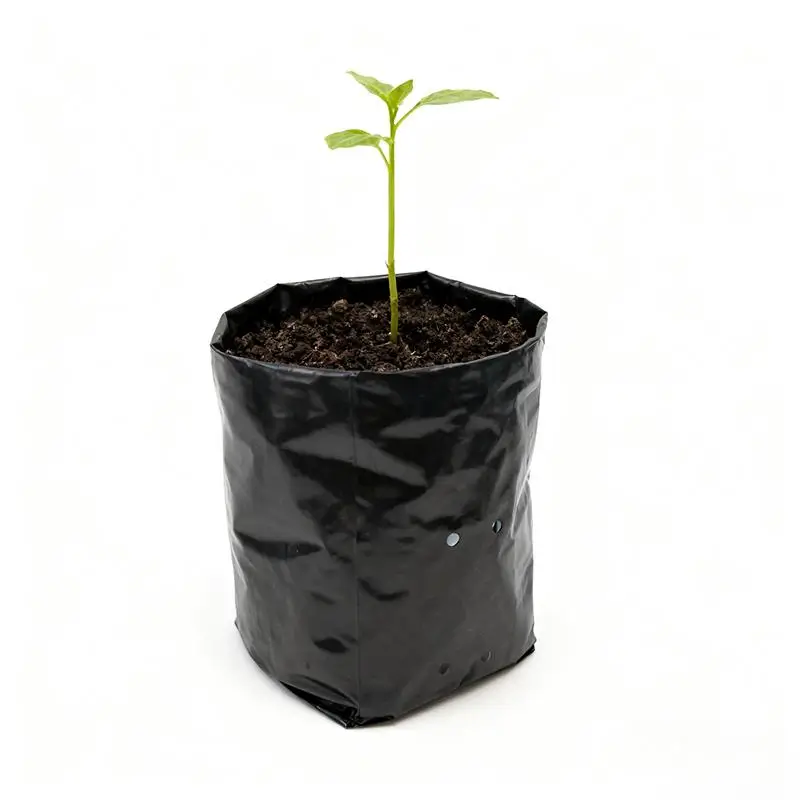
- Materials: PLA, PBAT and starch-blends.
- Applications: Seedling, propagation, potted plant sales. Compostable plant nursery bags provide the rigidity and durability needed for the growing cycle.
Compostable Mulch Films
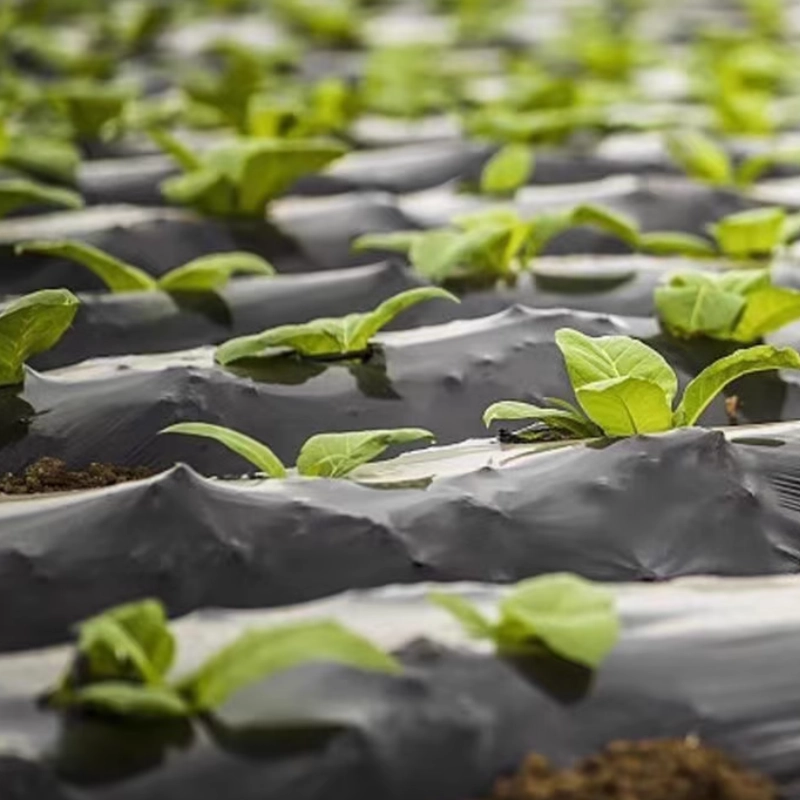
- Materials: Often PLA or PBAT-based reinforced films.
- Applications: Greenhouse ground cover for weed suppression, moisture retention, and soil temperature control. Can be tilled in or composted after the season.
Compostable Packaging Films
- Materials: Transparent compostable films made from PLA, PBAT and corn starch.
- Applications: Used for bundling perennials, wrapping hanging baskets, or protecting delicate plants, replacing traditional plastic wrap and shrink film.
How to Choose the Right Compostable Bags for Your Needs?
Not all compostable bags are created equal. Follow this guide to ensure you get the performance you need:
1. Look for Certifications
Always insist on products with independent, third-party certifications. Look for:
- OK Compost INDUSTRIAL: The European standard for industrial composting.
- OK Compost HOME: Certification for safe breakdown in home compost bins.
- ASTM D6400: The U.S. standard for industrial composting.
These labels are your guarantee that the product will break down safely and completely as promised.


2. Understand Your End-of-Life Options
- Industrial Composting: Requires a commercial facility. Ideal for large-scale operations.
- Home Composting: A major selling point for retail customers. Ensure the products you sell to home gardeners carry the appropriate “home compostable” certification.
3. Test for Durability
Request samples! A quality compostable bag should hold up to watering and handling for its entire intended lifecycle without disintegrating prematurely.
4. Partner with a Knowledgeable Supplier (Like Longxin)
Work with a supplier who understands compostable films and can provide technical data and support.
Grow a Green Future
Choosing compostable films and bags for your gardening is not just a trend; is a responsible decision. These sustainable alternatives reduce waste footprint, boost your plant healthy, and enhance your brand image.
Ready to make the change?
Contact us today to request free samples and see the quality of our certified horticulture film and bags for yourself. Let’s partner to grow a more sustainable future.
Frequently Asked Questions (FAQ)
1. Will compostable products decompose on my shelf or in my greenhouse?
No. Decomposition only begins under the consistent, warm, moist, and microbial activity conditions found in a compost environment. They are perfectly stable under normal storage and use conditions.
2. Are they as strong and durable as plastic?
For standard growing cycles, they are robust and reliable. For long-term crops or extreme conditions, discuss your needs with your supplier to select the right grade.
3. How do I dispose of compostable films and bags correctly?
The preferred routes are industrial composting, home composting, or with green waste.
CRITICAL: Do not place compostable products in with plastic recycling. They are a contaminant in the plastic recycling stream. Clear communication with your team and your end-customers is vital.