
If you run a bakery, you will find that plastic bags are everywhere from the moment the flour is delivered to the moment a customer comes out with a box of muffins. Packaging bags wrap our ingredients and dough and transport our goods. With the in-depth development of the concept of sustainability, compostable packaging bags have become a trend.
We are a manufacturer and factory of compostable bags, and we have witnessed firsthand how this industry has transformed. Today, we will delve into how compostable bags have gradually and completely transformed this industry.
What Are Compostable Bags?
Unlike traditional plastic that breaks down into nasty microplastics over hundreds of years, compostable materials are designed to return to the earth. They turn into nutrient-rich soil (humus) under specific conditions, leaving no harmful traces behind. They are made from plant-based materials like PLA, PBAT and other bio-resins.
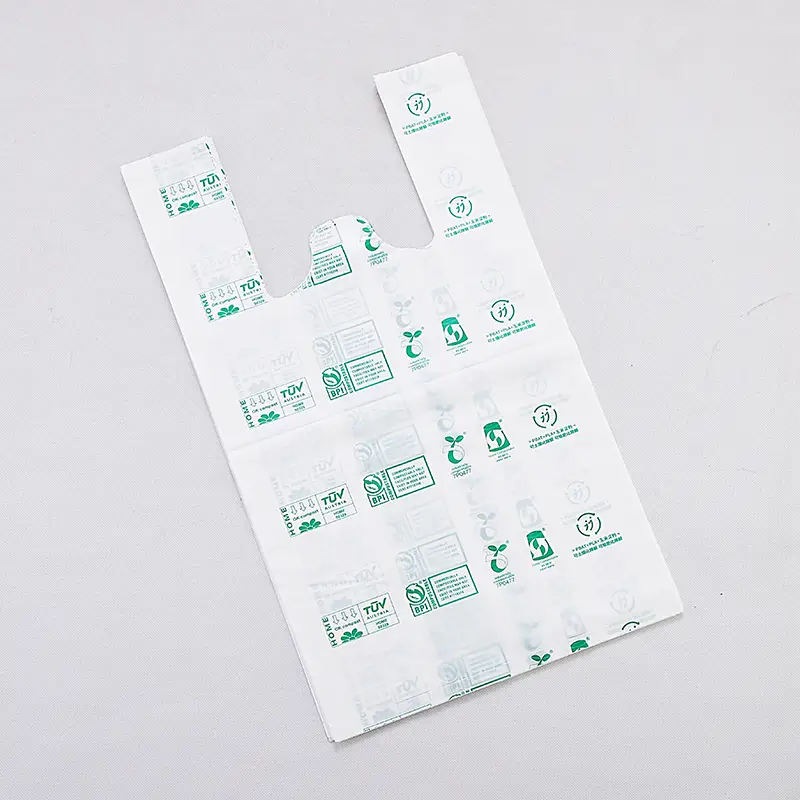
However, how can you be sure that what you have got is a genuine deal? Look for certifications. The gold standard in North America is the BPI (Biodegradable Products Institute) certification. In Europe, look for the OK Compost or the EN 13432 mark. In Australia, there are mainly two standards: AS 4736 and AS 5810. These are your guarantees that the products have been tested to break down safely and completely in composting facilities.
Compostable Bag Options for Sustainable Baking
Pastry Materials & Ingredient Storage
Bakeries may use countless plastic bags for storing opened dry goods (flour, sugar, nuts, chocolate chips) and resting dough. Switching to compostable bags will keep raw ingredients fresh without single-use plastic waste.
Compostable Resealable Bags
Compostable resealable bags are a game-changer for dry ingredients. These use a bio-based ziplock mechanism to keep moisture out and freshness in.
More importantly, compostable bags for baking ingredients are often safer for food contact. That’s because they don’t contain toxic chemicals that leaching into your premium organic nuts or specialty grains.
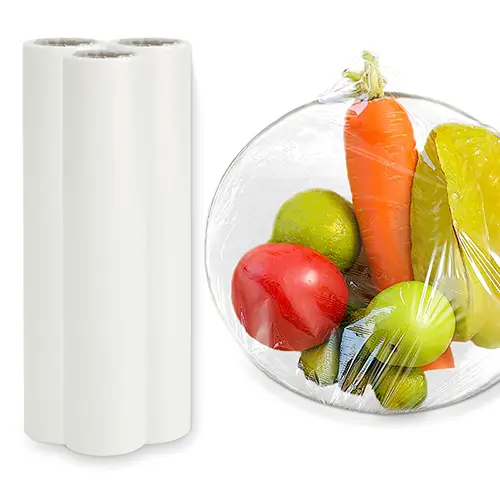
Compostable Cling Film
When you are retarding a sourdough loaf overnight or letting cookie dough rest, you need to cover it. Traditionally, this meant miles of cling film.
Compostable cling film is essential to wrap food. They cling to stainless steel bowls and ceramic ramekins just fine. Modern bio-films cling just as well as PVC but breathe better, preventing condensation build-up on warm dough.

Operation Table
Let’s head to the production table, where hygiene and efficiency are considered during the baking process.
Compostable Piping Bags

If you do any cake decorating, piping choux pastry, or filling macarons, you go through piping bags like water. Using reusable canvas bags is great in theory, but cleaning fatty buttercream out of a canvas bag during a rush is a nightmare, and hygiene can be an issue.
Compostable piping bags are engineered for high tensile strength. Durable and non-slip, they can withstand the pressure of thick ganache or stiff choux dough.
Compostable Disposable Gloves
Baking is a hands-on sport. Whether you are mixing a sticky rye dough or dyeing red velvet batter, you need protection.
Compostable disposable gloves are food-grade certified and usually powder-free to avoid contaminating your doughs. They offer the tactility you need to feel the dough’s development without leaving a plastic glove in a landfill for hundreds of years.
Compostable Disposable Aprons
And for those heavy prep days? Compostable disposable aprons save your staff’s uniforms from chocolate stains and flour dust. It keeps your operation hygienic and efficient, allowing your team to focus on the bake, not the laundry.
Packing and Display of Baking Goods
After the baking goods are prepared, they need to be packed with some bags to display and keep fresh. Compostable bags are a safe and greener alternative over traditional counterparts.
Compostable PLA Bags
These are packaging bags for cookies, muffins, cake pops, or sliced loaf cakes. Made from PLA and PBAT polymers, they offer that crystal-clear view, are grease-resistant for buttery croissants, and are completely petroleum-free. Using compostable bags for baking displays sends a subtle but powerful message to your customers:” We care about the quality of our food and the planet.”
Windowed Bread Bags
These are paper bags with a clear bio-plastic film window. The paper breathes (keeping the crust crisp), the window shows off the artisanal scoring, and the whole thing can go into the compost bin.
Resealable Stand-Up Pouches
Selling granola, artisan cookies, or your own baking mixes? Resealable stand-up pouches are the industry standard for a reason. They stand up on the shelf for better visibility and keeps products fresh long after purchase with its resealable feature.
Packaging To-Go Orders
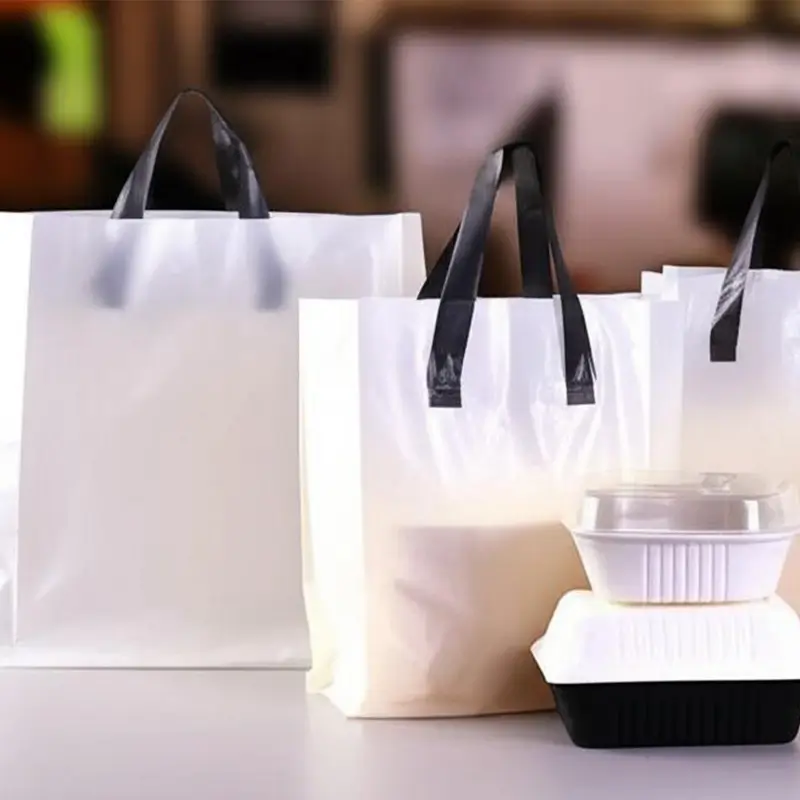
Bags can also used to ensure heavy cakes or multiple boxes don’t spill out from the store to the customer’s hand. But paper bags can tear, and plastic T-shirt bags are an environmental nightmare.
Compostable take out bags are the sturdy middle ground. Offered in T-shirt or shopper styles, they feature strong, reinforced handles made from durable compostable resins. They are suitable for carrying cupcakes or a heavy sourdough loaf without tearing.

Food Waste Collection
Bakeries generate a massive amount of organic waste daily, such as egg shells, fruit peels, apple cores, coffee grounds and so on. Using compostable bags to collect these waste can streamline cleanup process.
If you line that bin with a plastic trash bag, you have ruined the compostability of everything inside it. You have to dump the messy scraps out and throw the bag away separately.

Compostable food waste bags (bin liners) solve this. You can use them in the kitchen or food scrap collection setting. When the bag is full, you tie it off, and the entire thing goes into the organic waste bin.
Therefore, your waste stream is clean. Plus, this is a huge labor saver because there is no need to dump and scrub the bins every time. It’s the ultimate in operational efficiency and environmental integrity.
Making the Switch: Your Practical Path to a Greener Bakery
Sustainability is a trend that isn’t going away. Customers are becoming hyper-aware of packaging. When they see compostable bags for baking goods, they perceive the product as higher quality.
You can market this! Put a sign on your counter: “Our packaging is as natural as our ingredients.” Or tell the story on Instagram to show your customers that sustainable bags can contribute to the plastic island in the ocean.
Don’t try to change everything on Monday. Pick one pain point. Maybe it’s the compostable food waste bags in your kitchen scrap bins. Maybe it’s introducing compostable piping bags for your weekend decorating team. Master that swap, let your team adjust, and then add the next one—like replacing your dry storage bags with compostable resealable bags.
Conclusion
From the first scoop of flour to the final crumb left on the plate, compostable bags cover every single step of the process.
By integrating compostable bags for baking into every part of your process, you’re doing much more than cutting down on waste—you’re crafting a statement. You’re telling your community that you care deeply about the craft and honor the planet that yields your ingredients. You’re future-proofing your business and building stronger connections with customers—ones forged over shared values.
We are a manufacturer dedicated to helping baking businesses make this switch. If you want to change the plastic bags to sustainable packaging solutions, you can view our compostable food service supplies that may benefit your baking business.
Let’s make the world a little sweeter, and a whole lot cleaner.
FAQs
A: Most compostable bags (especially PLA) have a heat tolerance limit. For piping hot bread, paper-based compostable bags are best. For pure bioplastic bags, it’s better to let the product cool slightly to avoid warping.
A: Absolutely. Compostable piping bags are engineered to resist bursting. But you need to choose thicker, durable types.
A: The best place is an industrial composting facility (often accessible via your city’s organic waste collection). Many can also be composted at home, but check the “Home Compostable” certification on the bag.