
Introduction
If you run a grocery store, you know the “paper or plastic?” question is now more complex. Customers are savvy, regulations are stricter, and everyone wants to be kinder to the planet.
But sustainable packaging can be confusing—terms like “biodegradable,” “bio-based,” and “compostable” are often used without clarity.
As a compostable bag manufacturer, we understand your concerns: you want truly eco-friendly bags that are also strong and reliable.
Let us guide you in choosing the best compostable bags for your store.
What Does “Compostable” Mean?
Before we talk about buying, we need to talk about definitions. You know what? This is where 90% of people get tripped up.
Compostable bags are made from plant-based materials like cornstarch, PBAT and PLA. They will break down into non-toxic compost within a specific timeframe (about 90-180 days) under composting conditions.
However, biodegradable bags may eventually break down over a long time. That doesn’t mean it’s good for the soil.
Why Choose Compostable Bags for Your Grocery Store?
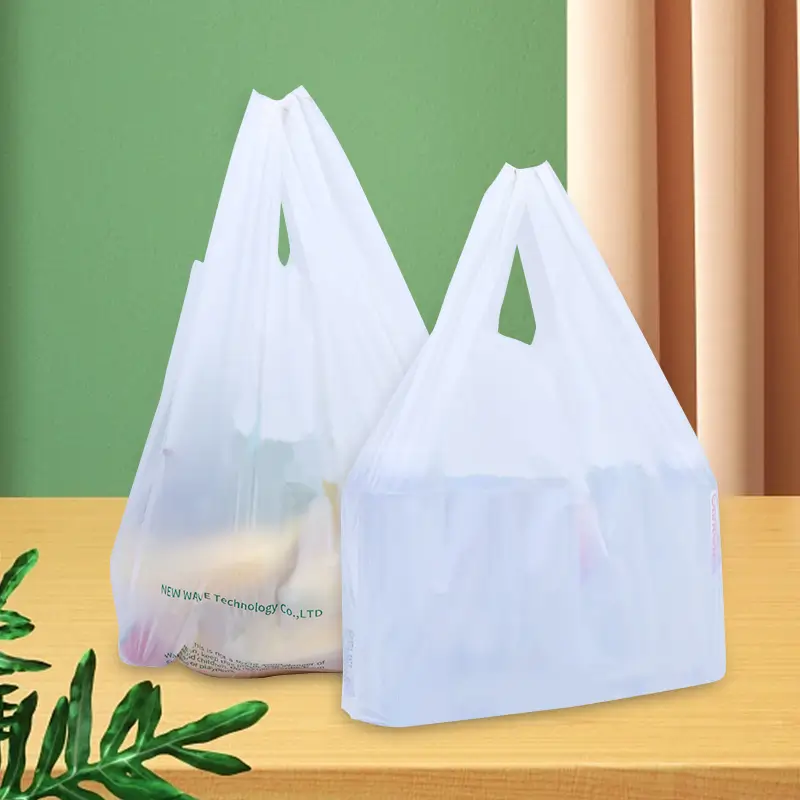
Aside from the warm and fuzzy feeling of saving the planet, why should you actually switch your inventory to compostable grocery bags?
The Legal Landscape is Shifting
Depending on where your store is located, the law might already be knocking on your door. Bans on single-use petrochemical plastics are sweeping across states and countries. Switching to compostable alternatives now future-proofs your business.
The “Green Wave” of Customers
Nowadays, shoppers are willing to pay more for sustainable packaging bags. They want to shop at places that align with their values. If they see you packing organic apples into a bag that will choke a sea turtle, it creates a disconnect. Sustainable packaging bags tell your customer, “We care about the same things you do.”
Key Factors for Selecting the Best Compostable Grocery Bags
Certifications
This is your shield against greenwashing. Do not accept a supplier’s word without certifications.
- BPI Certification: In North America, the Biodegradable Products Institute (BPI) certifies products against the ASTM D6400 standard. Look for the BPI logo on the bag and request the official certification documents.
- OK Compost INDUSTRIAL/HOME: These certifications are issued by TUV Austria. The corresponding labels can be printed on the bags to show customers that the product is certified as industrially or home compostable.
- AS 4736 and AS 5810: These are key standards for the Australian market. AS 4736 certifies bags as commercially compostable, while AS 5810 certifies them as home compostable.
- EN 13432: This European standard is verified by DIN CERTCO. Compliance with EN 13432 certifies that bags are industrially compostable.
Durability & Performance
- Weight Capacity
Your new compostable plastic bags must handle the relatiers of grocery shopping. They should confidently hold a gallon of milk, multiple cans and a bunch of produce without stretching thin or threatening to burst. Ask about the “micron” thickness and the rated weight. A standard grocery bag should hold 12-15 lbs easily.
- Moisture Resistance
Wet spinach, thawing ice cream, a damp watermelon—bags get wet. A quality compostable bag has excellent wet-strength. It shouldn’t turn to mush or develop holes when damp.
- Shelf Life
Properly manufactured compostable bags should have a shelf life of 12 months or more when stored in a cool, dry place. Ask your manufacturer for more details. You must don’t want them becoming brittle before you even use them.
Pro Tip: Always suggests ordering a sample box to physically test. Fill bags with your store items—a jug of juice, some apples, a few cans. Carry them, jostle them, leave a damp towel in one. If it survives your backroom stress test, it will survive your customer’s trunk.
Cost vs. Value
Per-unit cost of compostable bags is higher than traditional plastic. But let’s talk real value.
If you charge a small fee for bags (which many stores now do), customers rarely mind paying 5 or 10 cents for a bag they know is eco-friendly. In fact, many retailers find that switching to sustainable bags for store use actually improves their brand perception enough to justify the cost. It’s a marketing expense, not just an operations expense.
End-of-Life Clarity
If your area has industrial composting, your bag design and in-store signage should scream it: “I AM COMPOSTABLE! Place me in your green bin.” This closes the loop and maximizes the environmental benefit of your switch.
Recommended Compostable Plastic Bag Types for Retailers
Compostable T-shirt Bags for Checkout
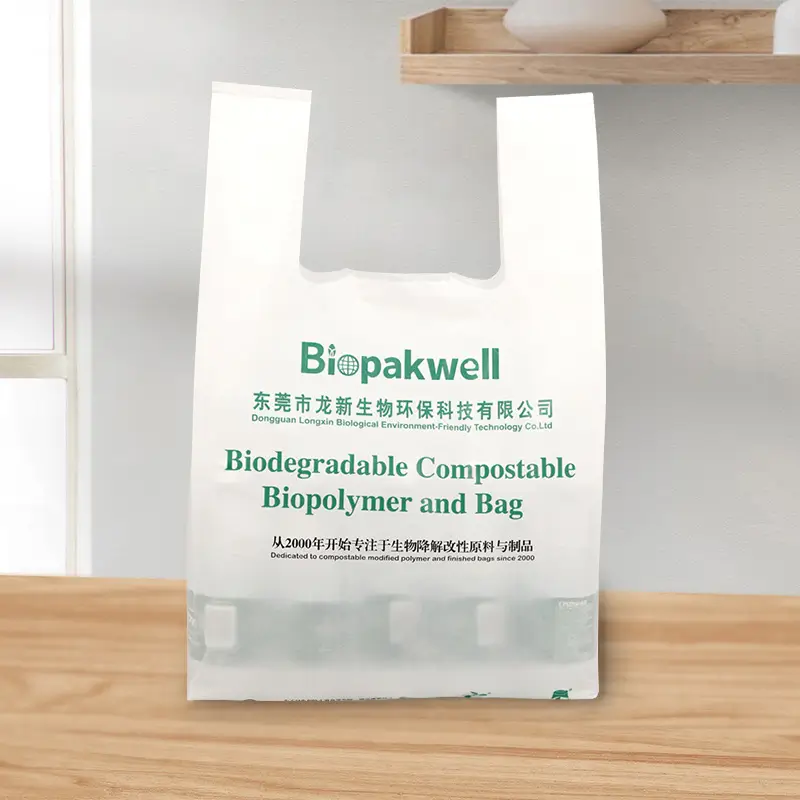
The direct replacement for your standard plastic grocery bags. Select a gusseted bottom for extra stability and look for reinforced handles. These checkout bags are strong and reliable for retail items.
Compostable Produce Roll Bags
These bags are usually placed in the produce section. They should be clear, slightly stretchy, and easy to tear off the roll. Providing compostable produce bags shows you’ve thought sustainability through the entire shopping journey.



Compostable Paper Bags
Paper bags from recycled content are a great compostable option. Some customers prefer them for certain items. Just ensure they are strong (high basis weight) and have handles for easy carrying.
Compostable Bin Liners
Don’t forget your own store operations. If you have trash cans in the store, use compostable liners. This keeps your operation consistent.
Marketing & Customer Education
Printed Compostable Bags: A Brand Ambassador
Don’t just hide them under the counter. Use the bag design to show off the store’s eco-values. We always recommend our clients print a catchy slogan on the side.
Something like:
- “Our bags feed the earth, not the landfill.”
- “Compost me with your food scraps!”
- “Thank you for helping us reduce waste.”
Signage from Checkout to Bin
At checkout, you can put a small sign: “Choosing a heathier planet? Ask for our compostable bags!”
Near the bin area, place a clear graphic showing the bag going into a green compost bin, not the trash. Explain what “industrial composting” means in simple terms.
Train Your Staff
Give your team a simple one-liner:”We’ve switched to certified compostable bags to reduce plastic waste. They break down into compost in commercial facilities!” Empowered employees turn a transaction into a shared mission.
Conclusion
Selecting the right packaging isn’t just about holding groceries; it’s about holding up your values. It’s about signaling to your community that you are a forward-thinking business.
By focusing on certifications, testing for durability, and educating your customers, you can make the switch to compostable grocery store bags seamless and successful.
It might seem like a small change—swapping one bag for another—but when you multiply that by thousands of customers a week, the impact is massive.
Ready to make the switch? As a dedicated factory, we are here to help you navigate these waters. Let’s make your store a little greener, one compostable bag at a time.