
In any kitchen, managing food scraps is often an overlooked aspect of your cooking routine. Usually, this mess gets bundled up in a plastic bag before being sent away. But traditional plastic bags have created a toxic legacy, polluting our landfills and oceans for centuries.
So compostable trash bags are a sustainable solution for kitchen waste management. They are designed not just to hold waste, but to transform it. Let’s explore why making this switch is one of the more practical decisions you can do for a cleaner kitchen and a healthier planet.
Environmental Benefits of Compostable Trash Bags for Kitchen
Reducing Landfill Waste & Methane Emissions
When you toss organic waste (like apple cores, banana peels, and leftover pasta) into a regular plastic bag, you are essentially sealing it in a tomb. In a landfill, buried under layers of other trash and trapped within that plastic, food scraps are deprived of the oxygen needed for proper decomposition.
Instead, it undergoes anaerobic decomposition. This process creates methane, a greenhouse gas that is roughly 25 times more potent than carbon dioxide at trapping heat in the atmosphere. By relying on standard plastic, we are basically turning our landfills into methane factories.
In contrast, compostable bags for kitchen waste are designed to be breathable. When used correctly in a composting system, they allow organic scraps to aerate. This promotes aerobic decomposition, which produces less methane and creates nutrient-rich soil instead of toxic sludge.
Eliminating Microplastic Pollution
Even when those plastic bags eventually start to degrade, they never truly disappear. They break apart into tiny, invisible fragments called microplastics. These end up in the soil, water, and food chain.
By switching to compostable plastic bags, we stop this cycle of pollution at the source. They are made from plant-based materials and break down completely into organic elements, returning to the soil without leaving behind heavy metals or microplastics.
The Role of Compostable Bags for Kitchen Waste Management
Beyong saving the planet, these bags offer immediate and practical benefits that improve daily kitchen hygiene and efficiency.
Odor Control Mechanism
The intense “garbage smell” usually comes from anaerobic bacteria thriving in wet, airless environments. By allowing airflow, compostable kitchen waste bags can actually reduce odor buildup. Plus, with less fermentation happening, you attract fewer fruit flies and other pests.
Simplify Waste Separation
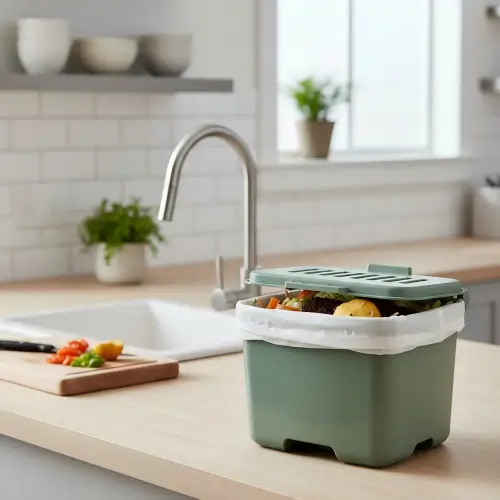
When you pair a compostable kitchen waste bag with a dedicated countertop caddy, separating organics becomes effortless. Simply toss your scraps in throughout the day. When it’s full, tie the bag and drop the entire unit into your compost bin. No more scraping soggy, smelly scraps out of a plastic liner. This simplicity is key to building a successful sustainable waste disposal habit.
Tips for Integrating Compostable Bags into Everyday Kitchen Routines
Prevent Leaks and Tears
While high-quality compostable trash bags are strong, it’s wise to avoid putting sharp bones or pineapple tops directly against the bag’s side. A layer of newspaper at the bottom can help absorb excess liquid. This is a best practice for any bin liner.
Read More: Best Practices to Prevent Compostable Bags from Leaking.
Storage and Shelf Life
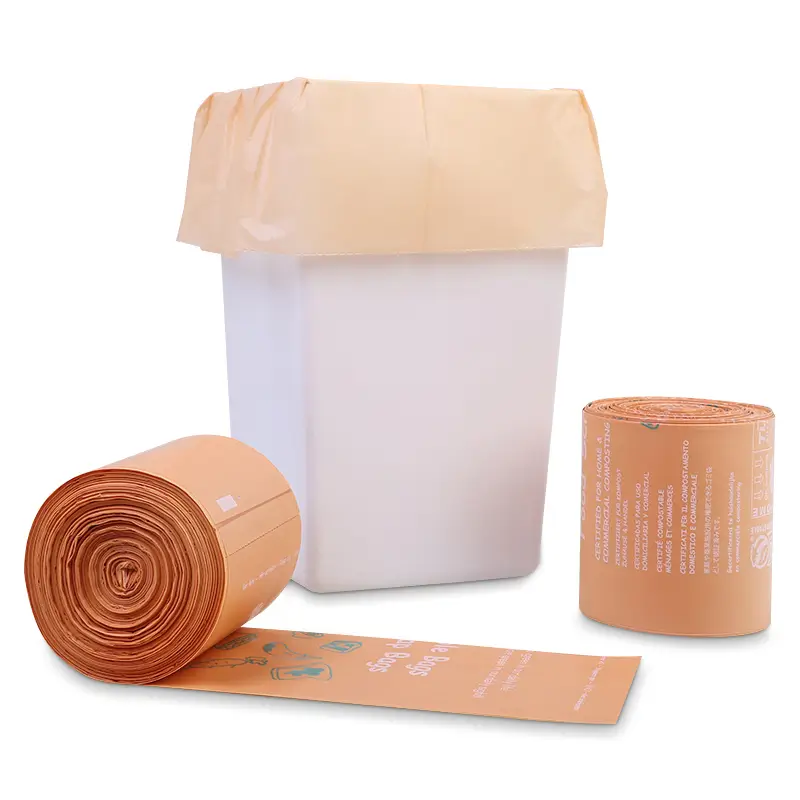
Store your bags in a cool, dry place away from direct sunlight. Since they are designed to break down biologically, extreme heat or humidity over long periods can initiate that process prematurely. Use them within a year or two of purchase for the best performance.
Choose the Right Bin
A vented kitchen caddy is an excellent choice, as it promotes airflow and often features a handle for easy transport and a lid to contain odors. Standard household trash bins can also be used effectively. Select the bin that best fits your kitchen’s space and your daily waste volume.
Best Practices for Composting Kitchen Waste: Home vs. Business
So, once you’ve filled your bag, where does it go?
Home Compost Bins and Backyard Piles
If you have a backyard pile or compost bin, ensure your bags are home compostable certified (“OK Compost HOME” or “AS 5810”). Then, just toss the whole bag in! Remember the basics: balance your “greens” (food scraps in the bag) with “browns” (dry leaves, shredded paper). Turn your pile occasionally to aerate it.
Dos and Don’ts for Backyard Composting:
- Do: Vegetable peels, coffee grounds, tea bags, eggshells, uncoated paper.
- Don’ts: Avoid meat, dairy, oils, and pet waste in standard cold compost piles, as they can attract pests and break down slowly without proper high-heat conditions.
Commercial Composting Facilities
If your municipality offers a “green bin” or organics collection program, this is often the most effective disposal route. This waste is processed at industrial facilities where massive piles reach high temperatures (exceeding 130°F or 55°C). In this intense heat, even certified compostable bags for kitchen waste break down rapidly and completely alongside the food scraps.
Conclusion
The future of kitchen clean-up is viewing your scraps not as worthless garbage to be buried, but as a valuable resource that we collect in compostable bags.
Adopting compostable trash bags for kitchen use is a pivotal step in this shift. It help to tackle the methane crisis, eliminate microplastic pollution, and streamline daily waste management. This simple switch transforms a routine chore into a powerful act of environmental stewardship, paving the way for a cleaner, more sustainable kitchen and planet.