
Introduction
Ever grabbed what you thought was industrial stretch film, only to realize it’s basically glorified kitchen wrap? Or maybe you’ve seen a warehouse worker wrestling a pallet with cling wrap, sweating bullets as it tears and fails? Yeah, it happens. These two products look vaguely similar – clear plastic on a roll – but confusing them is like mistaking a forklift for a shopping cart. The consequences range from annoying to downright costly.
Understanding the real difference between stretch film and cling wrap isn’t just trivia. For distributors supplying the right gear, manufacturers ensuring smooth operations, logistics companies protecting shipments, and food processors safeguarding products, it’s absolutely fundamental. Let’s peel back the layers (pun absolutely intended) and settle this plastic puzzle once and for all.
What is Stretch Film?
Stretch film, also called stretch wrap, are typically made of LLDPE (Linear low density polyethylene). This material is specifically engineered to offer exceptional stretchability while maintaining high tensile strength. When you apply stretch wrap, you’re pulling it tight – creating remarkable tension. It mainly relies on tensile force to be wound around cartons and pallets to secure the goods from moving or being damaged, making it highly suitable for use in the logistics and transportation industry.

You’ll find stretch film doing the heavy lifting in:
- Warehouse & Distribution Centers: Securing pallets for storage and transport.
- Manufacturing Facilities: Bundling parts, protecting machinery during moves or storage.
- Logistics & Transportation: Ensuring loads arrive intact, minimizing shifting and damage.
- Moving Companies: Protecting furniture and securing items on trucks.
- Construction Sites: Weatherproofing materials or bundling supplies.
Its core mission is stability, protection from dust and moisture, and preventing load shift during the bumps and jolts of handling and transit. Failure means damaged goods, safety hazards, and financial loss.
What is Cling Wrap?
Cling wrap (or cling food wrap) is a clear plastic film, crafted from PE (Polyethylene) or PVC (Polyvinyl chloride). It sticks to itself and containers to seal and preserve food. Crucially, food-grade versions must meet strict safety standards (like FDA or NSF certifications in the US, or equivalent globally) to ensure they don’t leach harmful chemicals into food.
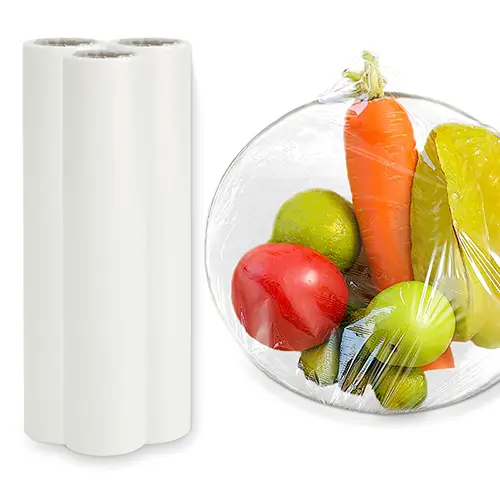
Cling wrap shines in environments demanding hygiene and preservation:
- Home Kitchens: Covering bowls, wrapping cut fruits/vegetables, sealing leftovers.
- Restaurants & Catering: Portioning food, covering prep stations, storing ingredients.
- Supermarkets & Delis: Packaging fresh produce, meat trays, and deli items for display.
- Food Processing Lines: Temporary covering or sealing during production stages (using specific food-safe types).
- Offices & Lunchboxes: Keeping sandwiches fresh.
Its superpower is creating an airtight seal over containers or directly on food surfaces. This prevents oxidation, keeps moisture in (or out, depending on the food), stops odors from mingling, and protects against contamination and flies. Performance is measured in freshness days and convenience.
What’s the Difference Between Stretch Film and Cling Wrap?
Purpose & Application
Stretch film is utilized to secure, stabilize, and protect loads, boxes, and machinery in warehouses, manufacturing workshops, and cargo vans. It relies on tension to form a stable cohesive unit to avoid cargo damage and accidents caused by shifting loads.
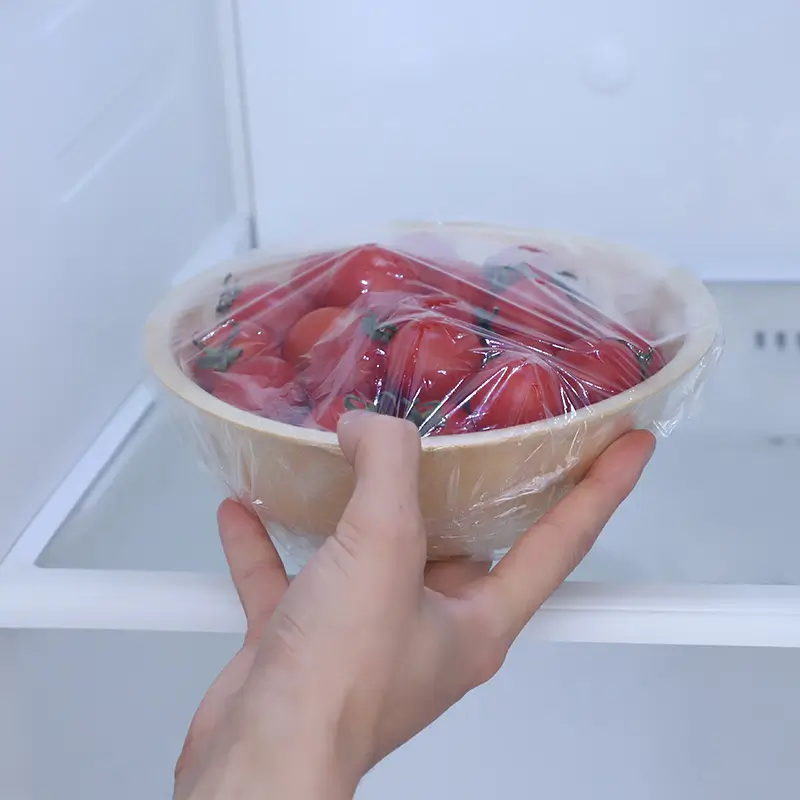
Cling wrap is applied to wrap cutting fruit and vegetables to preserve freshness. It’s about creating a barrier against air, moisture, and contaminants for individual food items or containers. Think covering a bowl of salad, wrapping cheese, sealing a meat tray. Failure means spoiled food, wasted product, and potential health risks.
Stretch Property
Stretch film is engineered for high elongation (often 200-300% or more!). You pull it hard to create tension. In addition, its high puncture and tear resistance is outstanding. Cling wrap, while it might stretch a little, simply cannot handle the same level of force of stretch wrap. Pull it hard, and it tears instantly. It lacks the inherent tensile strength needed for load wrapping.
Cling Performance
Cling wrap sticks primarily via static electricity or light adhesive coatings. It can adheres to smooth surfaces and itself with gentle pressure. Stretch pallet wrap doesn’t inherently “cling” in the same way. Its holding force comes entirely from the mechanical force generated when it’s stretched and tensioned around a load. Once you remove the tension, and it doesn’t stick to much.
Size Matters: Gauges, Widths and Lengths
Gauge (Thickness)
Stretch film gauge is measured in microns (µm) or mils (thousandths of an inch). 12-20 µm (0.5 – 0.8 mils), while heavy-duty machine rolls can be 20-35 µm (0.8 – 1.4 mils) or even higher for super demanding loads.
Cling wrap is generally thinner than stretch film, typically ranging from 8-12 µm (0.3 – 0.5 mils). That thinness makes it flexible for easy food covering but utterly useless against sharp corners or heavy weights. Trying to use thin cling wrap on a pallet is like using tissue paper to hold back a flood.
Width & Length
Stretch film rolls are built for big jobs. Widths range from narrow “mini” rolls for small bundling (e.g., 5 inches) up to massive 50-inch rolls for high-volume pallet wrapping machines. Roll lengths are substantial, often hundreds or thousands of feet.
Cling food wrap rolls are designed for handheld use. Widths are typically between 10-12 inches for standard boxes, sometimes wider for commercial use. Lengths are much shorter, usually measured in feet or tens of meters, packaged in boxes with convenient slide cutters or perforations.
Usage Method
While both can be applied by hand:
Stretch film is usually used in conjunction with some tools. Common hand dispensers (hooks or triggers) make applying tension easier. Semi-automatic and fully automatic stretch wrap machines dramatically increase speed, consistency, and tension control for pallets in industrial settings. With proper equipment, the effectiveness of stretch film is improved and material waste is reduced.
Cling film is mainly hand-applied. Boxes with built-in slide cutters or perforated rolls make tearing off sheets quick and easy. While specialized dispensers exist for high-volume food service, they are designed for gentle feeding and cutting, not tension generation.
Food Contact vs. Industrial Toughness
Stretch film is designed for industrial use. Standard grades are NOT food-safe. They lack the necessary certifications (like FDA 21 CFR or NSF) and may contain additives (like UV inhibitors for outdoor storage) or slip agents unsuitable for direct or indirect food contact. Using it on food is a major health code violation risk.
Cling food wrap must meet stringent food safety regulations. Reputable manufacturers ensure their food wrap complies with relevant standards for the regions they sell in. Using non-food-safe film in a kitchen or deli is irresponsible and dangerous.


Conclusion
The core difference between stretch film and cling wrap boils down to one simple question: What’s their purposes?
- Need to hold stuff together under pressure, weight, and movement? You need stretch film. Think strength, tension, containment. This is the domain of warehouses, logistics, factories, and moving trucks. It’s about brute force protection.
- Need to seal it or cover it for freshness, spill prevention, or light protection? You need cling wrap (specifically food-safe where required). Think cling, seal, food safety, convenience. This rules kitchens, delis, supermarkets, and food prep areas. It’s about gentle preservation.
Confusing them isn’t just an inconvenience; it’s a recipe for operational chaos, financial loss, safety hazards, or serious food safety violations. Understanding this fundamental plastic personality split isn’t just smart business; it’s essential for efficiency, safety, compliance, and protecting your bottom line. Now, go forth and wrap wisely with the right wrap!
FAQs
A: Absolutely not! Standard industrial stretch film lacks FDA/NSF certifications for food safety and may contain additives that can migrate into food. It’s designed for load containment, not food protection. Always use proper cling food wrap for anything edible.
A: There may be several factors:
Overstretching: Extends beyond the capabilities of film.
Gauge Too Thin: The gauge of wrap film might be too thin for the sharp corners or heavy-duty loads.
Dispenser: The dispenser could be malfunctioning or set incorrectly.
Poor Quality: The film quality itself could be poor. Not all stretch pallet wrap is created equal.
A: Cling wrap is inherently thinner gauge and relies on static cling, not tension. Even the thickest food wrap lacks the tensile strength and puncture resistance of proper stretch film. Trying to use it on pallets is asking for failure, damaged goods, and potential liability. Stick to the right tool.
A: There’s more variety than you might think! Beyond the basic PE vs. PVC:
Barrier Properties: Some films are better at blocking oxygen (good for meats or cheeses), others at retaining moisture (good for veggies).
Anti-Fog: Essential for clear visibility over refrigerated items in delis or stores.
Compostable Cling Wrap: Made from plant-based materials like PLA, designed to break down in commercial composting facilities (look for ASTM D6400/EN 13432 certs). A fantastic option for businesses focusing on sustainability. Updating your cling food wrap to compostable versions is a strong environmental statement.