
For the fashion industry, adopting sustainable packaging solutions is no longer optional—it is a necessity. With the rise of sustainable fashion, consumers are prioritizing brands that care for the environment, looking beyond the garment’s fabric to the bag it arrives in.
Compostable garment bags provide the perfect answer, delivering durability and clarity without the environmental damage caused by conventional plastics. Below, we explore what compostable garment bags are, the different types available, benefits for the fashion industry, and how to implement sustainable packaging.
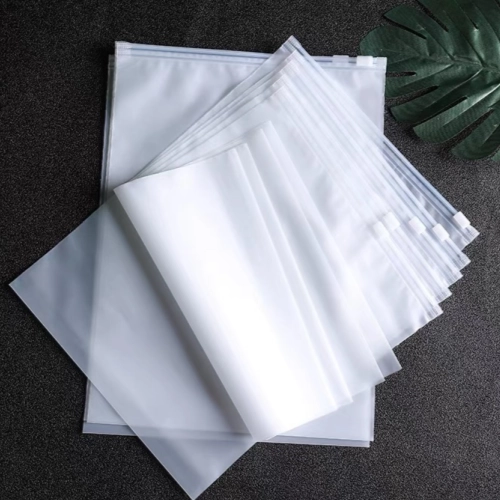
What are Compostable Garment Bags?
Compostable garment bags are eco-friendly packaging solution designed to break down into non-toxic organic matter (water, carbon dioxide, and biomass) when placed in a composting environment. Ulike traditional plastic bags made from finite fossil fuels, these bags are typically manufactured from renewable plant-based materials.
Key Materials Include:
- PLA (Polylactic Acid): Derived from fermented plant starch (usually corn, cassava, or sugarcane).
- PBAT (Polybutylene Adipate Terephthalate): A biodegradable co-polymer that adds flexibility and durability to the bag.
- Cornstarch Blends: Often mixed with PLA or PBAT to accelerate decomposition and reduce carbon footprint.
Crucially, a “compostable” bag is distinct from a “biodegradable” one. While biodegradable bags merely break down into smaller pieces (potentially leaving microplastics), certified compostable bags must decompose completely within a specific period of time (usually 90-180 days) leaving no toxic residue behind.
Types of Compostable Bags for the Fashion Industry
Fashion brands may have diverse needs, from shipping durability to retail presentation. Fortunately, advanced technology can offer several specific types of packaging.
Compostable Ziplock Bags
These are resealable bags featuring a “press-to-close” interlocking track. The zipper mechanism itself is made from bio-polymers, ensuring the entire bag is compostable, not just the film.
These bags are best for packaging swimwear, lingerie and small accessories that customers might want to return or store in the original packaging.
Compostable Slider Zipper Bags
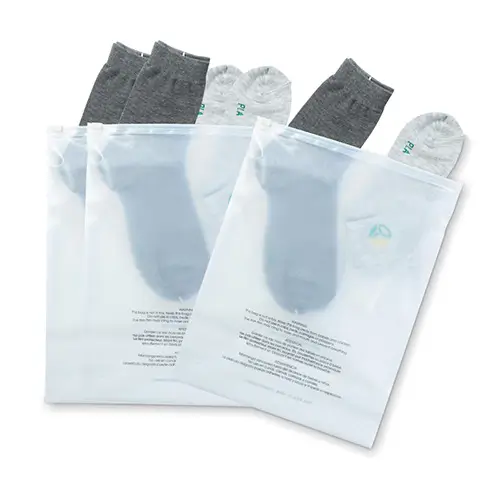
Similar to ziplock bags but equipped with a physcial sliding tab for easier opening and sealing. Generally, manufacturers must ensure the slider piece is also certfied compostable to avoid contaminating compost streams with small plastic bits.
Slider zipper bags are suitable for premium apparel, coats, or thicker items where a standard press-seal might pop open. The slider adds a “high-end” feel to the unboxing experience for customers.
Compostable Flat Garment Bags
These bags do not build sealing tapes on the top, which are used for packaging clothings or bulk shipping. They use the least amount of material, making them the most cost-effective and lightweight option for large-scale logistics.
Compostable flat apparel bags can be used for suits, dresses, and B2B shipping (factory to warehouse).
Compostable Self-Adhesive Bags
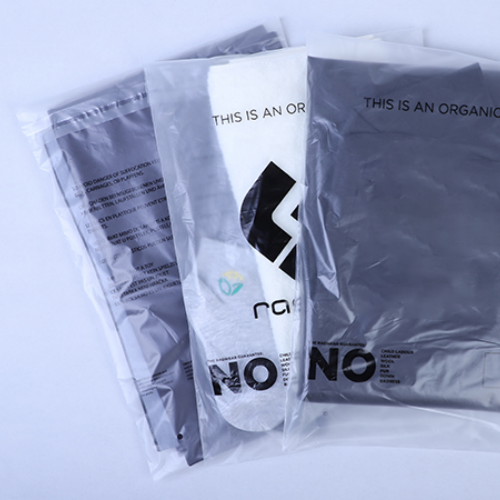
Compostable self-adhesive bags are one of the most popular choice for e-commerce business. These bags feature a peel-and-seal strip, which can be designed as tamper-evident or reusable. These compostable adhesives can also break down safely in a comost pile.
They are ideal for packaging t-shirts, jeans, and general e-commerce shipments.
Why Choose Compostable Bags for Clothes?
Reduced Carbon Footprint
Manufacturing plant-based plastics produces fewer greenhouse gases than extracting and refining petroleum for standard polybags. In addition, swicthing to compostable bags derives orgainc waste from landfills to composting facilities, leading to fewer burden on landfills.
Zero Microplastics
Unlike “degradable” plastic bags that break into microplastic toxic bits, certified compostable bags turn into soil that can be used to grow more plants—closing the loop.
Brand Alignment & Loyalty
A study found that over 60% of consumers are willing to pay more for sustainable packaging. Using compostable bags signals that your brand cares about every detail, building trust with eco-conscious shoppers.
How Clothing Manufacturers Can Implement Sustainable Packaging
Transitioning to sustainable packaging requires more than just buying a new product. It requires a thoughful strategy.
Choose Truly Sustainable Packaging
Certifications
To ensure you are buying genuine compostable bags, you must look for certifications. Do not trust a bag that simply says “Eco-friendly.”
| Certification Body | Region | Standards |
|---|---|---|
| TÜV Austria | Europe | OK Compost HOME OK Compost INDUSTRIAL |
| BPI (Biodegradable Products Institute) | North America | ASTM D6400 |
| ABA (Australasian Bioplastics Association | Australia | AS 5810 (Home Composting) AS 4736 (Industrial Composting) |
| Din Certco | Europe | EN 13432 |
Non-Toxic Inks & Adhesives
It cannot be ignored to verify the printing ink. Ensure your manufacturer uses soy-based or water-based inks for printing your logo, as standard petroleum inks can render a compostable bag toxic.
Biodegradable adhesives ensure that the packaging absolutely eco-friendly, breaking down naturally.
Convey Sustainable Value to Customers
Your packaging is a marketing tool. If a customer throws a compostable bag in the trash, its potential is wasted becuase it won’t compost in a landfill. So producers must inform retailers and customers about the right disposal practices.
Here are some practical approaches:
- Print Instructions: Clearly print “Home Compostable” or “Industrial Compostable” on the bag with simple disposal instructions.
- Educate via QR Code: Add a QR code to the bag that leads to a landing page explaining your sustainability mission and how to compost the packaging bags.
Upgrade to Sustainable Garment Bags
The shift toward sustainable fashion isn’t just about the clothes we wear, but how they are delivered to the world. Compostable garment bags are the bridge between premium presentation and environmental responsibility.
Embracing these materials proves that you don’t have to sacrifice quality to be kind to the earth. Whether you need slider zipper bags for coats or adhesive bags for t-shirts, making the switch helps eliminate microplastics and builds lasting trust with your customers.
Ready to switch to sustainable packaging? Explore our range of certified compostable garment bags today.
FAQs
In general, compostable garment bags are made of PLA, PBAT and corn starch.
Under the composting condition, compostable plastic bags can break down into orgainc matter within 3 to 6 months. It is important to note that they require specific conditions (miroorganisms, humidity, and temperature) to decompose efficiently.
Yes. Compostable poly bags are waterproof and dustproof, ensuring that garments remain dry and clean during storage and shipping. However, unlike plastic, they are breathable enough to prevent mold buildup over long periods.
Switching to compostable packaging offers a dual benefit: environmental impact and brand equity.
Environmentally, it reduces landfill waste and eliminates the risk of microplastic pollution, as the bags return to the earth safely. Commercially, it demonstrates environmental responsibility. Using sustainable packaging signals to eco-conscious consumers that your brand is committed to the planet, which increases customer loyalty and brand value.
The main differences are the mechanism and the presentation:
Compostable ziplock bags use a “press-to-seal” interlocking track. They are generally more cost-effective and have a lower profile, making them excellent for swimwear, lingerie, or high-volume shipping.
Compostable slider zipper bags feature a physical sliding tab that glides back and forth to open or close the bag. This mechanism is easier for customers to use and offers a more “premium” unboxing experience. They are ideal for premium apparel, coats, or items where the customer is likely to reuse the bag for storage.