
Introduction
Cling wrap, or cling film as it’s also known, has become an absolute staple. From households trying to reduce food waste to bustling cafes, restaurants, and food manufacturers, this thin plastic film plays a crucial role in food safety, freshness, and presentation. It’s versatile, and convenient, and it was the only game in town for a long time.
Think about it: wrapping sandwiches for a packed lunch, covering bowls of salad in the fridge, or protecting delicate pastries in a bakery. It’s everywhere! But this widespread use comes with a significant environmental price tag, and that’s where the conversation about alternatives really heats up.
That’s where compostable cling wrap bursts onto the scene. It’s more than just a new product; it’s a fundamental shift in how we think about single-use plastics. If you’re a distributor, supplier, or run a food service business, understanding this shift isn’t optional – it’s essential for staying relevant, meeting customer expectations, and genuinely reducing your environmental footprint.
So, let’s dive deep. We’ll compare materials, performance, disposal, environmental impact, and cost between compostable and traditional cling wrap. By the end, you’ll have the clarity you need to make informed decisions for your business and your customers.

Difference between Compostable Cling Wrap and Traditional Cling Wrap
Materials
Traditional Cling Wrap: The Petroleum-Based Plastic
For decades, the undisputed champion of cling wrap has been made from fossil fuels. Most common versions are made from Polyvinyl Chloride (PVC), Polyvinylidene Chloride (PVDC) or Polyethylene (PE). Both of them are difficult to recycle and relies on the non-renewable resource.
Compostable Cling Wrap: Plant-Based Resource
Now, let’s talk about the rising star: compostable cling wrap. This is where innovation meets environmental responsibility. Instead of oil rigs, think cornfields, sugarcane plantations, and even potato waste! These wraps are typically made from a blend of plant-based polymers and sometimes compostable synthetics. The main players are:
- PLA (Polylactic Acid): It’s often derived from fermented corn starch or sugarcane.
- PBAT (Polybutylene Adipate Terephthalate): A compostable but petroleum-based polyester. Crucially, it’s designed to break down completely in industrial composting facilities. It adds the essential stretch and cling that PLA lacks on its own.
- PHA (Polyhydroxyalkanoate): Made by microorganisms feeding on plant sugars. It’s fully bio-based and marine biodegradable under certain conditions.
Performance
Stretch Range: Can it Go the Distance?
- Traditional Wrap: Decades of refinement have made traditional films incredibly stretchy – often 200-300% or more. They’re generally easy to handle straight off the roll, resisting tearing during application.
- Compostable Cling Film: Early versions were stiffer, but formulations have improved dramatically. Modern compostable stretch cling film leverages blends like PLA/PBAT to achieve very respectable stretch ranges, often hitting 150-250%.
Cling Performance: How Well Does It Seal?
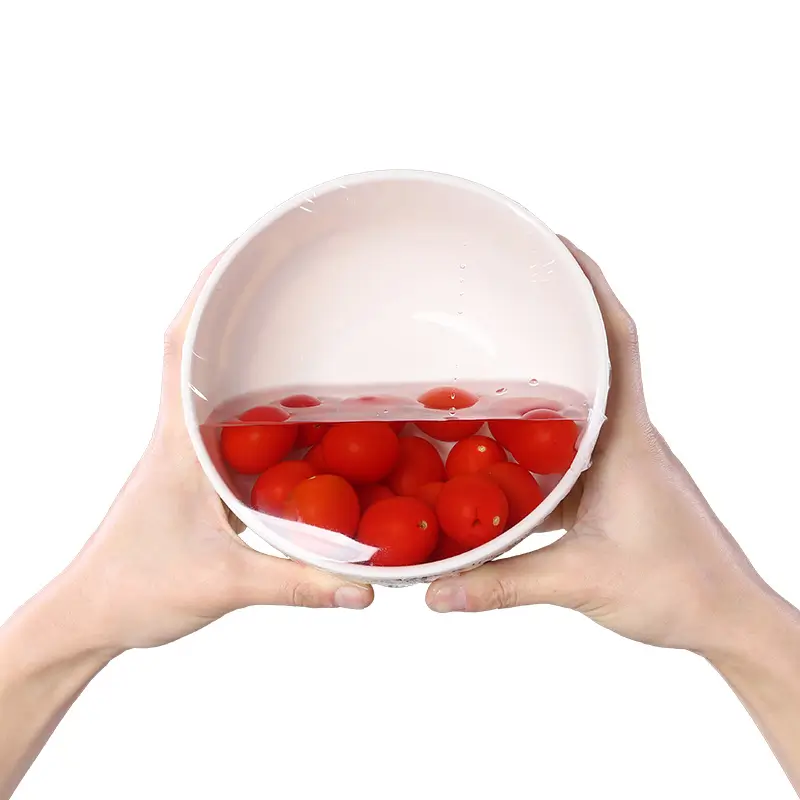
- Traditional Cling Wrap: Traditional film, especially PVDC, often reigns supreme here. It generates strong static cling that bonds tightly to itself (good for wrapping rolls) and adheres well to many smooth surfaces like glass, ceramic, and plastic.
- Sustainable Cling Wrap: Compostable wrap film relies more on mechanical cling and specific additive formulations rather than the static magic of PVC. Innovative compostable solutions offer excellent adhesion, sometimes even being described as “sticker” than traditional counterparts. Using a dispenser with a cutting edge can often help manage this stickiness, ensuring a clean tear and easy application.
Barrier Property: Keeping Goodness In and Badness Out
A key function of cling wrap is to act as a barrier, preventing moisture loss or gain, and protecting food from external contaminants like dust or odours.
- Traditional Cling Film: PVDC-based films offer exceptional barriers against both oxygen and moisture vapor. PVC is also very good, especially for moisture. This is why they’ve been the go-to for long-term fresh produce storage or delicate items prone to oxidation.
- Compostable Cling Film:
- Compostable films, thanks to the micropores in materials like PLA, allow for moderate water and oxygen exchange, which can actually be beneficial for certain fresh produce, helping to preserve its quality without trapping too much moisture that could lead to spoilage.
- By incorporating PBAT or specific barrier additives, compostable cling film has significantly improved its oxygen barrier performance. While it might not always match the absolute pinnacle of PVDC for ultra-long-term storage, it provides excellent protection for typical short-to-medium-term food storage needs (days to a week or so). For most bakery items, covered platters, prepped veggies, or leftover sandwiches, it’s more than sufficient.
Transparency: Seeing What You’re Storing
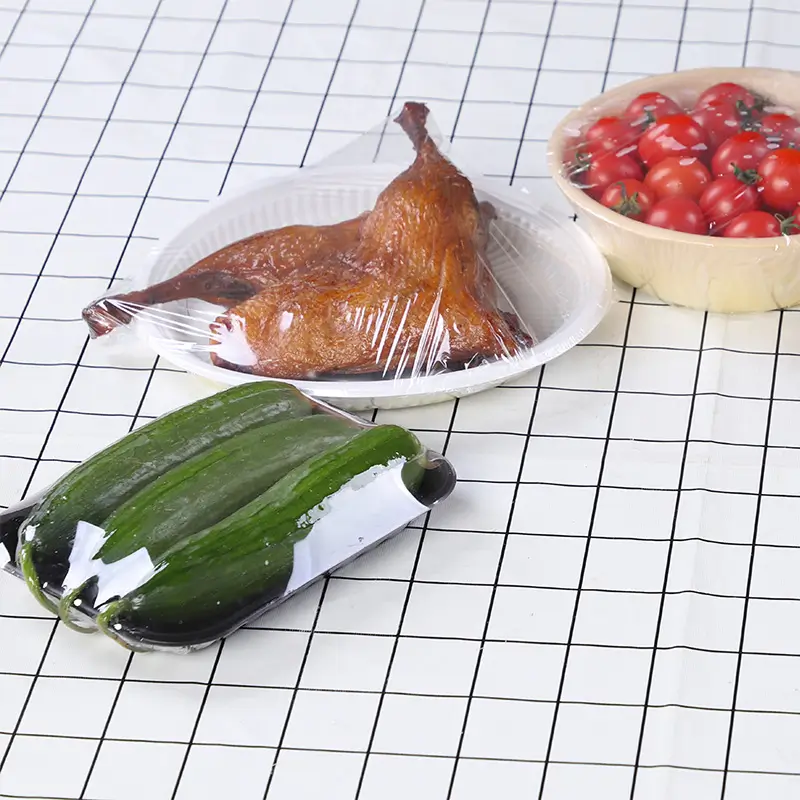
- Traditional Wrap: Offers excellent, often near-perfect optical clarity. Food looks vibrant and appealing underneath.
- Compostable Wrap: Compostable cling wrap achieves very high levels of transparency, often indistinguishable from traditional film to the casual eye. Some very early bio-films had a slight haze, but this is largely a thing of the past.
The Final Disposal of the Film
How you dispose of your cling wrap is critical to its environmental impact, and this is a major point of divergence between the two types.
Compostable Cling Wrap
- Home Composting
Look for certified home compostable film. This means they are designed to decompose within a reasonable timeframe ( often 12-24 weeks) under typical home composting conditions – a mix of heat, moisture, and microbial activity.
- Industrial Composting
Some compostable products, while still eco-friendly, are designed for industrial composting facilities. These systems operate at higher temperatures and with more controlled conditions, allowing for faster and more complete breakdown. If your compostable cling wrap is labelled “industrially compostable,” it’s important to check if your local council offers a food or garden waste collection service that handles these materials. If not, it’s still better to dispose of it in your general waste than to contaminate plastic recycling streams.
Traditional Cling Wrap
The sad reality is that most traditional cling wrap ends up in landfill. Because it’s made from petroleum-based plastics like PVC or LDPE, it’s not easily recycled through standard curbside programs.
While some LDPE cling film can theoretically be recycled, it rarely happens in practice. Why? Food contamination is a huge issue. Think about it – greasy pizza boxes, sauce-covered bowls – these are cling wrap’s natural habitat! This contamination, combined with its lightweight and flimsy nature, makes it a nightmare for recycling facilities. It can clog machinery and isn’t compatible with the plastics typically collected. So, sadly, most of it just goes to landfill, where it can persist for hundreds of years.
Environmental Impact
Traditional Cling Film: The Heavyweight Environmental Cost
- Fossil Fuel Dependence & Extraction: Relies entirely on non-renewable oil and gas, involving environmentally damaging extraction processes (like drilling and fracking) and contributing to greenhouse gas emissions from the get-go.
- Manufacturing Footprint: Producing PVC and PVDC is energy-intensive and involves hazardous chemicals (like chlorine and vinyl chloride monomer), creating pollution and health risks near manufacturing plants.
- Microplastic Menace & Ecosystem Harm: As traditional film fragments (especially in oceans or through landfill breakdown), it creates persistent microplastics. These infiltrate ecosystems, harm wildlife that ingest them, and are now found throughout the food chain, including in humans. It’s a toxic legacy that lasts generations.
Compostable Cling Wrap: Aiming for a Greener Trend
- Renewable Resources: Using plants (like corn, sugarcane) as feedstock reduces reliance on finite fossil fuels. While agriculture has its own impacts (land use, water, fertilizers), it’s a fundamentally different, renewable starting point. The carbon in the plants was recently absorbed from the atmosphere.
- Reduced Carbon Footprint Potential: Studies often show that compostable plastics, especially when derived from waste biomass and composted correctly, can have a lower net carbon footprint than traditional plastics over their lifecycle. The composting process captures carbon in the soil (in the compost), acting as a carbon sink.
- Turning Waste into Resource: If compostable cling film reaches an industrial composter and breaks down fully, it avoids landfill, doesn’t create persistent microplastics, and contributes valuable nutrients back to the soil. It transforms waste into a resource, mimicking natural cycles. But this hinges entirely on proper disposal infrastructure and use.
Cost Comparison
For distributors and food service businesses, cost is always a major consideration. Is the greener option also the more expensive one?
Initial Investment
Honestly, when you first look at the price per metre, compostable cling wrap can sometimes be a bit more expensive than traditional counterpart. This is often due to the cost of sourcing renewable materials and the sometimes more complex production processse involved.
Long-Term Value
However, it’s not just about the initial cost. Businesses adpoting compostable stretch cling film are often seeing long-term value in several ways:
- Enhanced Brand Image: Demonstrates environmental responsibility, appealing to eco-conscious customers and employees.
- Meeting Regulations: As single-use plastic bans expand (like those on PVC or non-compostable food service items), being ahead of the curve avoids disruption and fines.
- Waste Management Savings: Landfill tipping fees are rising steadily across the globe. Diverting organic waste (food scraps + compostable film) to composting can significantly reduce these fees for businesses generating large volumes of waste.
So, while the per-meter cost might be slightly higher, the overall value proposition of compostable cling wrap can make it a very smart business decision.
At a Glance: Compostable Cling Wrap vs. Traditional Cling Wrap
To make it super clear, let’s break down the key differences in a handy table.
| Features | Compostable cling wrap | Traditional cling wrap |
|---|---|---|
| Materials | Plant-based polymers (PLA, PBAT) | Petroleum-based plastics (PVC, PE, LDPE) |
| Stretch Range | Good | Excellent |
| Cling Performance | Excellent | Excellent |
| Barrier Property | Good moisture barrier, improving oxygen barrier | Excellent moisture & oxygen barrier |
| Transparency | High; allows for easy product visibility. | High; offers excellent product visibility. |
| Disposal Method | Home or industrial composting | General waste/landfill. Difficult to recycle. |
| Environmental Impact | Lower carbon potential; renewable resources; no microplastics if composted | Landfill burden; potential for microplastics; relies on fossil fuels. |
| Cost Comparison | Higher | Lower |
Conclusion
The world of cling wrap is evolving, and fast. While traditional cling wrap has served us for decades, its environmental footprint is simply no longer sustainable. Compostable cling wrap isn’t just a trend; it’s a necessary evolution, offering a viable, high-performing alternative that aligns with the growing global demand for eco-conscious solutions.
For distributors and food service businesses, making the switch to compostable cling film is more than just a good deed; it’s a strategic business move. It demonstrates a commitment to sustainability that resonates with today’s consumers, enhances brand reputation, and positions your business for a future where environmental responsibility is not just valued, but expected.
Yes, there might be a slight adjustment in cost or handling, but the benefits – for the planet, for your brand, and for future generations – are immeasurable. It’s time to embrace the change and wrap up a more sustainable future, one compostable roll at a time. Are you ready to make the switch?
Contact us to start a conversation.