
Choosing the right table cove can truly elevate your event. Decorating the dining table showcases the overall aesthetic of the space. Whether it’s preparing for a party or setting up a restaurant venue, the tabletop must look exquisite and eye-catching. But the key point is: we have already left behind the era of common single-use plastics. If you are a purchaser looking to upgrade your inventory or event setup, choosing compostable tablecloths can strike a balance between fashion, sustainability, and practicality.
This is not merely a film; it is also an embodiment of your enterprise’s values. Next, let’s delve deeper into how to make a choice that is both aesthetically pleasing and practical, one that will not be forever buried in landfills.
Why You Should Swap Plastic Table Covers for Compostable Alternatives
For a long time, traditional plastic table covers were the go-to because they were cheap and available. But these covers are tough to recycle and almost impossible to reuse once they get torn or stained.
On the flip side, high-quality compostable table linens have really leveled up. They offer the same spill-resistant barrier you expect, they’re durable enough to withstand a busy event. When the event is done, you can send them to an industrial composting facility. It’s an upgrade that makes operational sense without sacrificing the “disposable” convenience.
Practical Tips for Choosing the Right Compostable Table Cover
Choose the Right Material
Compostable table covers are often made of PLA, PBAT and other renewable alternative to traditional polymers.
- PLA is derived from resources like cornstarch, offering clear and strong features for disposable tablecloths. However, it can be brittle and does not handle high heat well.
- PBAT is often blended with PLA to make the tablecloth stretchier and less prone to tearing.
Manufacturers combine these to create a product that is strong enough to handle spills, flexible enough to drape over a table, and compostable in the right environment.
Verify Certifications
If you are looking for the best option, you will often come across the term “compostable”. However, don’t just believe what they say; instead, check the actual certification marks.
When you’re vetting a potential product, search for certifications from groups like BPI (Biodegradable Products Institute). These aren’t just pretty stickers; they prove the product has passed rigorous testing (like ASTM D6400) to ensure it breaks down correctly. For a purchaser, this documentation is your shield against greenwashing. It’s the difference between a product that truly breaks down and one that just breaks into smaller, annoying pieces of micro-plastic.
Sizing and Drop Considerations
Nothing is more frustrating than a table cover that is two inches too short. It exposes the table legs and ruins the symmetry. Frankly, it looks a bit amateur. Getting the sizing right is 90% of the battle.
The Formula for Tablecloth Sizing
Whether you’re working with round, rectangular, or square tables, there is a simple math formula you should keep on a sticky one. It never fails:
- Length: Table Length + (Desired Drop × 2)
- Width: Table Width + (Desired Drop × 2)
If you’re looking at a round table, it’s even easier: just use the diameter plus the drop multiplied by two. If you keep this formula in your pocket, you’ll never end up with an undersized cover again.
Drop Consideration( How Much Overhang You Want)
The “drop” is just a fancy way of saying how much hangs over the edge. It dictates the entire mood of your table.
- Casual (Standard Drop): 6 to 10 inches. This is perfect for the informal, breezy vibe of a picnic or a birthday party. It’s easy to clean, stays out of the way, and is budget-friendly.
- Semi-Formal (Lap Length): 12 to 15 inches. This is the sweet spot for restaurants. It’s elegant enough to feel “nice” but keeps the tablecloth out of the guest’s way while they sit.
- Formal (Floor Length): 29 to 30 inches. It hides the table legs entirely and is the go-to for weddings, banquets, or any formal setup.
Common Table Sizes & Recommended Cover Sizes
| Table Shape | Table Size | Standard Drop (8″–10″) | Floor Length (30″) |
| Rectangular | 4 ft (48″ x 30″) | 64″ x 46″ | 108″ x 90″ |
| 6 ft (72″ x 30″) | 90″ x 46″ | 132″ x 90″ | |
| 8 ft (96″ x 30″) | 114″ x 46″ | 156″ x 90″ | |
| Round | 48″ (4 ft) | 64″–68″ Round | 108″ Round |
| 60″ (5 ft) | 76″–80″ Round | 120″ Round | |
| 72″ (6 ft) | 88″–92″ Round | 132″ Round | |
| Square | 36″ x 36″ | 52″ x 52″ | 96″ x 96″ |
Additional Tips:
When in Doubt, Size Up: It is much easier to tuck or drape a slightly larger tablecloth than it is to fix one that is too short and leaves the table surface exposed. So always size up.
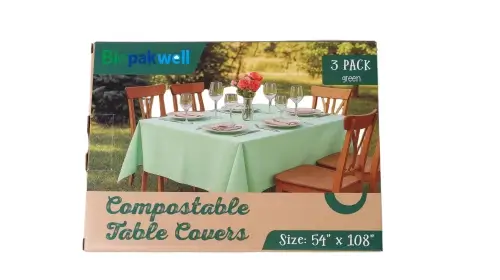
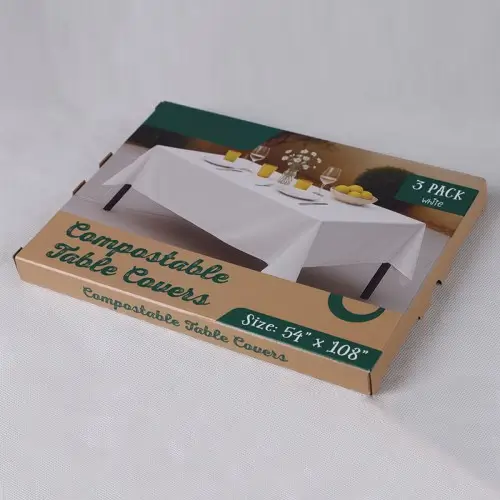
Check the “Box” Size: Disposable compostable covers are often sold in standard sizes like 54″ x 108″ (which fits a standard 6ft or 8ft rectangular table with a casual drop).
Account for Table Leaves: If you are using a dining table that has an extension (leaf), measure it while the leaf is inside so you don’t end up with an undersized cover.
Storage: Because they are made of organic materials, store them in a cool, dry place away from direct sunlight to prevent them from starting to break down prematurely.
Right Color and Design to Match Event Theme
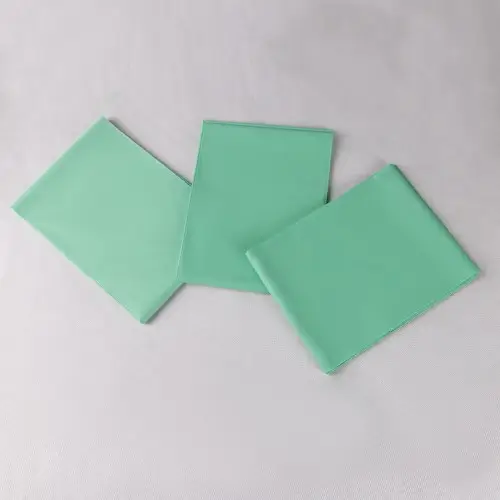
For exquisite atmosphere, you can find beautiful patterns, colors, and textures that match your brand’s specific theme or the color palette of your premises. For instance, an activity related to environmental protection would be more suitable to be decorated with light green tablecloths.
Durability and Quality
When selecting compostable table cover options, look at the performance metrics. Is it spill-resistant or tear-resistant? Does it actually hold up during a long event?
Choose the high-quality compostable tablecloth saves your money in the long run. Because you don’t need to deal with rips, stains, or embarrass equipment failures mid-event.
Non-Toxic Dyes and Inks
Biodegradable compostable covers are free of toxic dyes. It would be a shame to have a perfectly compostable base material only to have it ruined by toxic heavy-metal inks. It’s a small detail that makes a massive difference in the quality of your procurement.
Choosing the Right Manufacturer: Aligning with Your Procurement Plan
Finally, the most important step: picking the right partner. Don’t just browse a catalog and click to place a order. Reach out to the manufacturer. Ask about their supply chain and if they can provide the exact specs and custom designs that fit your brand.
A reliable manufacturer isn’t just selling you a product; they’re helping you execute your business strategy. Having a partner who understands your volume, budget, and need for consistency is worth its weight in gold. Aligning your choice with your overall procurement plan ensures you aren’t just making a purchase—you’re making a wise, strategic investment.
Conclusion
Choosing a compostable table cover is a way to level up your event. It provides a better experience for your customers and guests. By focusing on the right size, verifying those crucial certifications, and partnering with a manufacturer who cares as much about the product as you do, you’re set up for success.
If compostable disposable tablecloths represent the future of your business, it’s time for a change.