
We’ve all seen it happen. Or worse, we’ve felt it. You’re handing a heavy order of lamb curry and three tiers of rice containers to a customer, and just as they reach for the handles—rip. The bottom gives way, the curry meets the pavement, and your restaurant’s reputation takes a hit right alongside the customer’s dinner.
For years, this nightmare scenario has kept restaurant owners tethered to traditional plastic. There’s a lingering fear that switching to compostable takeout bags means sacrificing strength for “green” points. We’ve been told that plant-based materials are flimsy, that they melt under heat, or that they’re basically just reinforced tissue paper.
But here’s the truth: the compostable plastic takeout bags of today aren’t the “corn bags” of 2014. Technology has caught up. If you’re a distributor or a business owner wondering if sustainable takeout order packaging bags can actually handle a 15-pound Sunday roast delivery, the answer is a resounding yes—but you have to know what you’re looking at.

The Science of Strength: What Are They Actually Made Of?
To understand if a bag can hold weight, we have to look at the “molecular muscle” behind it. Most people think these bags are just compressed cornstarch. If they were, they’d dissolve the second a drop of rain hit them.
Beyond Cornstarch: The PLA and PBAT Secret
Modern compostable takeout bags are usually made from a blend of two main ingredients: PLA (Polylactic Acid) and PBAT (Polybutylene adipate terephthalate).
PLA, derived from fermented plant starch (like corn or sugarcane), is great because it’s stiff and holds its shape. However, stiffness alone makes a bag brittle. That’s where PBAT comes in. PBAT is a biodegradable polymer that adds flexibility and “stretch.” When you combine them, you get a material that behaves almost exactly like LDPE (Low-Density Polyethylene)—the stuff traditional grocery bags are made of.
Why Flexibility Matters in Sustainable Packaging
Think of it like a bridge. A bridge that’s too rigid will snap under a heavy load during an earthquake. A bridge with some “give” will sway and survive. Compostable takeout bags have high tensile strength, meaning they can stretch significantly before the molecular bonds actually break. This “stretch factor” is exactly why they can handle those awkward, heavy-duty containers without instantly puncturing.
Performance Metrics: How Much Weight Can They Actually Hold?
If you’re buying or selling these bags, you need to stop looking at the “color” and start looking at the “microns.”
The Micron Matter: Understanding Thickness
In the world of sustainable takeout order packaging bags, thickness is measured in microns (or “mils” in some regions).
- Standard bags (15–20 microns): These are perfect for a couple of pastries, a sandwich, or a light salad.
- Heavy-duty bags (30–50+ microns): This is the sweet spot for heavy orders.
| Bag Type | Recommended Weight Capacity | Best Use Case |
|---|---|---|
| Lightweight Compostable | 3 – 5 lbs | Cafes, Bakeries, Small sides |
| Medium Compostable | 8 – 12 lbs | Standard lunch orders, 2-3 containers |
| Heavy-Duty Compostable | 15 – 22+ lbs | Family meals, Italian/Chinese/Mexican food |
Handle Design: T-Shirt vs. Die-Cut
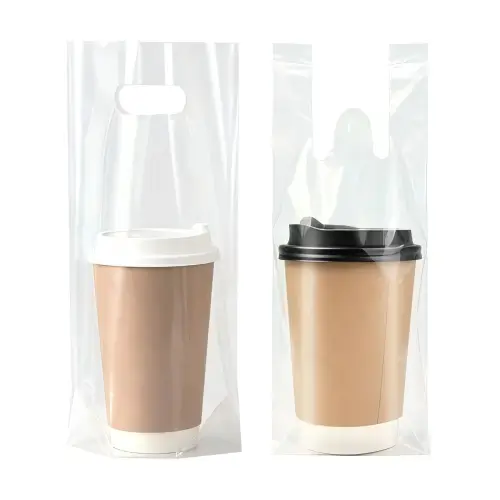
It’s not just the material; it’s the geometry. The “T-shirt” (vest) handle is the king of weight distribution. Because the handles are an extension of the bag’s side gussets, the weight is pulled upward through the strongest part of the film. Die-cut handles (the ones that look like an oval hole cut into the top) look “classier” but are more prone to tearing if the order is exceptionally heavy. For a five-course meal, stick with the T-shirt style compostable plastic takeout bags.
The “Triple Threat” to Bag Integrity
Heavy orders aren’t just about weight; they’re about environment. This is where things get tricky for restaurant owners.
The Steam Factor
Hot food creates condensation. In traditional plastic, this doesn’t matter. But with some lower-quality plant-based bags, prolonged exposure to high heat and moisture can start the “weakening” process (since they are designed to break down eventually). If your delivery driver is stuck in traffic for 40 minutes with a steaming bag of Pho, you need a bag with a higher PBAT content to ensure it doesn’t soften.
Puncture Resistance and Sharp Edges
Have you noticed how sugarcane clamshells have those slightly sharp, unfinished edges? Or how plastic lids can have pointed corners? A “hard” bag will puncture. A “stretchy” compostable bag will often deform around the corner rather than letting it poke through. This is a massive advantage of heavy duty eco-friendly takeout bags—they have better “give.”
Compostable vs. Traditional Plastic: The Head-to-Head
Let’s be real: traditional plastic is cheaper. It just is. But the gap is closing, and the “hidden costs” of plastic are rising.
- Pros of Compostable: Incredible brand perception. Customers love seeing that “Fully Compostable” logo. It tells them your business cares about more than just the bottom line. Plus, they have better elasticity.
- Cons: They have a shorter shelf life. If you buy a five-year supply and store them in a hot, humid garage, they will lose their strength. You want to use your stock within 12 months.
- The “Double-Bagging” Myth: I see many restaurants double-bagging with thin plastic to save money. This is a false economy. Two thin, cheap bags often cost more—and look worse—than one high-quality, 30-micron compostable takeout bag.
How to Choose the Right Bag for Your Menu
If you’re a distributor, you need to help your clients match the bag to the menu.
- The “Noodle Test”: If the restaurant serves heavy, liquid-based foods (like Ramen or Curry), suggest a bag with a reinforced bottom heat-seal. The seal is usually where a bag fails, not the wall of the bag itself.
- The “Stack Test”: If they stack four containers high, they need a “jumbo” gusseted bag so the weight isn’t pushing outward against the seams.
Real-World Tips for Restaurant Owners
I’ve spent a lot of time talking to folks in the food service industry, and these three tips usually save them a lot of headaches.
1. Storage is Key
Don’t store your compostable takeout bags under the sink where it’s damp, or right next to the pizza oven. Heat and humidity are the “activation triggers” for compostable resin. Keep them in a cool, dry place to maintain their maximum “hold” strength.
2. The Weight Distribution Trick
It sounds simple, but teach your staff to put the heaviest, flattest item at the bottom. Use a piece of cardboard at the base if you’re really worried. This prevents the “point-loading” that causes bags to stretch awkwardly.
3. Labeling for Customers
Sometimes customers mistake the “soft” feel of a compostable bag for weakness. A small note on the bag saying “I’m strong, I’m sustainable, and I’m compostable” changes their psychology. They stop looking for flaws and start appreciating the effort.
Bold the second table’s heading as requested:
| Testing Method | What it Tells You |
|---|---|
| The Pull Test | Checks the handle’s resistance to snapping. |
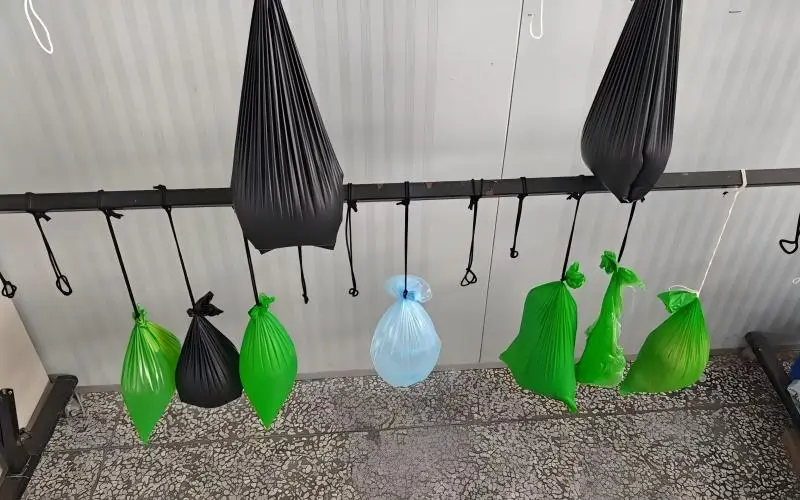
| The 24-Hour Stretch Test | Checks if the bag thins out under prolonged weight. |
Conclusion: Are They Ready for the Heavy Lifting?
So, can compostable takeout bags handle heavy orders? Absolutely. But you can’t treat them like a “one-size-fits-all” commodity. If you’re packing 20 pounds of food into a bag designed for a croissant, you’re going to have a bad time.
However, if you choose heavy duty eco-friendly takeout bags with a thickness of 30+ microns and a high PBAT blend, they will perform just as well—if not better—than traditional plastic. For distributors and restaurant owners, the transition to sustainable takeout order packaging bags isn’t just about saving the planet; it’s about upgrading the customer’s unboxing experience.
When you hand over a bag that feels sturdy, looks premium, and doesn’t end up in a landfill for 500 years, everyone wins. Just remember: check for the BPI Certification or the EN 13432 stamp. Those aren’t just stickers; they are your guarantee that the bag won’t fail when the “curry meets the road.”
Ready to make the switch? Start small, do a “stretch test” in your own kitchen, and watch your customers’ faces light up when they realize their Friday night feast is served with a side of environmental responsibility.