
Traditional plastic covers are conveninet for a massive table cleanup, but they contribute to landfill waste. So the compostable table cover is the ultimate solution for eco-conscious hosting. These innovative covers offer the liquid resistance and durability you need without negative impact on the environment.
By choosing compostable materials, you can simplify your catering and party routine while staying true to your green values. In this guide, we’ll explore what they are made of, their practical benefits, and how to dispose of them properly.
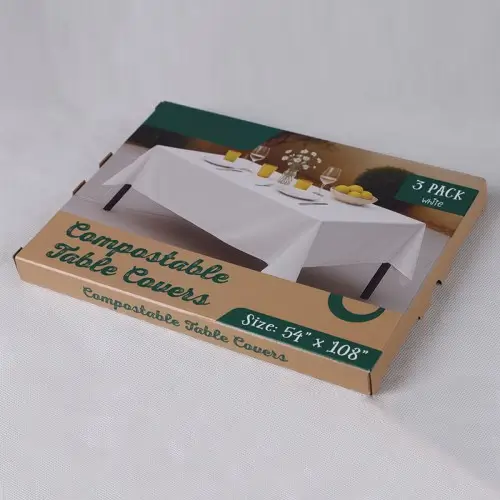
What are Compostable Table Covers Made of?
When you first touch a compostable table cover, you might be surprised to find it feels remarkably similar to traditional plastic. However, the science behind these materials is entirely different, relying on renewable resources rather than petroleum. Here is a breakdown of the primary materials used:
- Plant-Based Polymers (PLA)
Many “plastic-feeling” compostable covers are made from Polylactic Acid (PLA). This is a versatile bioplastic derived from fermented plant starch, most commonly sourced from corn, cassava, or sugarcane. PLA offers the same sleek finish and durability as conventional plastic. Because it is bio-based, it can be broken down by microorganisms under the right conditions.
- PBAT & Cornstarch Blends
To make table covers that are both flexible and highly durable, manufacturers often use a blend of PBAT and cornstarch. While PLA can sometimes be slightly rigid, these blends provide the “stretch” and softness required for a cover to drape elegantly over a table. Most importantly, this combination ensures the material is leak-proof, protecting the furniture from spills just as well as any standard plastic cover.
- Paper & Bamboo Alternatives
For those prefer a more organic, textured aesthetic, natural fiber options are widely available. These are typically made from recycled paper or sustainable bamboo. These alternatives offer a rustic, matte look that is perfect for outdoor luncheons or “boho” themed events. While they may not be as liquid-resistant as bioplastics, they are easy to compost and add a delicate, tactile feel to the table setting.
Benefits of Compostable Table Covers
Switching to compostable table covers isn’t just a win for the planet. This is also major upgrade for the host or event planner. These covers offer a unique combination of convenience and performance that traditional plastic simply can’t match.
Quicker Cleanup: The “Wrap & Roll” Method
The greatest advantage of using compostable table covers is the streamlined cleanup process. Instead of spending hours scraping plates and wiping down surfaces, you can use the “Wrap & Roll” method. At the end of the event, simply gather the leftover food scraps, biodegradable napkins, and crumbs right into the center of the tablecloth. Roll the entire bundle up and toss it directly into the compost bin. So you can eliminate the need to sperate organic waste form the “trash,” saving some time and labor.
Liquid Resistance
Compostable covers are designed to be liquid-resistant. Whether it’s a tipped-over wine glass or a splash of gravy, these covers act as a barrier. They protect your tables from stains and moisture. You get the same “wipeable” convenience as plastic without the long-term environmental footprint.
A Positive Guest Impression
Choosing a compostable tablecloth serve as a subtle yet powerful conversation starter, reflecting your values and attention to detail. It shows your guests that you’ve considered the lifecycle of the event. For businesses and wedding planners, this eco-conscious choice helps build a “green” brand identity and resonate with socially responsible audiences.
Reduced Waste Disposal Costs
For large-scale events, waste management can be an extra expense. By diverting disposable table covers and food waste away from landfills and into composting facilities, you can often reduce landfill tipping fees. It turns a waste stream into a resource, contributing to a circular economy while potentially lowering your overall event overhead.
Applications of Compostable Tablecloth
Because their durable and sustainable features, compostable tablecloth has become the standard across a wide range of industries and social settings.
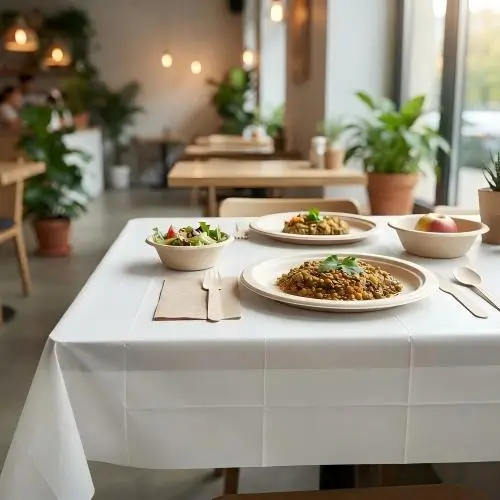
High-Volume Catering
Using compostable covers allows staff to spend less time cleaning tables and more time serving guests. By utilizing the “wrap and roll” method, the turnaround times between each session has been shortened. Furthermore, for large-scale catering businesses, diverting waste from landfills to composting facilities helps reduce landfill costs.
In summary, these disposable tablecloths not only have economic advantages but also align with environmental protection concepts.
Wedding & Outdoor Events
Compostable disposable tablecloths come in various colors and textures to match high-end decor. They provide a premium look for outdoor weddings where wind or grass might make traditional linens impractical, allowing the event to remain elegant while staying “green.”
Community Events & Festivals
For large-scale community events like street fairs, food festivals, and school carnivals, waste management is often the biggest logistical challenge. These events generate massive amounts of food-soiled waste. By mandate or by choice, many organizers are moving toward zero-waste goals. Compostable disposable tablecloth simplify the process by allowing attendees and volunteers to dispose of everything in a single organic waste stream, preventing the contamination of recycling bins.
How to Dispose of Compostable Table Covers Properly
Purchasing a compostable table cover is only the first step. Ensure it reaches the right destination is what completes the “green” cycle. Because these covers are made from various materials, disposal methods can vary.
Home vs. Industrial Composting
- Industrial Composting: Most bioplastic (PLA) table covers require the high, sustained heat of an industrial facility to break down. When choosing, look for labels like “BPI Certified” or “ASTM D6400.” These certifications guarantee the product will decompose in a professional composting environment.
- Home Composting: If you want to toss your tablecloth into your own garden bin, look specifically for the “Home Compostable” seal (such as TUV Austria’s OK Compost HOME). These are designed to break down at the lower temperatures found in domestic compost heaps.
Assessing Contamination Levels
Before you toss the cover film, take a quick look at what is on it. The level of food residue often dictates where it should go:
- Lightly Contaminated: If the cover only has light crumbs, water spills, or dry debris, it is generally safe for household or community compost bins (provided the material itself is home compostable).
- Heavily Soiled/Greasy: If the table cover is covered in heavy food waste, animal fats, or greasy sauces, it is better suited for industrial composting. Fats and oils can slow down the decomposition process in home bins and may attract pests. Always check with your local waste management to see if your municipal organic bin accepts food-soiled bioplastics.
By following these disposal guidelines, you ensure that your eco-friendly cover film actually results in nutrient-rich soil rather than just another piece of debris in a landfill.
Conclusion
Compostable table covers are a solution that balance convenience with environmental responsibility. Made from innovative plant-based materials, these covers are now just as durable and liquid-resistant as their plastic counterparts, ensuring your tables stay protected without the ecological cost.
Whether you are managing a high-volume catering business, organizing a community festival, or hosting an elegant outdoor events, these covers provide a stylish and practical way to reduce waste. By understanding the simple requirements for home and industrial composting, you can ensure your event waste is transformed into nutrient-rich soil rather than sitting in a landfill for centuries.
Ready to go green for your next event? Check out our range of certified compostable covers, and make your cleanup as sustainable as your hosting.
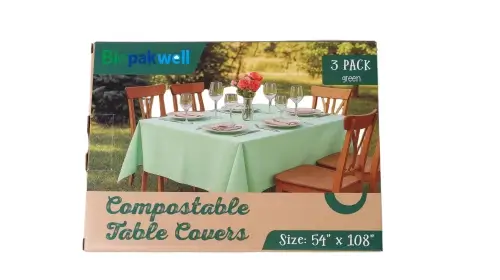
Compostable table covers