
Have you ever ordered a bulk shipment of “standard” liners only to find they won’t even stretch over the rim of your bins? Or perhaps you’re currently overpaying for heavy-duty 55-gallon bags to fit 40-gallon receptacles because you weren’t sure of the exact fit?
When trash bag sizes don’t match your bins, costs and mess pile up. In this complete guide to trash bag sizes, we’ll show you exactly how to measure, choose the right thickness, and cut waste out of your procurement cycle.
How Are Trash Bag Sizes Measured? (Gallon, Liter & Dimensions)
Gallons vs. Liters
In the United States, we live and die by the gallon. Most standard kitchen bins are marketed as 13-gallon containers. However, the world is shrinking, and many high-end brands often use liters to describe their capacity.
Here’s a quick mental conversion: 1 US gallon is roughly 3.785 liters. For the UK gallon, 1 gallon equals about 4.546 liters. If you’re a distributor selling trash bags, having both metrics on your packaging is a godsend for your customers. It removes the guesswork and builds trust.
Dimensions (Width × Length)
Volume measures how much “stuff” fits inside, but it doesn’t account for the shape of the container. You might have two different 13-gallon cans: one is tall and skinny, designed to fit into narrow cabinet gaps, while the other is short, squat, and wide. If you try to force a tall-style bag into a wide bin, you’re going to have a bad time. That’s why we always look at the flat width and the length (height) of the bag.
How to Measure Your Trash Can for the Perfect Bag
If you are going to buy some waste bags for your trash can in bulk, have a look at these three steps.
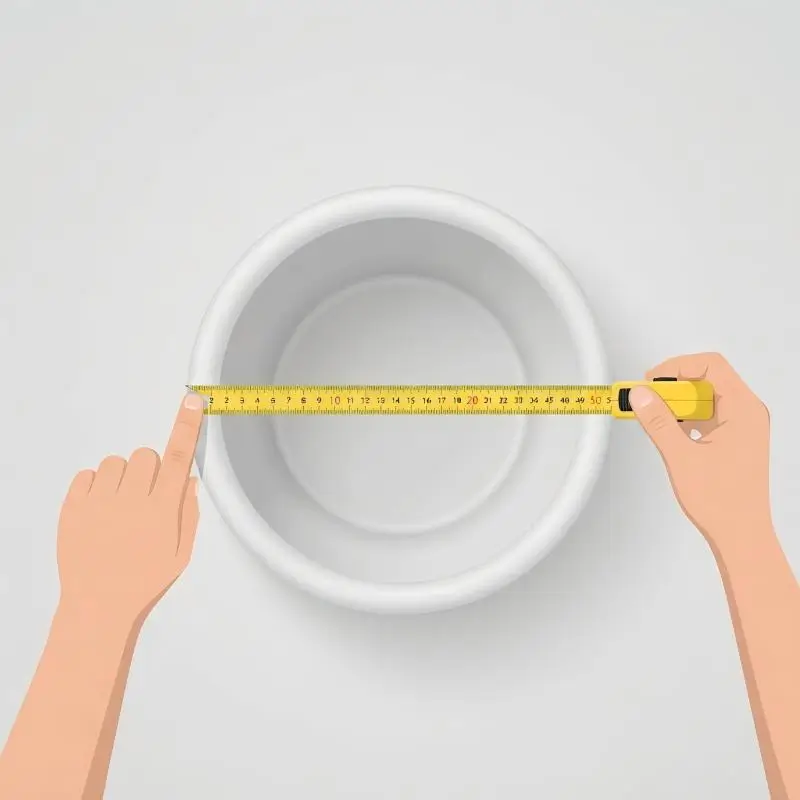
Step 1: Measure the Perimeter/Width
To find the right “flat width” of a bag, you need to know the distance around the top of the can.
- For Square or Rectangular Cans: Perimeter = 2 x (Length + Width). Take the total (the perimeter) and divide it by 2. That is your bag’s minimum flat width.
- For Round Cans: Take the diameter (the distance across the top) and multiply it by 3.14 (Pi). Divide that number by 2 to get the flat width.
Pro-tip: Always add an extra inch or two to this width. It’s better for a bag to be slightly loose than to be so tight it splits the moment you drop a heavy coffee mug into it.
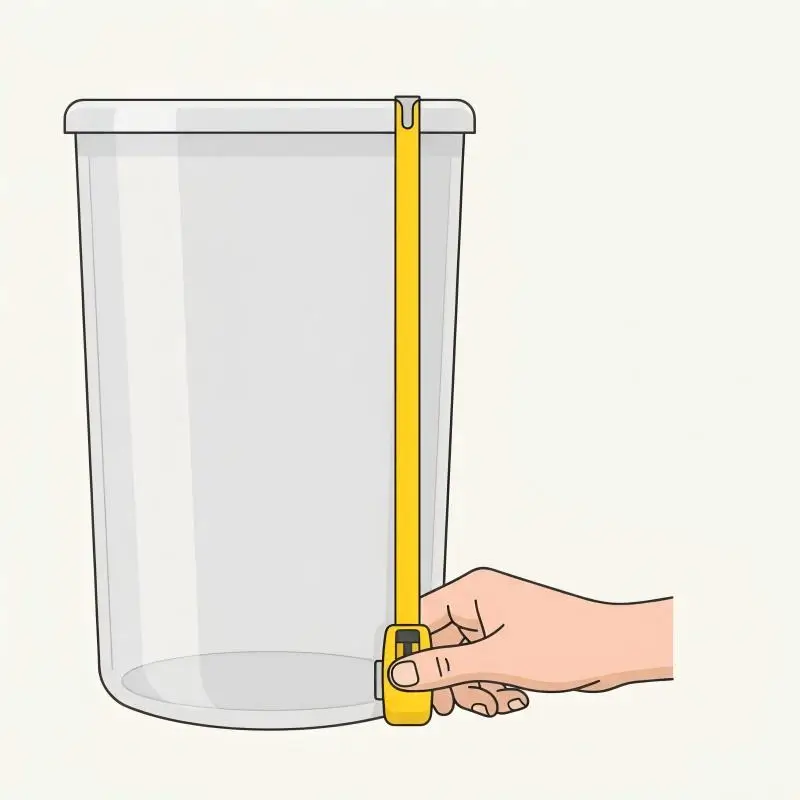
Step 2: Measure the Height
Measure from the very bottom of the can to the top rim. If the bag is too short, it will collapse into the can the second you put trash in it. If it’s too long, you’ll have a bunch of unsightly plastic bunched up at the bottom.
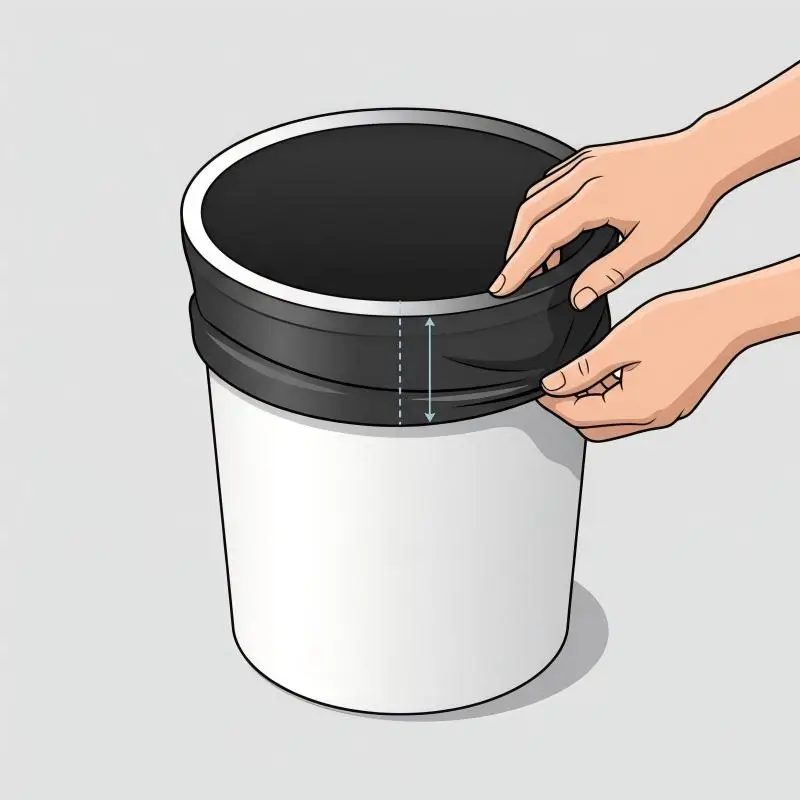
Step 3: Add the “Overhang”
This is the step everyone forgets. You need the bag to fold over the top of the rim so it stays in place.
- The Rule of Thumb: Always add about 3 to 4 inches to the height measurement so the bag can easily fold over the rim.
So if your can is 24 inches tall, you want a bag that is at least 27 or 28 inches long. This gives you enough material to wrap around the edge without losing precious volume inside the bin.
Trash Bag Size Chart: Dimensions & Uses
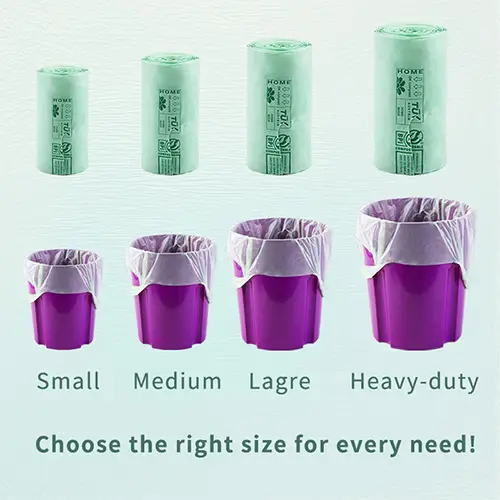
Not all trash bags are created equal. Depending on the room and the type of waste, you’ll need to pivot between various trash bag sizes.
| Type | Capacity | Typical Dimensions (W x L) | Best Use |
|---|---|---|---|
| Small | 4–8 Gallons | Approx. 17″ x 18″ | Bathrooms, under-desk office bins, bedrooms, small vanity cans |
| Medium | 10–16 Gallons | Approx. 24″ x 27″ | Kitchen, food scraps, general household waste |
| Large | 20–33 Gallons | Approx. 30″ x 36″ | Commercial breakrooms, event cleanup, yard waste |
| Extra Large/Heavy-Duty | 40–60+ Gallons | Approx. 38″ x 58″ | Construction sites, industrial warehouses, curbside rollaway bins |
Understanding Thickness: Why Mil vs. Micron Dictates Performance
Imagine you have the perfect sized bag, but it’s made of tissue paper. It doesn’t matter how well it fits the rim; it’s going to fail. For distributors and retailers, understanding “gauge” (thickness) is vital.
High-Density Bags
HDPE’s molecules are tightly packed in linear chains with very little branching, making the plastic dense and strong. HDPE bags are crinkly to the touch, and are often lack a glossy finish. Because it is so strong, HDPE bags can be made very thin (measured in microns) while still being functional.
Common Uses:
- Grocery Bags: The standard T-shirt style bag used at supermarkets.
- Trash Liners: Commonly used for office or bathroom bins where sharp objects aren’t a major concern.
- Produce Bags: The thin, clear rolls found in the fruit and vegetable section.
- Utility Bags: Laundry bags or industrial liners for powders and grains.
Low-Density Bags
LDPE has a highly branched molecular structure, which prevents the molecules from packing tightly together. This results in a softer, more flexible material. LDPE bags feel soft and smooth and don’t crinkle. These bags are better at resisting punctures from sharp corners because the plastic gives and stretches rather than snapping.
- 0.9 Mil: Standard kitchen bags.
- 1.5 Mil: Heavy-duty, good for sharp objects.
- 3.0 Mil+: Contractor grade.
Common Uses:
- Boutique/Retail Bags: Thick shopping bags with die-cut handles used by clothing or high-end retailers.
- Food Storage Bags: Ziplock-style bags, bread bags, and frozen food packaging.
- Heavy-Duty Trash Bags: The thick, black contractor bags used for construction debris.
- Bubble Wrap & Film: Used for protective packaging and shrink wrap.
Specialty Trash Bags to Consider
Drawstring vs. Flap-Tie
Most consumers love drawstrings. They make the bag easy to close and easy to carry. However, from a business perspective, drawstring bags actually use more plastic in the manufacturing process and can sometimes reduce the effective volume of the bag because the drawstring channel takes up space at the top.
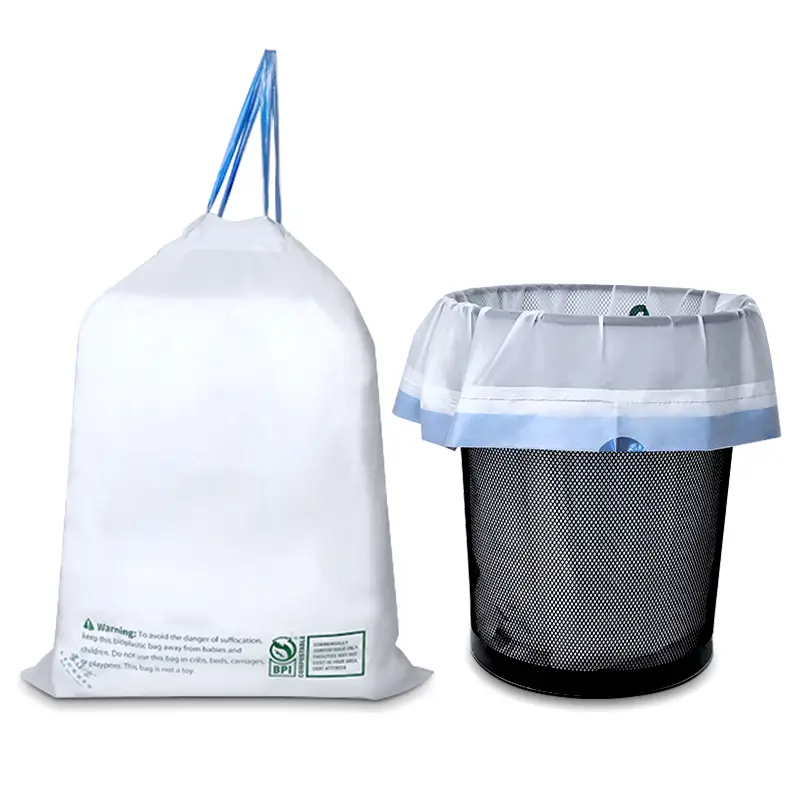
Flap-ties (those four wings you tie in a knot) are often more cost-effective and allow you to fill the bag literally to the brim.
Color-Coded Bags
Color coding is a universal language in waste management.
- Black: The classic. It hides the “ugly” garbage and provides privacy.
- Clear/Blue: Almost always reserved for recycling. Many municipalities won’t pick up your recycling if it’s in an opaque bag.
- Green: This is the international signal for compostable trash bags or sustainable trash bags. If you are a distributor, stocking green-tinted compostable liners is a great way to help customers visually distinguish their organic waste from their landfill waste.
Custom-Fit Bags
If you’ve ever struggled with a trash bag that’s too small for the rim or so large that it bunches up and looks messy, custom-fit liners are the solution. Unlike universal bags, these are designed to match the specific dimensions of your trash can.
- No More Slippage: The tailored fit ensures the bag stays securely around the rim, even when the trash gets heavy.
- Aesthetic Appeal: There’s no unsightly overhang or “bag wings” sticking out from under the lid, keeping your space looking sleek and tidy.
- Superior Strength: Most custom-fit brands use high-quality materials and double-seam construction to produce waste bags. This means you can pack it to the rim without worrying about punctures or leaks.
The Shift Toward Sustainability: Why Compostable Trash Bags are Winning
As waste management policies tighten and consumers become more eco-conscious, the demand for sustainable trash bags is skyrocketing.
For retail businesses and distributors, compostable trash bags are no longer a “niche” product. They are a necessity. These bags are typically made from plant-based materials like cornstarch or PLA/PBAT. They are designed to break down in a composting environment, returning to the earth rather than sitting in a landfill for 500 years.
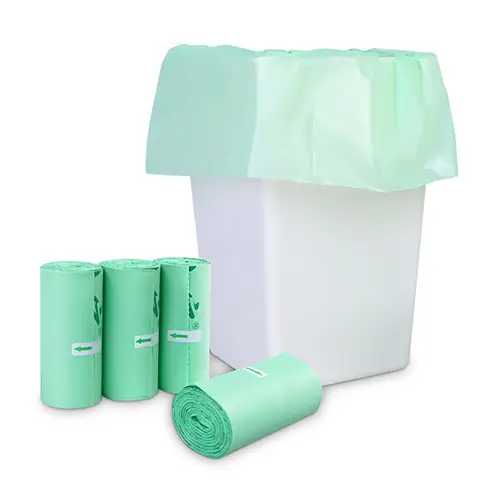
When choosing compostable trash bags, ensure they are certified (like BPI certification in the US or TUV in Europe). This ensures that the bag will actually perform as advertised and won’t just break into microplastics.
Clever Hacks to Keep Your Trash Bag from Slipping
Even with the perfect trash bag sizes, slipping happens. Here are a few “human” ways to fit it.
- The Giant Rubber Band: Use a massive rubber band to secure the overhang to the rim.
- The Command Hook Trick: Place two small Command hooks upside down on the sides of the bin. Hook the drawstrings around them. This keeps the bag anchored even when it gets heavy.
- The “Air Hole” Hack: If you struggle to get bags out of the can because of a vacuum seal, drill a tiny hole near the base of the plastic bin. It lets air in, making bag removal a breeze.
The Distributor’s Perspective: Managing Inventory of Trash Bag Sizes
If you’re in the business of supplying garbage bags, you know that “out of stock” is the kiss of death. Because there are so many trash bag sizes, it’s tempting to stock everything. Don’t do that.
Focus on the “Power Trio”:
- 13-gallon tall kitchen bags (both in standard and compostable trash bags)
- 7-10 gallon office/small bin liner
- 33-gallon large commercial liner
By covering these three bases, you satisfy about 80% of the market. You can then add specialty sizes—like 55-gallon drum liners or custom-fit equivalents—as your client base grows.
Conclusion
Selecting the right trash bag sizes isn’t rocket science, but it does require a little bit of attention to detail. Remember: measure twice, buy once. Consider not just the volume, but the dimensions and the thickness (Mil vs. Micron) to ensure the bag can handle whatever you throw at it.
As we move toward a more circular economy, don’t overlook the importance of sustainable trash bags. Whether you’re a household trying to go green or a distributor looking for the next big thing, compostable trash bags offer a functional, eco-friendly solution that doesn’t sacrifice performance.
So, go ahead—measure that bin, grab the right liner, and say goodbye to the days of “trash bag wrestling.”
Frequently Asked Questions (FAQs)
A: The standard kitchen trash bag size is 13 gallons, with a typical width of 24 inches and length of 27 inches.
A: Absolutely. It will fit easily, though you’ll have a bit of extra length at the bottom. It’s actually better to go slightly larger than slightly smaller to avoid the bag slipping off the rim.
A: Generally, they are the same in volume, but “tall” bags are specifically shaped to be narrower and longer to fit the modern upright cans found in most kitchens today.
A: Since 50 liters is roughly 13.2 gallons, a standard 13-gallon bag is often a tight fit. You might want to look for a 14 or 15-gallon bag, or a specialized 50L liner, to ensure it doesn’t rip at the rim.
A: Modern compostable trash bags have come a long way! While they might have slightly less “stretch” than traditional low-density polyethylene, high-quality certified compostable bags are more than strong enough for daily kitchen and office waste.
A: Look for certifications like BPI (Biodegradable Products Institute) or the “OK Compost” seal. These labels prove that the sustainable trash bags meet rigorous standards for breaking down in composting facilities.