
Have you ever wondered how everyday plastic bags are made? The secret lies in a fascinating manufacturing method known as blown film extrusion. This is the process that creates the thin, flexible film that is eventually cut and sealed into finished bags.
Whether you are navigating the packaging industry for the first time, evaluating new material sourcing strategies, or simply looking to understand factory-level production, this guide is for you. Let’s take an inside look at how blown film extrusion works.
What is Blown Film Extrusion?
Blown film extrusion is a highly efficient, continuous manufacturing process. It begins by melting raw polymer resin—which can range from conventional plastics to plant-based compostable resins. The molten polymer is then extruded through an annular (circular) die, and air is introduced to inflate the material into a massive, continuous tubular ‘balloon’ of film.
Performances of Blown Film
The blown film extrusion process doesn’t just make a plastic tube; it fundamentally transforms the physical properties of the material. Here is why this process is so highly valued in the packaging industry:
Unbeatable Strength
When the bubble is inflated with air, the plastic stretches outward while the machine simultaneously pulls it upward. This dual-direction stretching creates what we call “biaxial strength.” It essentially intertwines the polymer molecules into a tough, web-like structure. As a result, a durable film that stubbornly resists tearing or puncturing, no matter which way to pull it. It’s the exact reason you can stuff a trash bag full of sharp cereal boxes without it bursting.
Advanced Barrier Properties
Whether it’s keeping oxygen away from a block of cheddar cheese or locking the moisture inside a bag of garden soil, blown film offers fantastic barrier protection. By expertly tweaking the resin mix, we can engineer films that effectively block air, moisture, and environmental contaminants, keeping the product inside perfectly safe.
Customizability
Looking for bags in your exact brand colors or with specific physical features? By simply introducing color masterbatches or specialized additives into the hopper at the start of the process, we can completely customize the look, feel, and function of the final film to meet your exact needs.
Cost Efficiency
Unlike other plastic processing methods, blown film extrusion generates virtually no scrap material or edge trim waste. The process is continuous and highly efficient, reducing production costs. When combined with high-quality fillers like calcium carbonate masterbatch, manufacturers can further lower raw material expenses while maintaining excellent film performance.
Consistent Thickness Control
Modern blown film lines are equipped with precision air rings and internal bubble cooling (IBC) systems that allow for extremely tight gauge control. This means the film maintains a uniform thickness across its entire width—critical for downstream converting processes like printing, sealing, and bag-making.
Blown Film vs. Cast Film Extrusion: What’s the Difference?
If you are researching plastic manufacturing, you have probably seen the term “cast film” popping up right next to blown film. So, what exactly is the difference between blown film and cast film extrusion? Let’s break it down.
The Manufacturing Process
While blown film is inflated upward into a giant air-filled bubble, cast film is extruded flat. In the cast film process, the melted plastic is pushed through a straight, flat die directly onto a chilled, spinning metal roller.
Cooling Speed
Cast film hits the cold roller and freezes instantly. Blown film, on the other hand, is cooled grabually by ambient and forced air as it travels up he cooling tower. Because blown film cools more slowly, its polymer molecules have time to settle and arrange differently.
Visual Clarity and Gloss
If you need something crystal clear—like the cling wrap for leftover pizza—cast film is usually the winner. Because cast film cools instantly, opaque crystals don’t have time to form in the plastic, resulting in an incredibly clear, glossy finish. Blown film, due to its slower cooling process, tends to have a very slight, milky haze.
Directional Strength and Tearing
As mentioned earlier, blown film is stretched in two directions, making it incredibly tough from all angles. Cast film is only pulled in one direction. Have you ever nicked the edge of a piece of packing tape, only for it to split endlessly in a perfectly straight line? That is the one-way directional strength of cast film in action.
How is Plastic Film Manufactured: Explore the Blown Film Process
Want to know how the process actually works from start to finish? Let’s take a virtual walk across the factory floor and explore the blown film extrusion process step-by-step.
Step 1: Compounding & Feeding
Everything starts at the hopper— a large metal funnel at the top of the machine. Here, we mix our raw pellets. If we are making our signature compostable bags, we use PLA or PBAT resins. We can also blend in specific color masterbatches or performance additives at this stage. Gravity then pulls this dry mixture down into the extruder.
Step 2: Melting & Extrusion
The resin falls into a long, heated steel barrel containing a massive rotating screw. As the screw turns, it continuously forces the plastic forward. The intense friction from this tight squeeze, combined with electric heater bands on the outside of the barrel, melts the pellets into a thick, uniform liquid. It’s now hot, pliable, and ready to be shaped.
Step 3: Die Forming
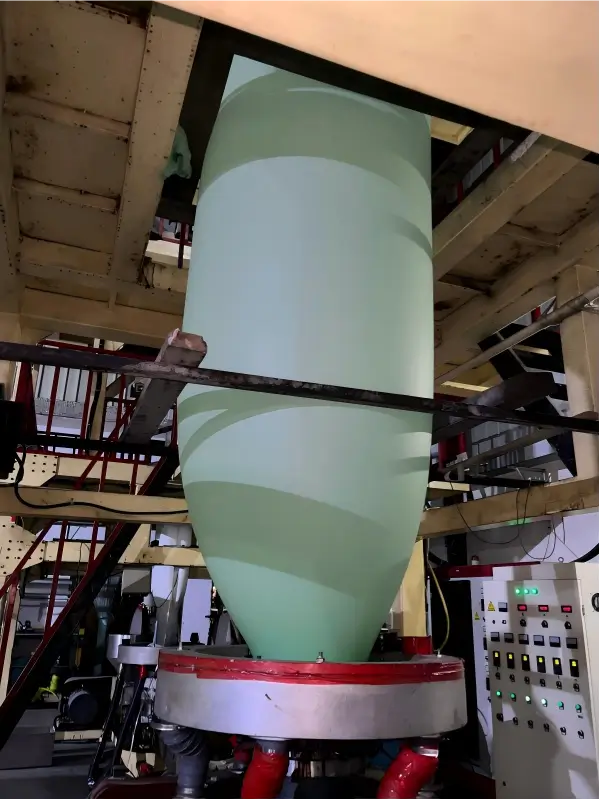
At the end of the barrel, the liquid plastic is pushed through a specialized die. In the blown film process, this die is annular, meaning it is perfectly circular. The molten plastic oozes out of this circular opening, forming a continuous, thick-walled tube of lava-like material.
Step 4: Inflation & Cooling
Right in the center of that circular die sits an air valve. We pump air directly into the middle of the molten tube, inflating it outward like a giant ballon. In the industry, we refer to this as the “bubble.”
As the exact same time, an “air ring” positioned on the outside of the die blows chilled air against the exterior of the bubble. This cold air rapidly cools and solidifies the molten plastic, freezing it into its newly stretched, thin shape as it travel upward toward the factory ceiling.
Step 5: Collapsing & Winding
Once the cooled, solid plastic bubble reaches the top of the machine (which can be 30 feet or more in the air.), it meets an “A-frame.” This V-shaped structure acts like a funnel, gently collapsing the round bubble flat. A pair of rubber nip rollers grabs the flattened film, squeezing out any remaining air. Finally, this continuous sheet travels back down to the floor, where it is tightly wound onto massive cardboard cores, ready to be cut and sealed into finished bags.
Extended Reading: Manufacturing Process of Compostable Plastic Bags.
Advanced Technology: Multi-Layer Co-Extrusion
A single layer of blown film is fantastic for everyday applications, but modern packaging often demands something much more advanced: multi-layer films.
Instead of just one extruder melting one type of plastic, imagine three, five, or even nine extruders all feeding different molten polymers into one highly complex die. The result is a single, continuous bubble made up of microscopic, distinct layers.
Why go to this level of complexity? Because it allows every single layer to serve a highly specific function. For example, you might engineer a film with a tough, puncture-resistant layer on the outside, a cost-effective core layer on the inside to optimize your budget, and a specialized “barrier” layer dead in the center to block oxygen. In fact, co-extruded blown film is the hidden engineering secret behind high-performance products like poly mailer bags and vacuum-sealed meat packaging.
Applications of Blown Film
Blown film is all around us. Here is a look at how this highly versatile manufacturing process impacts different industries:
Industrial Packaging
When factories ship goods on wooden pallets, they rely on thick stretch hoods and shrink wraps to keep boxes secure and prevent them from tipping over during transit. Heavy-duty blown film is also used to manufacture rugged industrial sacks for shipping bulk materials like cement, fertilizer, and gravel.
Consumer Packaging
Rolls of blown film are fed into high-speed bag-making machine to create various finished bags. For example, trash bags, ziplock sandwich bags, grocery bags and even the clear overwrap you see around multi-packs of toilet paper.
In food packaging specifically, blown film products include heat-resistant bags, plastic cup sealing films, bread bags, and self-adhesive cookie bags. They offer excellent softness and superior sealing properties. For marinating or storing food, ziplock bags made from blown film are lighter and more space-efficient than glass containers, suitable for both solid and liquid foods, and help extend shelf life during storage and transportation.

Transport Protection
Blown film extrusion also produces transportation protection materials such as bubble cushioning pads, tamper-evident courier bags, bubble wrap, and protective films. These products prevent items from being exposed or damaged during transit.
Agriculture Films
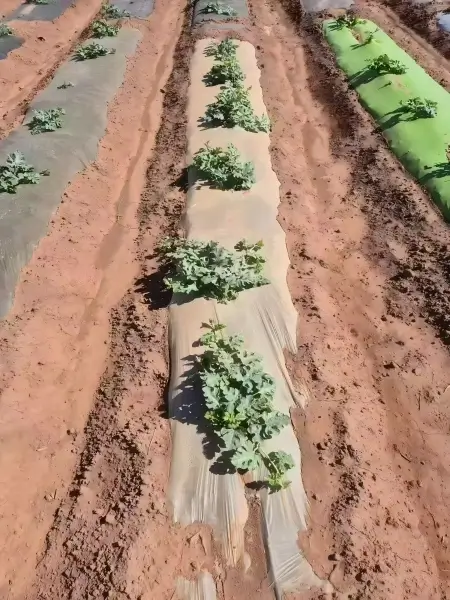
Drive past a modern farm, and you’ll see blown film everywhere. Farmers use massive sheets of greenhouse cover films to regulate crop temperatures. They also use dark, opaque mulch films laid directly over the soil to block weeds and retain moisture.
At our compostable bag factory, we manufacture biodegradable agricultural films that farmers can just plow back into the dirt at the end of the season, allowing them to naturally biodegrade.
Medical Field
Through the blown film process, manufacturers can also produce medical waste disposal bags, collection bags, medication bags, and disposable aprons. Due to the excellent isolation properties of plastic films, these products are commonly used to store hazardous waste and collected materials, preventing cross-contamination while keeping invasive surgical supplies clean—ensuring the safety and hygiene of the medical environment.
Construction Applications
Multi-layer plastic film technology is widely used for transparent insulation in the construction market. Available in films and panels made from materials like PC, PE, and PET, blown film technology can be applied to building windows, skylights, and curtains. This allows natural light to create a bright and comfortable indoor environment while saving on lighting and air conditioning electricity—contributing significantly to energy conservation and carbon reduction.
Household Applications
Everyday household blown film products include ziplock storage bags, garbage bags, disposable tablecloths, and disposable gloves. These single-use blown film products effectively prevent direct contact with dirt or chemicals, making household cleaning tasks easier, safer, and more efficient.
The Key to Enhancing the Quality of Blown Film
Making blown film isn’t just aboute turning the machine on and walking away. The key to enhancing the quality of film lies in meticulous attention to detail on the factory floor.
Machine Parameter Settings
Operating a blown film machine is a balancing act. If even one setting is off, the whole bubble can collapse.
- Haul-Off and Extruder Speed: It’s all about the ratio. The speed at which the screw pushes the plastic out versus the speed the nip rollers pull the film up dictates your thickness. Pull fast, and you get thin film. Push fast, and you get thick film. These two speeds have to dance together perfectly.
- Screw Size and Design: Not all plastics melt the same way. The extruder screw’s size and thread design have to be matched perfectly to the resin. A bad screw design won’t mix the plastic well, leaving you with ugly, un-melted “gel” spots in your final film.
- Temperature Control: I can’t stress this enough; temperature really is the make-or-break factor. If the extruder barrel is too cold, the machine will literally damage itself trying to push solid plastic. If it’s too hot, the plastic burns, or the bubble becomes so runny that it sags and collapses before the cooling air can freeze it. It has to be just right.
Plastic Fillers and Additives
We don’t just use 100% pure resin. Not only would that be unnecessarily expensive, but the film wouldn’t perform as well. Instead, we use specific additives to give the blown film superpowers.
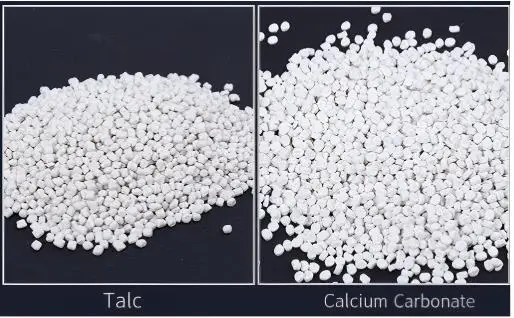
Rock Solid Savings: Calcium Carbonate (CaCO3):
We frequently blend in fillers like Calcium Carbonate (which is basically purified chalk dust!). First, it significantly reduces production costs because CaCO3 is more cost-effective than pure plastic resin. But it also improves the printability of the film (ink sticks to it better) and increases the overall stiffness, making bags easier to open.
Functional Additives:
Have you ever struggled to open a produce bag at the grocery store, licking your fingers in frustration just to pry it apart? That happens when a manufacturer skimps on slip agents. Slip agents are additives that rise to the surface of the film, acting like a microscopic lubricant so the film layers don’t stick together.
Producers also use UV stabilizers to keep agricultural films from turning brittle and cracking in the harsh sun. Besides, anti-static agents are used to prevent static electricity during the blown film extrusion process. Therefore, it doesn’t cause a fire hazard or make the bags cling to your hands.
Sustainability and the Future of Blown Film
The plastics industry has taken a lot of heat over the last decade regarding pollution. But that is exactly why the future of the blown film extrusion process is so incredibly exciting.
At our factory, we are proving that blown film extrusion isn’t just for fossil-fuel plastics. We run our machines using advanced bioplastics like PLA (derived from corn starch) and PBAT. The process is virtually identical, but the end result is a high-performance compostable bag. Despite being eco-friendly, the resulting blown film maintains a perfectly uniform thickness and a vibrant, high-quality finish.
When you throw your kitchen food scraps away in one of our bags, the whole thing can go into an industrial composting facility and turn back into nutrient-rich soil in a matter of months. No microplastics and no forever chemicals.
Furthermore, the industry is getting better at downgauging. By using smarter resins, we can blow films thinner than ever before without sacrificing any strength, meaning we simply use less material overall. And the push toward using PCR (Post-Consumer Recycled) materials in the blown film process is creating a true circular economy. The machines are the same, but the materials running through are finally getting greener.
Conclusion
The blown film extrusion process is a brilliant, elegant manufacturing method. It takes a handful of plastic pellets, melts them down, and harnesses the simple power of air to create the versatile, strong films that keep our modern world running.
From the biaxial strength that keeps your trash from spilling open, to the multi-layer technologies that keep your food fresh, blown film is an unsung hero of the packaging industry. As we continue to push the boundaries with plant-based, compostable resins, this exact process is going to be the key to a more sustainable future.
If your business is looking for an eco-friendly switch, or you need high-quality compostable bags manufactured with precision blown film extrusion, drop us a line. We’d love to help you wrap up your packaging problems for good.
FAQs
Blown film is used to manufacture a wide range of products, including industrial stretch film, garbage bags, food packaging, agricultural films, medical bags, and lining films.
Blown film is inflated into a bubble and stretched in two directions, giving it superior strength and toughness. Cast film is extruded flat onto a chilled roller, resulting in higher clarity and gloss but lower directional strength.
Common materials include LDPE, HDPE, LLDPE, EVA, PVC, PP, PS, PA, as well as bioplastics like PLA and PBAT. Fillers such as calcium carbonate masterbatch are also commonly added to reduce costs and improve performance.