
Introduction
When you look at a compostable bag or a bio-based product, what you’re seeing is rarely a single material. In terms of modern plastics manufacturing, performance and cost are carefully balanced through the use of additives. Among the most important of these are plastic fillers.
Plastic fillers are solid additives incorporated into polymers to modify their properties or reduce production costs. For manufacturers and procurement specialists in the compostable space, understanding fillers is essential. The right filler can transform an expensive, hard-to-process bioplastic into a cost-effective, high performance material that meets strict environmental standards.
This article will walk you through the types, benefits, and considerations when sourcing filled compostable materials and bags.
What Are Plastic Fillers?
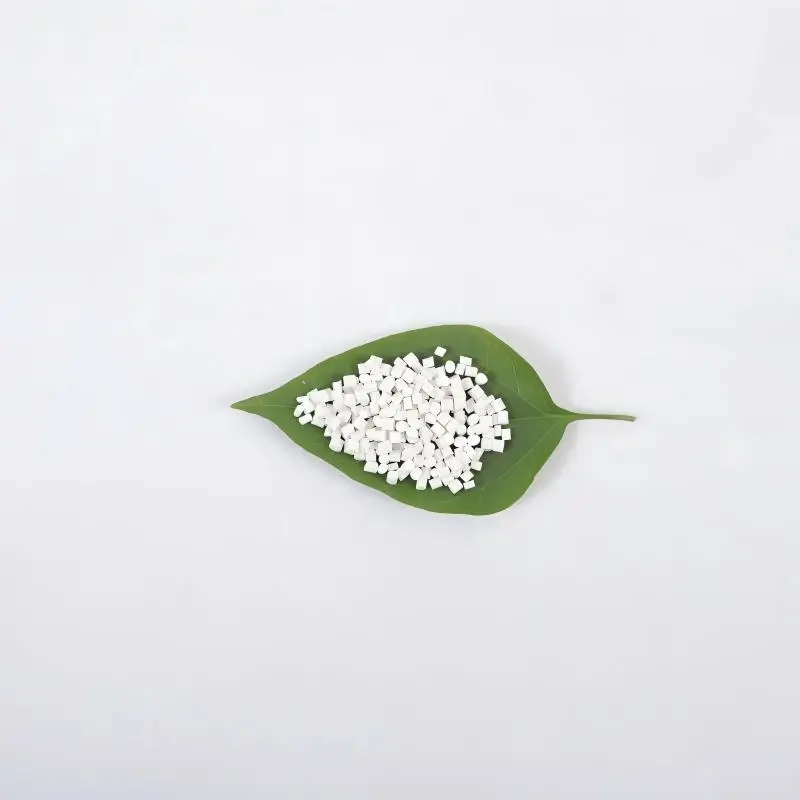
Plastic fillers are inert or active particulate added to polymer resins during compounding. They are designed to balance performance, cost, and processing. Unlike plasticizers or stabilizers that protect the polymer, fillers alter the material’s bulk characteristics — its overall stiffness, weight, and stability.
Key Functions of Plastic Fillers
- Cost Reduction
By replacing expensive polymer resin with affordable filler, manufacturers can largely lower material costs without drastically altering the product’s essential characteristics.
- Mechanical Enhancement
Fillers can improve stiffness, heat resistance, and even the rate of biodegradation in specific environments.
- Dimensional Stability
Incorporating fillers during compounding helps reduce shrinkage upon cooling (e.g., talc).
Common Types of Plastic Fillers (Focus on Compostable Materials)
In the compostable product industry, the choice of filler is critical—it must not compromise the material’s ability to biodegrade. Here are the most common fillers used in certified compostable formulations:
1. Inorganic Fillers
- Calcium Carbonate (CaCO₃)
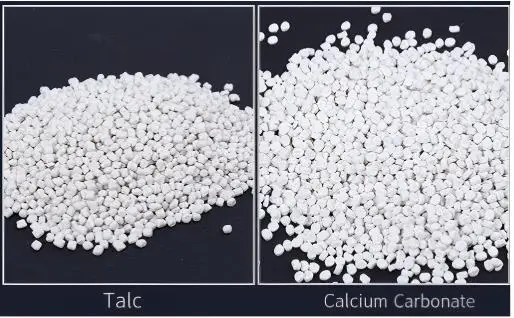
This is by far the most widely used filler in compostable films and packaging. Mined from natural sources like limestone or marble, calcium carbonate is valued for its purity and cost-effectiveness. When added to bioplastics, calcium carbonate improves stiffness, printability, and processability. During composting, it plays another key role. The particles create micro-channels as the material starts to break down. This accelerates the overall degradation process.
- Talc
Talc is another common mineral filler that excels at increasing heat resistance and dimensional stability. It is particularly useful in applications where the product must withstand higher temperatures during use or processing.
2. Organic Fillers (Bio-Based)
- Wood Flour/Natural Fibers
Derived from wood processing or agriculture byproducts, these fillers add a natural aesthetic to products while increasing the bio-based content. They can give compostable items a more “earthy” look and feel.
- Starch
Often used as a filler or as a primary component in thermoplastic starch (TPS) compounds, starch enhances the overall biodegradability of the formulation. And it is derived from renewable resources like corn, potato, or tapioca.
Why Add Fillers to Compostable Materials?
Three key pillars drive the decision to incorporate fillers: economics, performance, and environmental impact.
1. Economic Benefits
Pure bioplastics like PLA or PBAT are more expensive than traditional plastics. Mineral fillers often cost less than half the price of pure resin. Therefore, manufacturers can produce compostable products that are cost-competitive. This helps them meet market pricing expectations
2. Performance Benefits
- Improved Stiffness: Films made with calcium carbonate are less flimsy; they open easily and stand up well on shelves, which is critical for bag applications.
- Enhanced Thermal Stability: Fillers like talc help maintain dimensional stability during the heat cycles of high-speed packaging lines.
3. Environmental Benefits
- Reduced Carbon Footprint: Using mined minerals or natural fibers reduces the overall reliance on petro-chemical or fermentation-based polymers. Therefore, this lowers the carbon footprint of the final product.
- Faster Disintegration: In an industrial composting facility, filled products break apart more quickly due to the porosity created as the filler particles separate from the polymer matrix.
Key Considerations When Sourcing Filled Compostable Materials
Not all plastic fillers are created equal. Here are some factors to evaluate.
Compostability Certification
- Ensure the final formulation (resin + filler + additives) is certified to international standards like ASTM D6400 (US) or EN 13432(EU).
- Verify filler is non-toxic and doesn’t inhibit the biological composting process.
Filler Content & Particle Size
Generally, higher filler content leads to higher density (meaning you get more bags per kilogram, but each bag is slightly heavier) and lower cost.
However, excessive fillers (>50% by weight) can increase viscosity, reduce impact strength, or cause brittleness. So optimal levels balance cost and performance.
Finer particles disperse more uniformly within the resin, resulting in smoother film surfaces and more consistent mechanical properties. Poor dispersion can lead to weak spots or surface defects.
Compatibility with Equipment
Highly filled materials can be more abrasive on processing equipment. It’s important to understand how the filler affects your specific converting processes—printing, sealing, and cutting.
Some suppliers offer surface-treated fillers designed to minimize wear and tear on machinery. For example, hydrophilic fillers (e.g., CaCO₃) often require surface treatment (coupling agents like silanes, titanates) to bond with hydrophobic polymers, improving mechanical performance.
Our Solutions: Biopakwell’s Filled Compostable Products
At Biopakwell, we specialize in formulating high-performance, certified compostable materials and finished bags that leverage the best of filler technology.
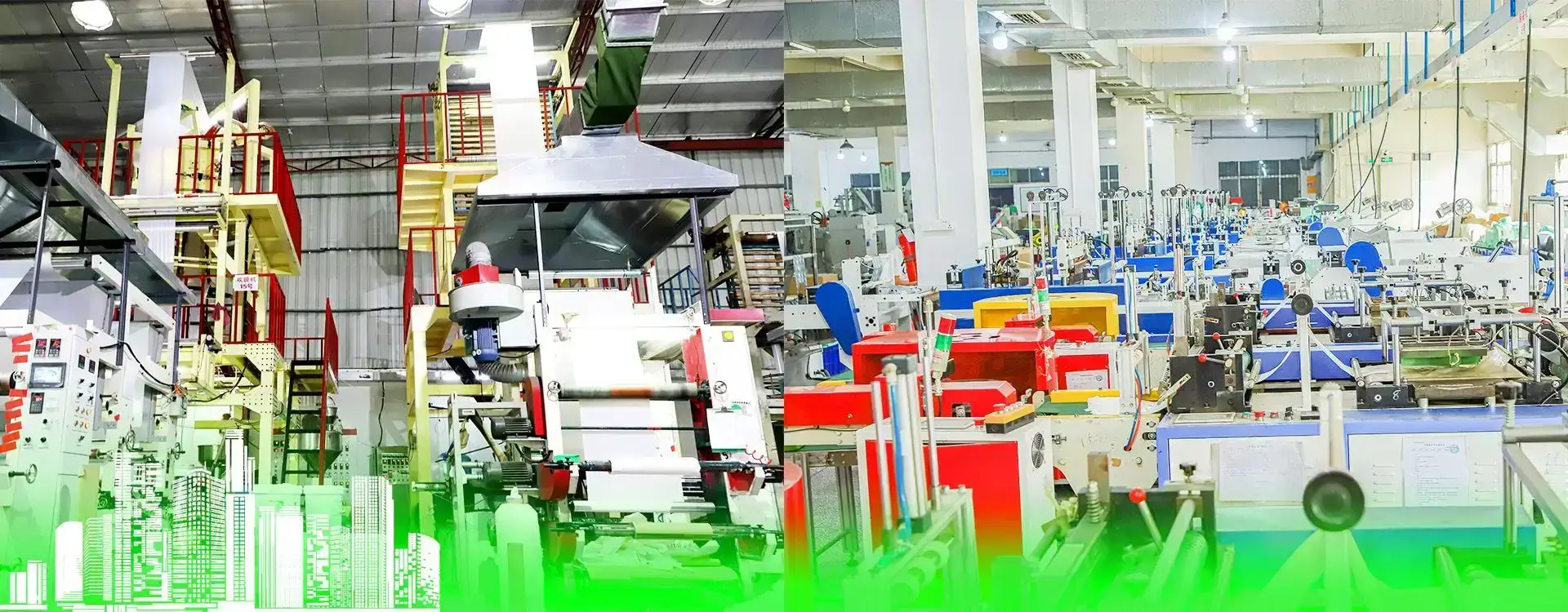
- Product Range: We offer a comprehensive line of filled compostable resins and finished compostable bags tailored to various applications, from shopping bags to waste collection liners.
- Technical Excellence: Our materials feature high-purity fillers with optimized particle size distribution, ensuring excellent dispersion, consistent film quality, and reliable processing performance.
- Certified Quality: All our formulations are rigorously tested to meet ASTM D6400 and EN 13432 standards. We also ensure compliance with food contact regulations where applicable, giving you and your customers complete peace of mind.
FAQs
What are the main functions of fillers in compostable plastics?
Fillers reduce material costs by partially replacing biopolymer resins, enhance stiffness and heat resistance, improve dimensional stability, and can accelerate disintegration during composting.
Which types of fillers are commonly used in certified compostable products?
Common inorganic fillers include calcium carbonate (improves stiffness and accelerates degradation) and talc (increases heat resistance). Organic options like wood flour, natural fibers, and starch raise bio-based content and add a natural aesthetic.
Does a high filler content compromise compostability certification?
Not necessarily. The final formulation must pass EN 13432 or ASTM D6400 testing, and the filler must be non-toxic and not inhibit composting. Mineral fillers like calcium carbonate can even speed up disintegration by creating porosity.
What should I evaluate when sourcing compostable bags made with fillers?
Verify that the specific formulation holds valid compostability certification. Evaluate filler content (higher loading cuts cost but excess causes brittleness) and particle size (finer particles yield smoother film). Confirm equipment compatibility, as highly filled materials can be abrasive and may require surface-treated fillers.
Conclusion
In summary, plastic fillers are versatile tools that tailor polymer properties to meet specific application needs, blending functionality with economic efficiency. Understanding how they work empowers you to make smarter sourcing decisions that benefit your bottom line and the planet.
Are you ready to optimize your compostable product line with expertly formulated filled materials? Contact our team today to request samples. Our team of material specialists is ready to help you find the perfect solution for your specific application.