
For most businesses handling wet organic waste, compostable plastic bags are often the better choice; paper bags tend to work best for dry, light retail loads. This guide compares the two across material, strength, disposal and best-use scenarios, so you can decide which packaging fits your operation—and where to order from a certified manufacturer.
Paper bags and compostable plastic bags are both alternatives to conventional single-use plastic. But they perform very differently depending on what you pack, how wet your waste is, and how your local market handles disposal. With 20+ years of polymer manufacturing experience behind us, we break down the practical differences below in plain language.
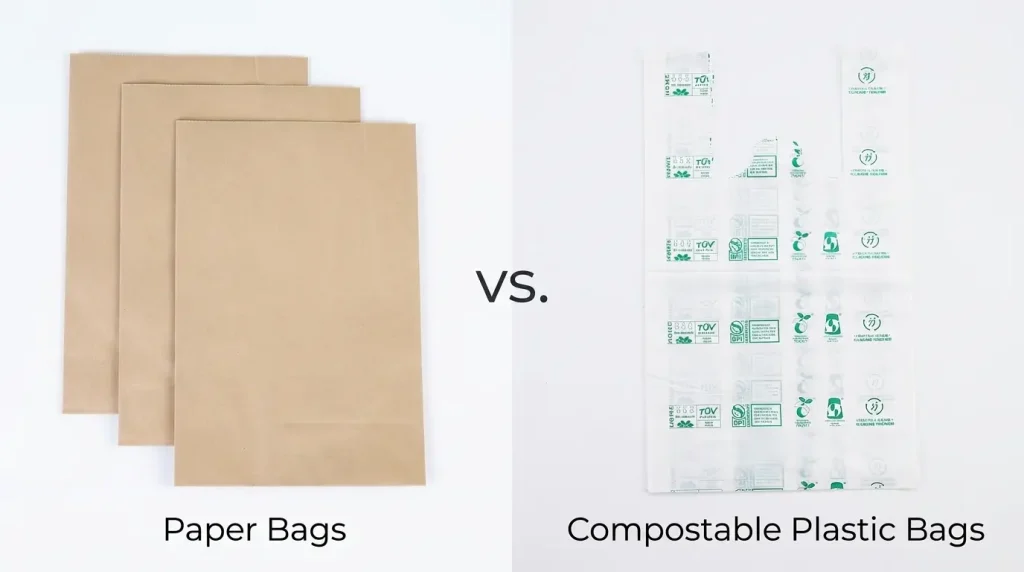
What Are Paper Bags?
Paper bags are typically made from kraft paper derived from wood pulp or post-consumer recycled paper. They are biodegradable and can be recycled where clean, dry paper is accepted, which can help reduce the environmental impact of retail packaging.
These bags are sturdy enough for a trip from the car to the kitchen, but their production comes at a cost. Manufacturing paper bags is resource-intensive, requiring significant amounts of water, energy and chemicals to transform wood into fiber. In addition, unless the raw material comes from certified sustainable forests (such as FSC-certified sources), paper bags can contribute to deforestation.
What Are Compostable Plastic Bags?
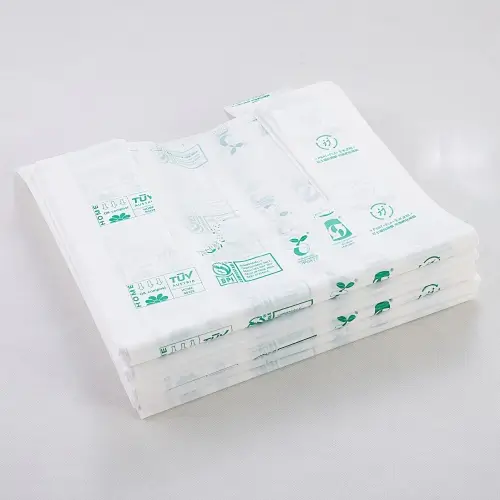
Compostable bags are often made from plant-based starch polymers, such as corn starch, blended with materials like PLA and PBAT. Under composting conditions, these materials break down into CO2, water and biomass, without leaving toxic residues. Truly compostable bags must meet the relevant international standards and carry certifications such as ASTM D6400, EN 13432 or AS 4736 for industrial composting, or AS 5810 for home composting.
However, there is a crucial distinction:
- Industrial Compostable: Requires high heat (50-60℃) and specific microbial conditions found only in commercial composting facilities.
- Home Compostable: Can break down in a backyard compost pile, though much slowly.
If these bags end up in a landfill or the ocean, they may persist for years and can behave similarly to conventional plastic. So the disposal route matters as much as the material itself.
To dive deeper into how these eco-friendly alternatives work, check out our comprehensive guide on what you need to know about compostable bags.
Key Differences: Paper Bags vs. Compostable Plastic Bags
| Features | Paper Bags | Compostable Plastic Bags |
|---|---|---|
| Material | Wood pulp (virgin or recycled) | PLA, PBAT, and corn starch |
| Texture | Stiff and structured, but with sharp edges that may cause paper cuts. | Soft, lightweight, and fits bin walls perfectly; odorless. |
| Durability | Weakens rapidly when exposed to liquids; bottoms prone to bursting. | High tensile strength and elasticity; leakproof and tear-resistant. |
| Heat Resistance | Good for warm, dry items and short-term hot dry foods; not safe for hot ash, open flames or large amounts of hot oil. | Limited; usually cannot withstand temperatures above 80 ℃. |
| Best Used for | Dry waste, retail shopping, dry groceries. | Kitchen waste, food scraps, wet organic waste. |
| Ideal disposal | Clean, dry paper bags can be recycled; uncoated paper may compost slowly in home compost. | Intended to be processed with food waste in industrial composting facilities. |
| Degradation | Decomposes over time, but slowly in oxygen-poor landfills. | Breaks down within the certification test timeframe under industrial composting; much slower in home compost or landfill. |
| Shelf appeal | Natural texture; minimalist, organic and premium feel. | Resembles traditional plastic; requires certification labels to distinguish. |
| Environmental Impact | Higher recycling rate when clean and dry, but energy-intensive production. | Can reduce plastic pollution and return nutrients to soil when properly composted. |
Which One Should You Choose?
The right choice depends on your waste type, your disposal route and the image you want to project. Use the matrix below as a quick decision guide.
| Business scenario | Recommended choice | Why |
|---|---|---|
| Kitchen / wet organic waste | Compostable plastic bags | Moisture-resistant, highly leak-resistant, supports food-waste composting. |
| Retail shopping / dry goods | Paper bags | Premium feel, stable under dry loads, high recycling rate when clean and dry. |
| Food delivery | Compostable plastic bags (certified) | Leak-resistant and oil-resistant; pairs with compostable meal packaging. |
| Fresh produce e-commerce | Compostable plastic bags | Moisture control can help maintain freshness; performance depends on the specific film and storage conditions. |
| Bakery / dry grocery retail | Paper bags | Breathable, natural look, heat-tolerant for dry baked goods. |
| Industrial / bulk packaging | Custom solution based on load, size and environment requirements | Provide your specifications for a tailored solution. |
If your waste is mostly dry and light, paper bags give you a natural, premium look with a straightforward recycling path. If you handle food waste, liquids or heavy loads—or you want a closed-loop organic waste story—certified compostable bags are often the better solution in commercial composting scenarios.
Pros & Cons of Paper Bags and Compostable Film Bags
Paper Bags
- Pros:
- Renewable & recyclable: made from wood pulp or recycled paper; clean, dry paper bags can be recycled where facilities accept them.
- Premium brand image: a natural, high-end minimalist look favored by retail brands.
- Heat stability for dry items: can safely hold warm, dry items and short-term hot dry foods without melting. Do not use paper bags for hot ash, open flames or large amounts of hot oil.
- Biodegradable: uncoated paper can decompose naturally over time in soil or water, although coated paper may not.
- Cons:
- Poor wet strength: strength drops sharply in humid or wet conditions, increasing the risk of leaks and cleaning costs.
- Storage issues: bulky, takes up warehouse space and can soften with ambient moisture.
- Higher disposal fees in some markets: dry waste mixed with impurities may cost more to dispose of than organic waste.
- Environmental footprint: higher water consumption in production, and coated (waterproof or oilproof) paper can be difficult to recycle and may generate wastewater during production.
- Chemical risks: some low-quality recycled paper may contain contaminants such as fluorescent whitening agents or heavy metals; choose food-safe grades.
Compostable Film Bags
- Pros:
- Hygiene and safety: single-use bags can help reduce cross-contamination and support closed-loop waste disposal.
- Plant-based and low-toxicity options: many formulations use corn starch and PLA; they may be free from phthalate plasticizers, but confirm with your supplier.
- Lower carbon footprint potential: under industrial composting, certified materials break down into CO2, water and biomass, returning nutrients to the soil. Full carbon neutrality depends on a life-cycle assessment.
- Moisture resistant: unlike paper, they maintain integrity when holding wet kitchen waste.
- Space saving: compact and easy to stack, efficient for shipping and storage.
- Economic incentives: in some regions, disposal with organic waste may qualify for lower tipping fees or government subsidies.
- Cons:
- Short shelf life: sensitive to humidity and heat, and may become brittle or start degrading if stored too long (usually over 12 months).
- Specific disposal required: need industrial composting facilities to degrade efficiently and may not break down quickly in cold, dry landfills.
- Sorting confusion: compostable plastic looks like regular plastic and can contaminate traditional plastic recycling streams if misidentified.
The Bottom Line
Choose compostable plastic bags for wet or organic waste, food-service operations and any leak-sensitive application; choose paper bags for dry, light retail loads where a natural premium feel matters. For most food-service and retail businesses handling mixed waste, certified compostable bags can deliver lower leakage risk, easier compliance and a cleaner organic-waste story.
Need certified compostable bags for your business? We are a manufacturer with 20+ years of polymer experience. Send us your size, quantity and destination, and our team will recommend the right specification for you—contact us.
New to sizing? Read our trash bag size guide to specify the right dimensions for your waste stream.