
While autumn leaves are essentially nature’s free fertilizer, figuring out how to efficiently manage them is a major chore. Traditional compost bins take up too much precious space, and leaving loose yard waste out in the open can look messy and unkempt. The solution? Composting leaves in plastic bags.
This method is an effortless way to create nutrient-rich soil amendments without the need for heavy lifting or expensive bins. But there is a modern twist that makes this method even better. Upgrade your fall cleanup routine by composting leaves in plastic bags that are compostable, making the process zero-waste, and hassle-free. Let’s dive into everything you need to know about transforming yard waste into garden gold.

What Happens When You Compost Leaves in Bags?
Before we jump into the steps, it’s essential to understand what happens when composting leaves in bags. When leaves break down over time, they turn into something called “leaf mold.” Leaf mold is a fantastic, dark, crumbly soil conditioner made entirely from decomposed leaves. Unlike traditional food compost, which relies on a balanced mix of nitrogen and carbon broken down by heat-generating bacteria, leaf mold is a cooler process primarily driven by fungi.
Creating leaf mold in bags accelerates this natural decomposition. By enclosing the autumn leaves, you deliberately trap the essential moisture and heat needed for fungi and bacteria to thrive. This creates a perfect micro-environment. Instead of blowing away or drying out in the harsh winter wind, the bagged leaves stay damp and insulated, breaking down efficiently into organic matter that will help spring vegetables and flowers thrive.
Benefits of Composting Leaves in Plastic Bags
If you have ever tried to turn and maintain a massive, open pile of dry leaves, you know how frustrating it can be. Here is why composting leaves in plastic bags is far superior to leaving them in an exposed pile:
- Save Space and Keeps Your Yard Tidy
Bags can contain the mess. So there are no loose leaves blowing back onto the freshly raked lawn on windy autumn days. This method is especially great for small urban or suburban gardens where a massive compost bin or a sprawling leaf pile just isn’t practical.
- Traps Heat and Moisture for Faster Breakdown
When composting leaves in plastic bags, the enclosure acts like a mini-greenhouse. It traps solar heat and prevents the leaves from drying out. A lack of moisture is the most important reason open compost piles stall and fail to decompose. The trapped, humid environment inside the bag drastically speeds up the entire timeline.
- Easy to Transport and Store
Bagging scattered leaves makes it easier to transport them to a fixed disposal point without causing a sky full of fallen leaves.
- Weed Seed and Pest Management
An open leaf pile is an open invitation for blowing weed seeds and burrowing pests. Enclosing your leaves prevents new, invasive weed seeds from infiltrating your precious compost. It also deters large pests—like rodents, raccoons, or neighborhood cats—from digging through your yard waste.
The Eco-Friendly Upgrade: Why You Should Use Compostable Plastic Bags
While you certainly can use traditional plastics, the real magic happens when you switch to eco-friendly alternatives. Compostable bags can transform a standard garden chore into a fully sustainable practice. Here is why you should make the switch from traditional black garbage bags.
Zero Waste Solution
Traditional petroleum-based plastic bags run a high risk of tearing, flaking, and leaving harmful microplastics in the soil. By composting leaves in plastic bags that are certified compostable, you entirely eliminate this risk. Compostable bags break down naturally into organic matter alongside the leaves, leaving absolutely no toxic residue behind.
The “Toss and Go” Convenience
When you use compostable yard waste bags and the leaves are partially or fully broken down, you don’t even have to empty the bag. The entire compostable bag can go into a compost bin and will decompose itself into the earth.
Better Breathability
High-quality compostable bags often allow for micro-aeration. They let just enough oxygen permeate the material to support the aerobic bacteria needed to create good, sweet-smelling compost. This breathable design greatly reduces the risk of opening a sealed plastic bag only to find a slimy, smelly, anaerobic mess.
Supports a Circular Economy
Buying certified compostable options directly supports sustainable manufacturing practices. Instead of relying on fossil fuels, these eco-friendly bags are typically made from renewable plant starches (like corn or potato). This means your gardening business support a circular economy and a healthier planet from start to finish.
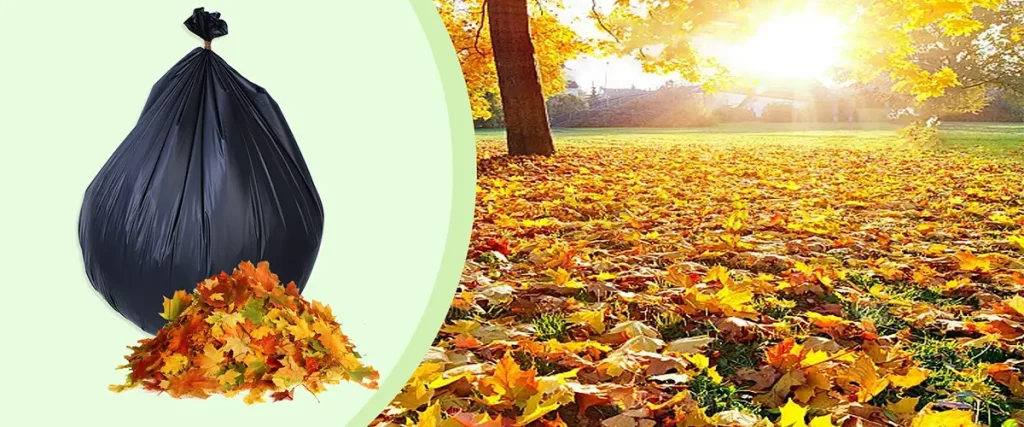
Step-by-Step Guide: How to Compost Leaves in Bags
Ready to start to composting? If you are wondering how to compost leaves fast, follow this easy-to-follow guide for composting leaves in plastic bags.
Step 1: Gather and Shred Leaves
While whole leaves will eventually break down, running over large fallen leaves with a lawnmower before bagging them will speed up decomposition by months. Shredded leaves have more surface area for fungi and bacteria to attack.
Step 2: Choose the Right Bag
Ditch the standard petroleum plastics. Instead, opt for heavy-duty compostable yard waste bags. Look for trusted industry certifications on the packaging (like BPI or OK Compost) to ensure they are the real deal.
Step 3: Add the “Green” Activator
Dead autumn leaves are purely carbon (often called “browns” in composting terms). To kickstart the bacteria and speed up the process, add a scoop of nitrogen-rich “greens” into the bag. A shovel of standard garden dirt, a handful of fresh grass clippings, or some leftover coffee grounds works perfectly to activate the pile.
Step 4: Moisten the Mix
Fungi and bacteria must need water to survive and multiply. So leaves need to feel like a damp sponge. As you pack the compostable bags, use a watering can or hose to moisten the leaves slightly. Don’t drown them, but ensure they are thoroughly and evenly damp.
Step 5: Poke Holes for Airflow
Unless you are intentionally making strictly anaerobic leaf mold, oxygen is necessary to prevent foul odors. Take a garden fork, a skewer, or a stick and poke a few holes around the sides of the bag to ensure proper airflow.
Step 6: Tie, Store, and Wait
Tie the top of the bag loosely. Store your bags in a shaded, out-of-the-way area of your yard so they don’t get baked by direct, intense summer sun later on. Now, let nature do the work! Expect your rich leaf mold to be ready in 6 to 12 months.
Frequently Asked Questions (FAQs)
Q: How long does it take for leaves to compost in a bag?
A: Generally, it takes between 6 to 12 months for leaves to fully transform into leaf mold.
Q: Can I use regular black garbage bags to compost leaves?
A: Yes, composting leaves in garbage bags made of standard black plastic will technically work. Because the dark color traps heat incredibly well. However, they come with severe environmental drawbacks, risk leaving microplastics in the soil.
Q: Do compostable bags break down too fast?
A: Commercial-grade compostable yard waste bags are designed to hold up to weather for several months before breaking down.
Conclusion
In summary, composting leaves in plastic bags is the absolute easiest, most space-saving way to turn annoying autumn yard waste into premium garden fertilizer. It neatly bypasses the need for massive compost tumblers, keeps your property looking pristine, and creates a controlled environment for rapid decomposition.
By taking the extra step to use certified compostable bags, you not only save yourself time and effort, but you actively protect the earth. You can enjoy the ultimate “toss and go” convenience while keeping harmful microplastics out of your precious soil.
Have you ever tried making leaf mold in bags? Choose the certified compostable yard waste bags and start on an eco-friendly fall cleanup today!