
With the increasing awareness of environmental protection and the ban of disposable plastic products, more and more enterprises have begun to adopt eco-friendly packaging solutions. Paper bags and compostable plastic bags are excellent options for reducing your carbon footprint.
But which one should you choose for your business? This article will delve into the differences between them from multiple aspects.
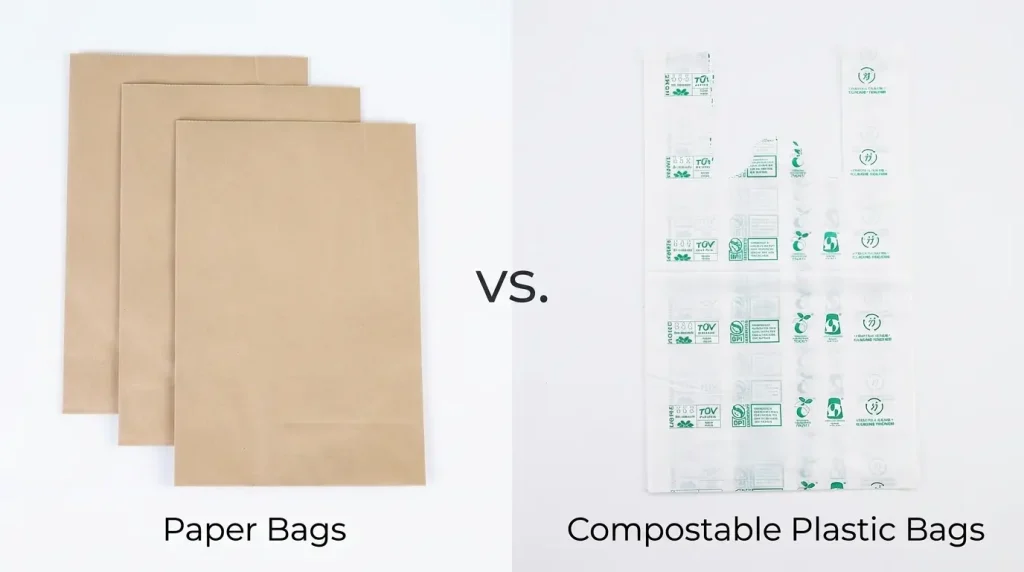
What are Paper Bags?
Paper bags are typically made from kraft paper derived from wood pulp or post-consumer recycled paper sheets. They are biodegradable and widely accepted in recycling programs to reduce the carbon footprint.
These bags are sturdy enough for a trip from the car to the kitchen, but their production comes at a cost. Their manufacturing process is resource-intensive, requiring amounts of water, energy, and chemicals to transform wood into fiber. Furthermore, unless sourced from certified sustainable forests (like FSC-certified sources), paper bags contribute to deforestation.
What are Compostable Plastic Bags?
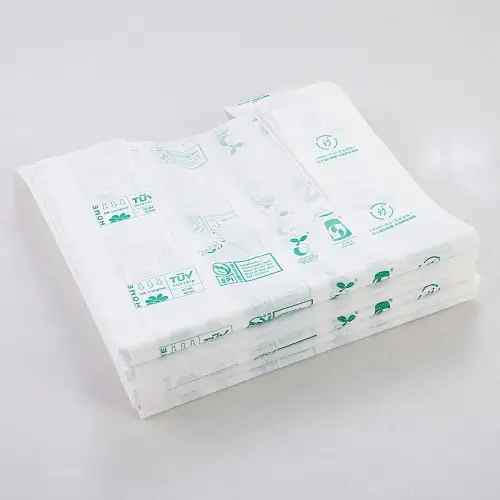
Compostable bags are made from plant starch polymers, such as corn starch, and PLA. Under composting conditions, these materials can break down into CO2, water and biomass, without leaving toxic residues. Truly compostable bags must meet international standards and carry certifications such as ASTM D6400, EN 13432, AS 4736, or AS 5810.
However, there is a crucial distinction:
- Industrial Compostable: Requires high heat (50-60℃) and specific microbial conditions found only in commercial composting facilities.
- Home Compostable: Can break down in a backyard compost pile, though much slower.
If these bags end up in a landfill or the ocean, they often behave just like traditional plastic, persisting for years.
To dive deeper into how these eco-friendly alternatives work, check out our comprehensive guide on what you need to know about compostable bags.
Key Differences: Paper Bags vs. Compostable Plastic Bags
| Features | Paper Bags | Compostable Plastic Bags |
|---|---|---|
| Material | Wood pulp (virgin or recycled) | PLA, PBAT, and corn starch |
| Texture | Stiff and structured, but with sharp edges that may cause paper cuts. | Soft, lightweight, and fits bin walls perfectly; odorless. |
| Durability | Weakens rapidly when exposed to liquids; bottoms prone to bursting. | High tensile strength and elasticity; leakproof and tear-resistant. |
| Heat Resistance | Excellent; can hold hot ash, grease, or residues safely. | Limited; usually cannot withstand temperatures above 80 ℃. |
| Best Used for | Dry waste, retail shopping, dry groceries. | Kitchen waste, food scraps, wet organic waste. |
| Ideal disposal | Recyclable. Does not degrade well in organic compost bins. | Compostable. Intended to be processed with food waste in composting facilities. |
| Shelf Image | Natural texture. Conveys a “minimalist, organic, and premium” feel. | Resembles traditional plastic. Requires certification labels to distinguish. |
| Environmental Impact | High recovery rate but high energy use | Reduces plastic pollution and returns nutrients to soil |
Pros & Cons of Paper Bags and Compostable Film Bags
Paper Bags
- Pros:
- Renewable & Recyclable: Paper bags are made from trees, so they have high recycling rate if kept clean and dry.
- Premium Brand Image: Provides a natural, high-end “minimalist” look favored by retail brands.
- Heat Stability: Safely handles hot food, fried items, or hot ash without melting.
- Biodegradable: Naturally decomposes in soil or water even without industrial facilities.
- Cons:
- Poor Wet Strength: The Strength of paper drops sharply in humid/wet conditions, so it is prone to leaking soup or liquids, increasing cleaning costs.
- Storing Issues: Bulky and takes up more warehouse space and susceptible to softening from ambient moisture.
- Higher Disposal Fees: Many incinerators charge higher fees for dry waste (paper mixed with impurities) compared to organic waste.
- Environmental Footprint: Paper packaging bags need higher water consumption during production. In addition, coated paper (waterproof or oilproof) is difficult to recycle and causes wastewater pollution.
- Chemical Risks: Low-quality recycled paper may contain fluorescent whitening agents or heavy metals.
Compostable Film Bags
- Pros:
- Hygiene & Safety: Single-use avoids cross-infection and ensures closed-loop waste disposal.
- Plant-Based & Non-Toxic: Compostable bags are derived from corn starch, free from plasticizers. So they are safer for organic waste contact.
- Carbon Neutrality: Under industrial composting, they break down into CO2, water, and humus, returning nutrients to the soil.
- Moisture Resistant: Unlike paper, compostable bags maintain integrity when holding wet kitchen waste.
- Space Saving: These bags are compact and easy to stack, so it is efficient for shipping and storage.
- Economic Incentives: Disposal of compostable bags with organic waste often attracts lower tipping fees or government subsidies.
- Cons:
- Higher Unit Cost: Compostable raw materials are generally more expensive to produce than standard plastic or basic paper bags.
- Short Shelf Life: Compostable bags are sensitive to humidity and heat, so they may become brittle or start degrading if stored too long (usually over 12 months).
- Specific Disposal Required: These bags require industrial composting facilities to degrade efficiency. They may not break down quickly in cold, dry landfills.
- Sorting Confusion: Compostable plastic looks like regular plastic. They can contaminate traditional plastic recycling streams if misidentified.
Which One Should You Choose?
Which bag should you grab? It depends entirely on your disposal methods and waste types.
If you are looking for visual environmental protection and high-end touch experience, and the waste contains very low moisture content (such as dry waste paper and cigarette ash), then choose paper bags.
If you are aiming for compliance with the closed-loop system, leak-proof durability, and a true organic matter cycle (for handling kitchen waste), compostable plastic bags are currently the best solution in industrialized scenarios.