
We’ve all been there: you lift a full trash bag out of the bin, ready to take it to the curb, only to have the bottom give way. Within seconds, coffee grounds, leftovers, and heavy waste are all over the floor.
The “heavy-duty” label is not all the matters. The real secret to a reliable bag lies in the bottom seal. The way a bag is fused at the base determines how much weight it can carry, how well it fits the bin, and whether it will leak when lifting.
In this post, we’ll give an overview of the three main seal types—star, flat and gusseted seal—to help you choose the right one for your business.
Trash Bag Bottom Design
Star Seal Bottom
Star seal is also known as an “X-seal”. The bag’s bottom is folded over multiple times and sealed at a single point, creating a pattern that looks like a star.
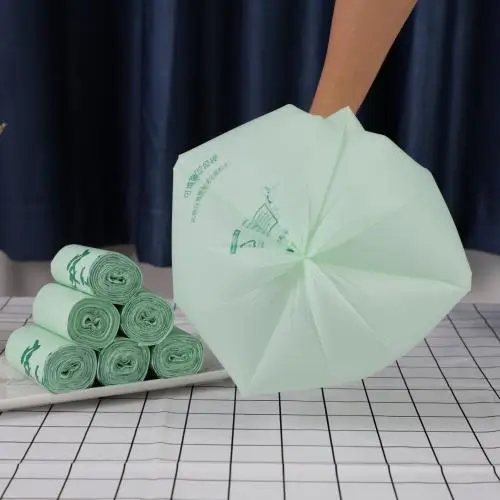
Pros:
- Because the plastic is folded onto itself, there are no gaps for liquids to escape, making it the best for leak prevention.
- This design also distributes weight evenly across the entire surface of the seal.
- Most importantly, it allows the bag to conform perfectly to round trash bins without wasting space.
Cons:
- Due to the multiple folds at the base, you do sacrifice a small amount of vertical space. That is to say the bag may appear slightly shorter than a flat seal of the same gallon size.
Best For: Heavy, wet, or messy waste.
Flat Seal Bottom
A flat seal is exactly what it sounds like: a simple two-dimensional seal straight across the bottom, much like a pillowcase.
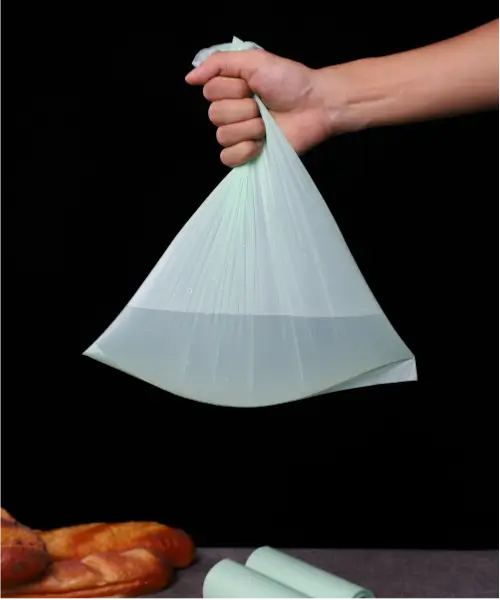
Pros:
- This design maximizes internal volume, offering up to 30% more space than a star seal.
- The manufacturing process is simpler and requires less folding machinery, so flat seal bags are often the most cost-effective option on the market.
Cons:
- When the bag is full and heavy, the stress is concentrated entirely on the bottom corners. This makes flat seals prone to leaks and “blowouts” if they are overloaded.
Best For: Dry waste, paper, and light office use.
Gusseted Seal Bottom
A gusseted seal is created by tucking the sides of the bag inward to form gussets. This results in a bag that has four layer of plastic at the edges but only two in the middle.
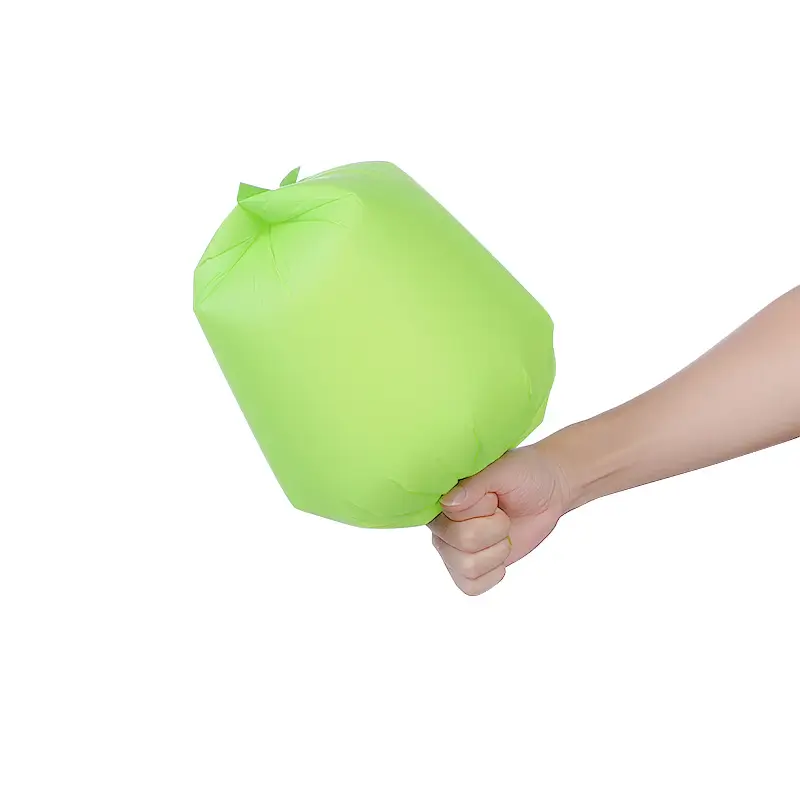
Pros:
- These bags are designed to sit flat when empty, making them ideal for lining square bins or large cardboard boxes. They provide a neat, tailored fit for rectangular containers.
Cons:
- The “weak middle” (where the plastic is only two layers thick) makes it the most likely of the three to leak wet waste. If the middle seam fails, the entire contents can drop through.
Best For: Lining crates, square bins, or carrying bulky, dry items.
Performance Comparison
| Features | Star Seal Bags | Flat Seal Bags | Gusseted Seal Bags |
|---|---|---|---|
| Leak Resistance | Excellent (No side seams) | Moderate (Corner stress) | Poor (Weak center point) |
| Weight Distribution | Superior (Centralized) | Poor (Corner-loaded) | Moderate |
| Bin Conformity | Best for round bins | Average | Best for square bins |
| Volume Efficiency | Low (Folds take up space) | Highest | High |
Material Matters
The seal is the foundation, but the material is the structure. To get the most out of your seal choice, you must match it with the right plastic.
- LLDPE (Linear Low-Density): Thick and stretchy. Use this with flat seals to help the corners stretch rather than snap.
- HDPE (High-Density): Thin and crinkly. Use this with star seals to give the “brittle” plastic more strength through folding.
- Mil Thickness: For heavy-duty tasks, a seal only matters if the “skin” is thick enough. 0.9 mil is standard for kitchens; 3.0 mil is for contractor grade work.
Learn how trash bag thickness effects performances in this article: Understanding Trash Bag Thickness: How to Choose the Right Gauge.
Modern Innovations & Sustainability
Today’s manufacturers aren’t just sticking to the plastic; they are re-engineering the bag to meet new environmental standards and durability demands.
- Reinforced Seams: Many premium brands now use “dual-action” or “reinforced perimeter” seals. By fusing the plastic twice at high-stress points, they can use thinner and more eco-friendly material without sacrificing the bag’s weight capacity.
- Custom-Fit Engineering: Manufacturers now design proprietary bags that match the exact “footprint” of their bins. This ensures the seal sits perfectly flat against the bottom of the canister, reducing the “drop impact” when heavy trash is tossed in.
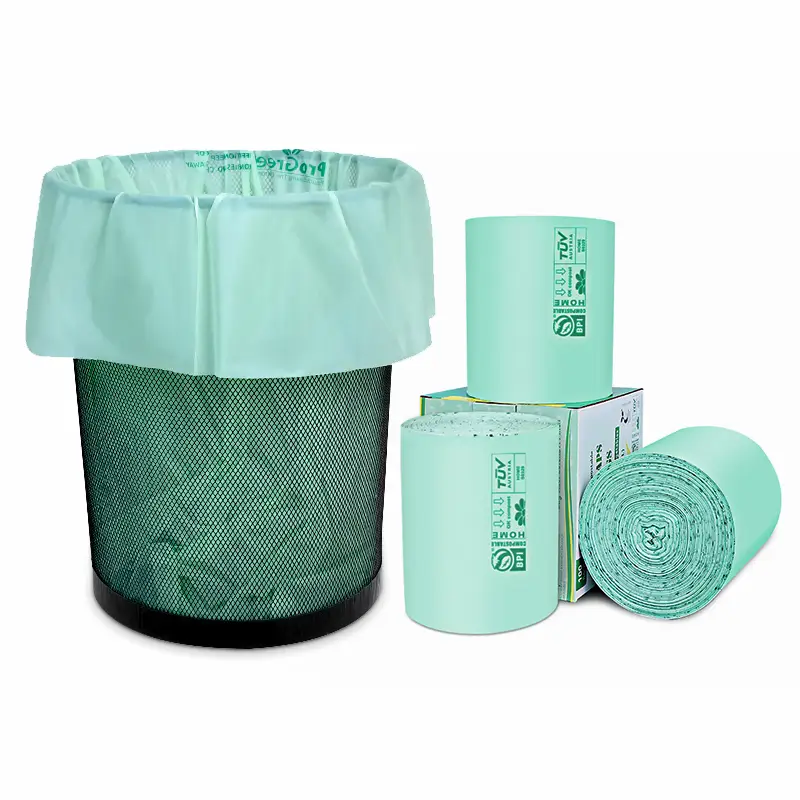
- Sustainability Trends: To reduce carbon footprints, brands are increasingly using recycled or compostable trash bags. Thanks to the developing technology, compostable bags have excellent tensile strength to ensure them doesn’t fail or leak when holding heavy, wet organic waste.
Practical Buying Guide: Which One Should You Choose?
- For the Kitchen & Wet Waste: Go for star seal trash bags. They handle liquids and heavy food waste with the least risk of failure.
- For the Office & Paper Waste: A flat seal is perfectly fine. It saves money and provides the extra volume needed for bulky but light paper trash.
- For Square Bins: A gusseted seal bag provides the best, most tailored fit for rectangular containers.
- For Large Renovations: Look for heavy-duty flat seals (contractor bags). While they have corners, the plastic is so thick (3.0 mil+) that the material’s sheer strength overrides the seal’s geometry.
Conclusion
A trash bag is only as strong as its weakest point—and that point is almost always the bottom seal. By matching the seal type to your specific bin shape and waste type, you can end the frustration of “trash bag blowouts” forever. Next time you purchase, look past the “extra strong” marketing and check the bottom of the bag.