
Introduction
For a long time, eco-conscious consumers faced a frustrating trade-off: choose a compostable trash bag and risk a messy leak on the floor, or stick with traditional plastic for its strength.
Thanks to advancements in material science, strong compostable trash bags now offer an excellent tensile strength, which is actually comparable to—and sometimes higher than—standard polyethylene (PE) bags.
In this guide, we’ll break down the science of what makes a compostable bag “heavy-duty” and how to choose the right one for your applications.
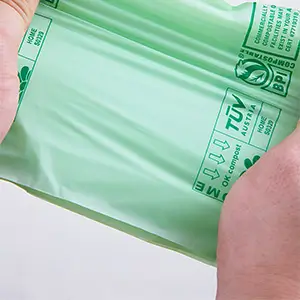
Factors Affecting Trash Bag Strength
Core Materials
The durability of a compostable bag starts with its raw materials. High-quality bags don’t just one material; they use a blend to achieve the perfect balance of stiffness and flexibility.
- PLA (Polylactic Acid): Derived from renewable resources like corn starch or sugarcane, PLA provides the bag with structure and rigidity. However, if you used only PLA, the bag can be brittle.
- PBAT (Polybutylene Adipate Terephthalate): This is the “secret sauce” for toughness. PBAT is a biodegradable polymer that adds incredible flexibility and impact resistance.
When you blend these two, you get a bag that can stretch without snapping, ensuring your waste stays contained.
Reinforcement Technologies
It’s not just about what the bags are made of; it’s about how they are built. Manufacturers have borrowed some tricks from the traditional plastic industry to make heavy-duty trash bags that don’t quit.
- Nano-Calcium Carbonate Filling: By adding nano-calcium carbonate into the mix, manufacturers can increase the impact resistance of the film. This reinforcement ensures the bag can handle heavy loads without the material thinning out or tearing.
- Multi-Layer Co-Extrusion: Instead of one thick layer, the bag is made of multiple micro-layers pressed together. This multi-layer approach improves the bag’s overall puncture resistance compared to single-layer designs. If a sharp corner of a cereal box punctures the inner layer, the outer layers are there to stop the tear from spreading. This is why modern strong compostable trash bags can handle those jagged edges that used to be a death sentence for eco-bags.
Strength Metrics: Labs vs. Real-World Performance
Tensile Strength
Tensile strength is basically how much you can pull on something before it breaks. While traditional polyethylene (PE) bags typically range between 10–20 MPa, modern compostable trash bags now reach 10–25 MPa. This means they can easily support loads of 8 kg or more, effectively closing the performance gap between “eco-friendly” and “heavy-duty.”
Elongation at Break
A good compostable garbage bag should feature an “elongation at break” of ≥100%. This means it can stretch to at least double its size before tearing. The flexibility is what saves you when you’re trying to shove “just one more thing” into the bin.
Puncture and Tear Resistance
In the lab, we test durability using weighted steel needles and 1-meter drop tests. In your kitchen, durability means resisting sharp bone fragments and jagged plastic packaging. Thanks to the multi-layer co-extrusion technology, these bags offer tear resistance that is virtually indistinguishable form traditional plastic.
Heat Seal Strength
The strongest film is useless if the bottom falls out. Our heat-sealing process ensures that the seams are as strong as the walls of the bag itself. This reinforced bonding prevents leaks and structural failure at the base, ensuring the bag stays intact from the bin to the curb.
Choose the Right Strong Trash Bags
Match Thickness to Waste Type
One size does not fit all. If you’re buying for a business, you need to match the bag to the task. We measure thickness in “mils” (one-thousandth of an inch).
- 0.9–1.2 mil (Standard): Perfect for food scraps, paper waste, and general kitchen gunk. Food waste is heavy and wet, so these bags are designed to be “soft” but tough. They won’t leak, but they might struggle if you throw a broken wooden crate in there.
- 1.5 mil (Heavy Duty): If your trash includes sharp coffee filters, hard plastic packaging, or bones, you want a 1.5 mil heavy-duty trash bag. It has that extra bit of “resilience” to resist punctures.
- 2.0 mil (Extra Heavy Duty): For outdoor use, yard waste, or industrial settings where people are throwing away sticks, glass, or heavy metal scraps, 2.0 mil is the way to go.
Extended Reading: Understanding Trash Bag Thickness: How to Choose the Right Gauge.
Structural Design
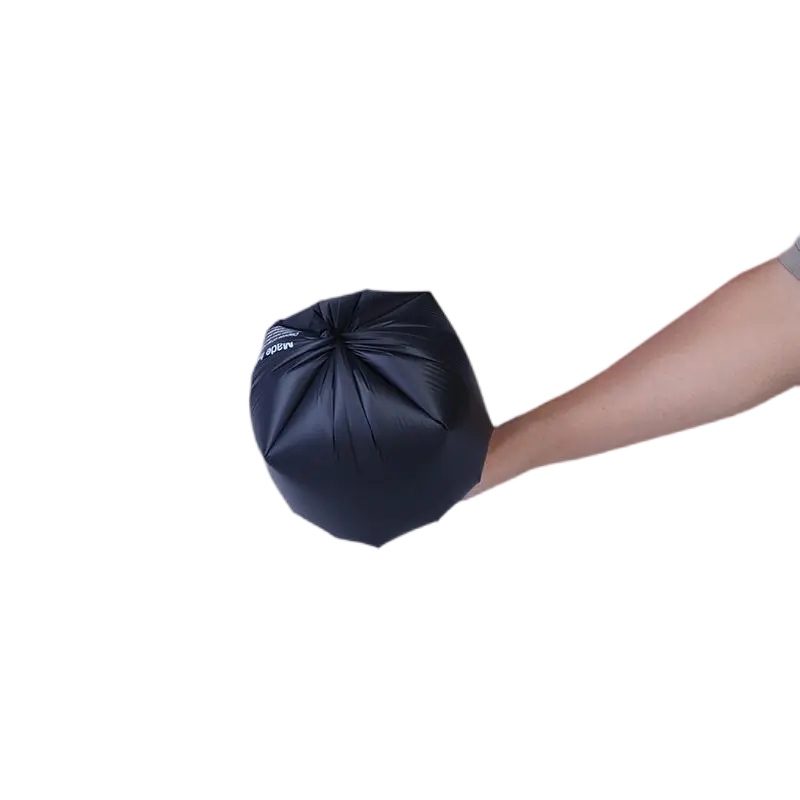
Star Seal Bottom Design
Strength isn’t just about the material; it’s about the shape. When buying strong compostable trash bags, look for a star seal bottom.
By folding the bottom of the bag into a star shape, the weight is distributed across all seals rather than a single flat line. This design virtually eliminates leaks and prevents the bottom from ripping when you lift a heavy load.
Reinforced Handles
Have you ever carried a heavy bag only to have the handles stretch out until they’re a foot long? It’s annoying and makes the bag harder to carry. High-quality compostable garbage bags feature reinforced handles that maintain their shape, even when the bag is at full capacity.
Check for Certifications
Strength is useless if the bag isn’t actually eco-friendly. Always look for these certifications to ensure the bag meets global standards for both durability and compostability:
- BPI Certified (US)
- TUV AUSTRIA “OK Compost” (International)
- EN 13432 (European Standard)
- AS 5810 & AS 4736 (Australian Standard)
Common Mistakes to Avoid
1. Confusing “Degradable” with “Compostable”
“Degradable” or “oxo-degradable” bags are often just plastic that breaks into microplastics. They lack the specialized PLA/PABT strength of true compostable bags.
2. Improper Storage
Compostable bags are designed to break down. Storing them in a hot, damp garage will weaken the molecular bonds before you even use them. Keep them in a cool, dry, dark place. Most compostable bags have a shelf life of about 9-12 months.
3. Overestimating Weight Capacity
Always check the micron thickness. For heavy kitchen waste, look for bags that are at least 18-20 microns thick. Don’t “over-stuff” or pack sharp edges (like eggshells or bones) against the sides.
4. Putting “Industrial Only” Bags in Home Compost
Most compostable bags require the high, sustained heat of an industrial facility to break down. In a backyard pile, they may sit for years without changing. If you compost at home, ensure the bag is specifically labeled “Home Compostable.”
5. Using Them for Recycling
Compostable bags are considered a contaminant in the plastic recycling stream. They cannot be recycled with PE plastics. Only use compostable bags for organic waste (food scraps, yard waste). For recycling, use the bin directly or use clear PE bags if your municipality requires them.
6. Letting Wet Waste Sit Too Long
Because biodegradable bags are breathable and moisture-sensitive, “sweating” occurs. Wet waste will begin to break down the bag from the inside out within a few days. So change your compost liner every 2-3 days, even if it isn’t full, to avoid leaks and odors.
Conclusion
So, are strong compostable trash bags as tough as plastic?
In the past, the answer would have been a polite “no.” But today, thanks to the PLA and PBAT blend, multi-layer co-extrusion, and smart star-seal designs, the answer is a resounding yes.
For distributors and businesses, the message is clear: the technology has arrived. You no longer have to choose between a bag that works and a bag that’s good for the planet. You can have both.
Ready to make the switch? Just remember to check your “mils,” look for that star seal, and always look for the certification logos.