
Are you involved in distributing pet products, supplying pet care stores, or running a pet business and concerned about how we handle our cats’ waste? Let’s explore this important issue together, focusing specifically on the bags we use for disposal.
As customer awareness about sustainability grows, it’s important to improve our environmental footprint and genuinely contribute to protecting our planet. Considering compostable cat litter bags is no longer just a trend; it’s quickly becoming the smart choice for responsible pet waste management. In the following, we’ll look at why these bags are an excellent solution for both you and your customers.
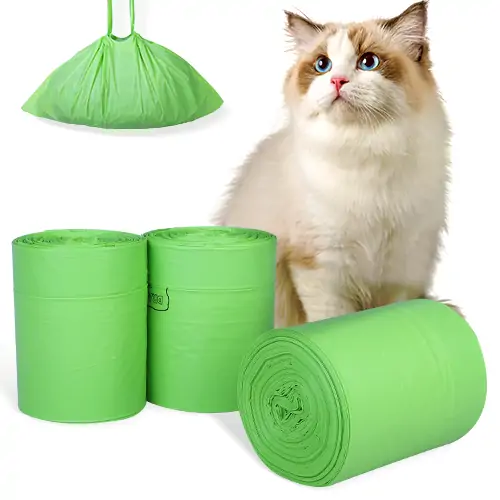
The Plastic Waste Dilemma with Cat Waste
While we adore our cats, managing their litter can be tiresome. And for many years, the usual method—scooping litter into a plastic bag and throwing it away—has silently caused a important environmental problem. It’s time to face this reality.
The Growing Mountain of Plastic in Landfills
Imagine billions of tiny plastic bags piling up in landfills year after year. That’s exactly what’s happening. Although plastic bags seem out of sight once thrown away, their environmental impact continues long after. Standard plastic cat waste bags can take anywhere from 10 to even 1,000 years to decompose. And when they do break down, they often turn into microplastics—tiny pieces that are impossible to remove from our environment. Each plastic bag used for cat litter adds to this long-lasting waste.
The heavy volume of cat waste bags with millions of cats living worldwide, the number of disposable bags used daily is astronomical. Multiply that by 365 days each year, and you see the huge amount of persistent plastic waste generated just from managing cat litter. It’s a problem that affects us all.
Microplastics and Environmental Damage
Plastic doesn’t just pile up in landfills; it also harms ecosystems.
Over time, exposure to sunlight, wind, and water causes plastic bags to break apart into tiny microplastics, which are smaller than 5 millimeters. These particles are nearly impossible to clean up and can contaminate soil and water sources. Microplastics can leach into waterways, enter agricultural land, and eventually find their way into animals’ food supplies—and even into our own diets. That plastic bag discarded yesterday could contribute to microplastics found in fish tomorrow.
What Are Compostable Cat Litter Bags?
So, how are compostable bags different? They’re built on smart science designed to work naturally with our environment. Certified as truly compostable, these bags are designed to break down entirely within a specific timeframe when placed in a proper composting setup. The end result? No microplastics or toxic residues—just water, carbon dioxide(CO2), inorganic compounds, and nutrient-rich compost that can be used to enrich soil, helping to close the recycling loop.
What Are They Made From?
Compostable cat poop bags are generally made from a smart mix of renewable resources.
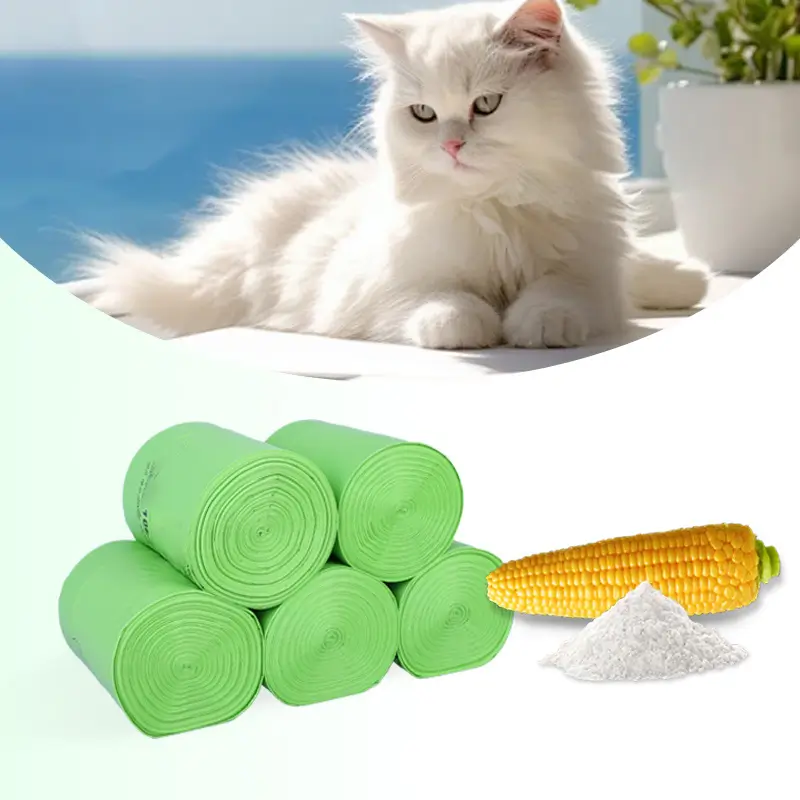
- Plant-based starches (corn, potato, tapioca): These materials originate from crops that are planted every year and break down easily when composted.
- PBAT (a compostable polymer): Polybutylene adipate terephthalate (PBAT) is a fossil-fuel-derived polymer, but it’s specifically engineered to be compostable. It gives the bag the necessary strength and flexibility, and it completely breaks down in industrial composting facilities—making it essential for good performance.
- PLA (Polylactic Acid): Often derived from corn starch or sugarcane, PLA is a bioplastic. While it biodegrades under specific conditions, PLA usually needs industrial composting temperatures to do so effectively. Because of its brittleness, it’s less common in high-performance pet waste bags, but it’s often blended with PBAT to improve properties.
Benefits of Using Compostable Cat Litter Bags
Choosing compostable cat waste bags isn’t just good for the environment—it also offers real benefits to pet owners, wholesalers, distributors, and pet care services.
Tangible Environmental Wins
- Drastically reduced landfill burden: Every compostable bag you use instead of traditional plastic means one less piece of plastic that can take hundreds of years to break down. Just imagine the collective impact if more within the industry made this switch.
- No persistent microplastics: These bags also eliminate the problem of microplastics. Certified compostable bags fully break down into natural components, so they don’t contribute to the growing microplastic pollution in oceans, soil, or our food supply—an important win for our ecosystems.
- Potential for nutrient return via composting: If processed properly alongside compatible litter in industrial composting facilities, these bags and their contents can become valuable compost. This nutrient-rich soil conditioner can help plants grow, improve soil health, and even trap carbon, turning what once was waste into a useful resource—a true example of sustainability and circularity. This is what makes high-quality compostable pet waste bags stand out.
Practical Benefits
Using compostable cat waste bags makes it easier to keep your cat’s litter tray clean and hygienic. Also, using compostable liners reduces needing frequent scrubbing. Closing the bag of waste also helps trap unpleasant odors, keeping your home or pet center smelling fresh. When customers visit your store or clinic, a clean and pleasant environment adds to their positive experience.
Economic Effectiveness
Switching to compostable cat litter bags presents a great opportunity for your business, driven by a clear shift in customer preferences. Overlooking this trend could mean missing out on a rapidly expanding market segment.
The Eco-Conscious Pet Owner Is Your Ideal Customer
Today’s pet owners are more knowledgeable and prioritize their values more than ever. They see their pets as part of the family, and they want to make eco-friendly choices for them just as they do for themselves.
Growing Demand for Sustainable Pet Products
Market research consistently emphasizes a sharp increase in the demand for eco-friendly pet care items. Consumers are actively searching for products that reflect their environmental concerns. Offering sustainable options like certified compostable cat litter bags is now essential, not optional, in attracting and keeping these customers. They want brands that help lower their pet’s carbon pawprint.
Premium Products and Better Profits
Compostable cat waste bags are viewed as innovative, high-value solutions. This allows you to position them as premium products, which often means higher profit margins compared to traditional plastic bags. Plus, more customers are willing to pay extra for sustainability, boosting your earnings.
Aligning Your Brand with Customer Values
By offering and promoting genuinely compostable cat waste bags, you show real commitment to sustainability. This can encourage stronger brand loyalty, build trust, and generate positive word-of-mouth. It demonstrates that you understand your customers’ concerns and are part of the solution.
Preparing for Future Regulations on Plastics
Governments around the world are increasingly banning or restricting single-use plastics. Being an early adopter and provider of compostable pet waste bags can position your brand ahead of upcoming rules, helping you avoid fines and disruptions to your product offerings.
Making it Work: The Composting Process for Cat Waste Bags
Industrial Composting
For most pet owners, especially those using clay or silica litters—which aren’t compostable—industrial composting is the primary pathway for dealing with certified compostable cat litter bags.
The Composting Environment
Industrial composting facilities create ideal conditions — sustained high temperatures (typically 55-65°C or 131-149°F), controlled moisture levels, proper aeration, and specific microbial mixes. These conditions effectively break down compostable bags and organic waste, while also destroying harmful pathogens when managed properly over enough time.
Guiding Customers to Local Composting Options
Not all composting facilities accept pet waste, even in certified compostable bags. Concerns include pathogens like Toxoplasma gondii and whether the facility’s process can handle pet waste safely. Here’s how businesses can help:
- Research locally: Find facilities nearby that accept pet waste in compostable bags.
- Share clear information: Prominently display this info on your website, packaging (if possible), and marketing materials. Use resources like the BPI ‘Where to Compost’ directory or local government websites.
- Set realistic expectations: If local composting options are limited, emphasize how compostable bags reduce plastic waste, microplastics, and landfill impact, while advocating for better infrastructure.
Home Composting
Home composting of cat waste is a complicated matter and generally not recommended by experts or health authorities because of the risk of harmful pathogens.
One of the main challenges is that backyard compost piles rarely reach the high temperatures needed to reliably kill dangerous microbes like Toxoplasma gondii, which can be especially risky for pregnant women and people with weak immune systems. Managing a separate, well-maintained compost system specifically for pet waste is quite complex and demands a good understanding of composting techniques and major effort. Most home composters simply cannot consistently achieve the necessary conditions.
If someone is determined to try composting cat waste at home, it’s important to use bags that are certified as OK Compost HOME. These bags are designed to break down in typical home compost settings that don’t reach industrial temperatures. Bags certified only for industrial composting, such as those compliant with ASTM D6400 or EN 13432, will likely not decompose properly in a home compost pile.
For those proceeding cautiously, here are some best practice tips: only use OK Compost HOME certified bags; keep the compost in a dedicated, enclosed bin away from food crops; restrict use to ornamental plants and avoid applying it to edible vegetable gardens; maintain high heat and turn the pile often; allow an extended curing period; and always check local health and agricultural guidelines.
Overall, it is strongly advised to encourage customers to use industrial composting services whenever possible, as this is safer and more effective. If industrial composting isn’t available, emphasizing the environmental benefit of reducing landfill waste can be a good alternative note.
What About the Litter Inside?
while the compostable bag itself might break down, most common litters such as clay, silica gel, or many clumping litter types are not suitable for composting. Adding clay-based litter to a compost bin can contaminate the load and prevent the process from working properly.
Typically, pet waste facilities require the waste to be in a certified compostable bag and paired with a compatible, certified compostable litter. A comprehensive approach involves promoting plant-based, genuinely compostable litters made from materials like untreated wood shavings or sawdust, paper, wheat or grass seed husks, corn, or specific types of pine pellets.
Look for litters with proper compostability certifications. Offering both certified compostable cat waste bags and compatible litters can help create a truly sustainable waste management system that your customers will appreciate.
Choosing the Right Compostable Cat Waste Bags
When selecting compostable cat waste bags, it’s important to choose options that are reliable, eco-friendly, and meet industry standards. Here are some tips to keep in mind:
Key Features Retailers and Distributors Should Look For
Don’t compromise on quality or credibility.
- Relevant certifications: Always ask for proof of certifications, such as specific certificate numbers or logos, for standards like ASTM D6400 or EN 13432, which indicate industrial compostability. If the bags claim to be home compostable, ensure they have certifications like OK Compost HOME or AS 5810, and verify that these certifications are up-to-date from trusted organizations.
- Strength & leak resistance: Pay attention to the strength and leak resistance of the bags. They should be thick enough to handle claws without tearing, with sturdy seams and leak-proof features. Customer satisfaction depends on the product performing at or above the level of regular plastic bags. Inquire about the material blend—higher PBAT content, for example, usually means better durability.
- Scent control options: Consider scent control features, such as bags lightly scented with natural essential oils or those with built-in odor barriers. These can make disposal more pleasant for users and are a nice way to stand out. Always check that any scents are compatible with composting processes.
Educating Your Customers
Your role extends beyond just providing the bags; educating your customers encourages proper use and broader adoption.
- Providing clear disposal instructions: Include simple graphics or brief text on shelf tags, your website, or product inserts explaining how industrial composting works.
- Explaining composting pathways realistically: Be honest about the realities of composting pet waste, including limitations of home composting and the current infrastructure for industrial composting. Emphasize the benefits—like reducing plastic waste, preventing microplastics, and decreasing landfill use—and advocate for improved composting systems.
- Differentiating your certified products: Help customers understand what your certifications mean and why they matter. Explain that your bags are scientifically verified as compostable, unlike vague claims like “biodegradable” or “eco-friendly” that are often unsubstantiated. Position your products as the trustworthy, certified choice.
The Future is Green: Trends in Sustainable Pet Waste Management
More and more, sustainability is becoming a focus. Compostable cat litter bags are just part of a bigger movement.
We’re seeing innovative products like flushable (and truly sewer-safe) litters, advanced composting systems designed for pets, and continual improvements in compostable materials. The goal is to close the waste loop completely.
Legislation banning single-use plastics—including pet waste bags—is spreading worldwide, from parts of the EU to various US states and Canadian regions. Offering reliable compostable options helps your business stay compliant and shows leadership in the industry. Keep an eye on regulations in your market.
Expect ongoing advances in materials—stronger, thinner, possibly home-compostable—and improvements in composting technology that handle waste more efficiently and safely, including better pathogen management.
Conclusion
The days of tossing cat waste into plastic bags that might sit in landfills for hundreds of years are coming to an end. Pet owners are looking for better solutions, and the environment really needs this change. Using compostable cat litter bags—recognized through trusted certifications and paired with responsible disposal options like industrial composting—offers a practical, meaningful way to address this pressing environmental issue.
For distributors, suppliers, and pet care providers, choosing compostable cat waste bags isn’t just a good ethical step; it’s increasingly important for your business. It helps meet the growing demand from eco-aware customers, positions your brand as forward-thinking, boosts your reputation, and prepares your product line for tighter plastic regulations ahead.
Making this shift involves working with experienced manufacturers who produce certified, high-quality bags and collaborating with waste management experts to expand composting facilities. It also calls for clear communication and education for pet owners. But in the end, the goal—a future where managing pet waste doesn’t harm the environment—is well worth the effort.
Are you ready to lead the way in sustainable pet waste management? Switch from plastic to high-quality, certified compostable cat litter bags. Your customers, your brand, and the planet will thank you. Let’s make eco-friendly scooping the new standard.